


Lead generation tools play a vital role in modern marketing by helping businesses attract, qualify, and convert prospects efficiently. From CRM platforms and email automation to chatbots and intent data tools, the right combination ensures consistent growth, better targeting, and higher conversion rates.
Lead generation forms the lifeblood of any successful business. Without a steady stream of qualified prospects, even the most innovative companies struggle to grow. The right lead generation tools can transform your marketing efforts from scattered activities into a systematic approach that consistently delivers results.
Understanding Lead Generation Tools
Lead generation tools are software platforms designed to help businesses identify, attract, and convert potential customers. These tools streamline the process of finding prospects who are likely to be interested in your products or services.
Modern lead generation tools work across multiple channels. They can capture website visitors, engage social media audiences, automate email campaigns, and analyze customer behavior. The best tools integrate seamlessly with your existing marketing stack to create a cohesive lead generation system.
The key is choosing tools that align with your specific business needs, target audience, and marketing strategy. Some tools excel at capturing website leads, while others focus on social media prospecting or email outreach. Many businesses use a combination of tools to maximize their lead generation potential.
Top Lead Generation Tools
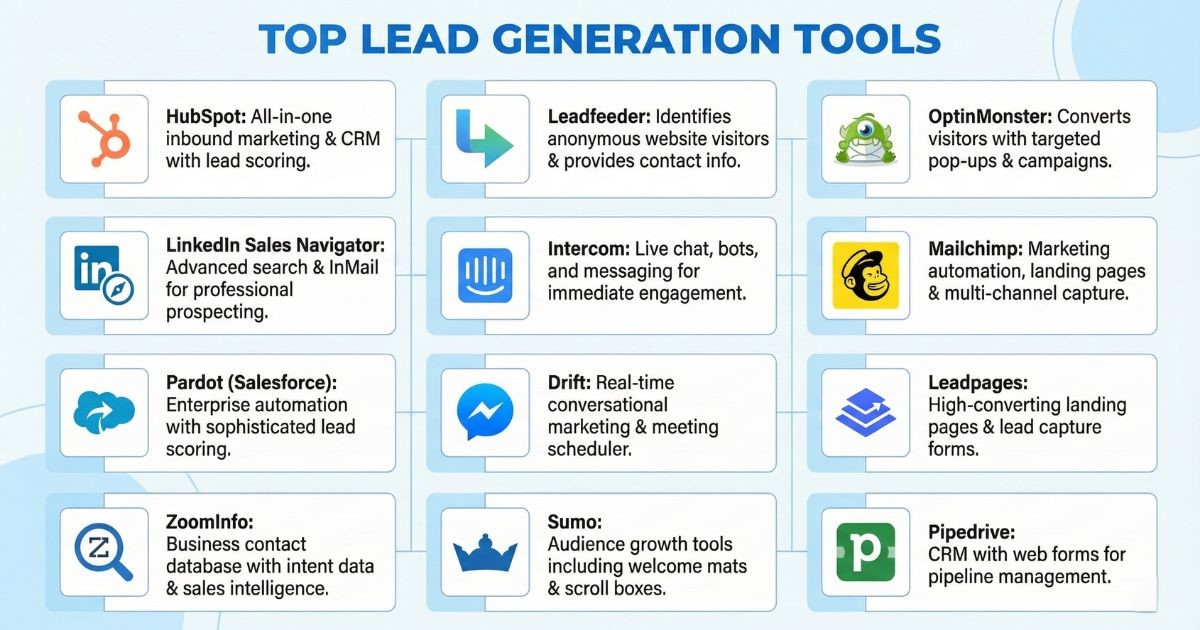
1. HubSpot
HubSpot stands out as an all-in-one inbound marketing platform that excels at lead generation. Its free CRM provides excellent value for small businesses, while paid tiers offer advanced features for larger organizations.
The platform’s landing page builder makes it easy to create high-converting pages without technical expertise. Built-in A/B testing helps optimize conversion rates over time. Email marketing automation nurtures leads through personalized sequences based on their behavior and interests.
HubSpot’s lead scoring feature prioritizes prospects based on their engagement level and fit with your ideal customer profile. This helps sales teams focus their efforts on the most promising opportunities.
2. Leadfeeder
Leadfeeder reveals which companies visit your website, even if they don’t fill out forms. This tool tracks visitor behavior and provides contact information for potential prospects who showed interest but didn’t convert.
The platform integrates with popular CRM systems to automatically add identified leads to your sales pipeline. You can set up custom alerts to notify your team when high-value prospects visit your site.
Leadfeeder’s filtering capabilities help you focus on the most relevant visitors. Filter by company size, industry, or specific pages visited to identify the best opportunities for your sales team.
3. OptinMonster
OptinMonster specializes in converting website visitors into leads through targeted campaigns. Its drag-and-drop builder makes it easy to create professional-looking opt-in forms, pop-ups, and landing pages.
The platform’s exit-intent technology detects when visitors are about to leave your site and displays targeted campaigns to capture their information. Behavior-based triggers ensure your messages appear at the right moment for maximum impact.
Advanced targeting options allow you to show different campaigns based on visitor location, device type, or referral source. This personalization increases conversion rates and improves user experience.
4. LinkedIn Sales Navigator
LinkedIn Sales Navigator transforms the professional networking platform into a powerful lead generation tool. Its advanced search capabilities help you find prospects based on industry, company size, job title, and other criteria.
The platform’s InMail feature allows you to reach prospects directly, even if you’re not connected. Lead recommendations suggest potential prospects based on your existing network and previous interactions.
Sales Navigator’s CRM integration ensures all prospect information syncs with your existing sales process. Real-time updates notify you when prospects change jobs, post content, or engage with your company.
5. Intercom
Intercom combines live chat, chatbots, and customer messaging into a comprehensive lead generation platform. Its chat widget captures visitor information while providing immediate support and engagement.
The platform’s bot builder creates automated conversations that qualify leads and schedule meetings. Custom qualification questions help identify the most promising prospects before they reach your sales team.
Intercom’s behavioral triggers initiate conversations based on visitor actions, such as spending time on pricing pages or downloading resources. This proactive approach increases engagement and conversion rates.
6. Mailchimp
Mailchimp has evolved beyond traditional email marketing into a comprehensive marketing automation platform. Its lead generation features include landing pages, customizable sign-up forms, and social media advertising to capture leads across multiple channels.
The platform’s segmentation capabilities allow businesses to run targeted campaigns for different audience groups. Automated email sequences nurture leads based on their interests and behavior patterns, ensuring timely and relevant communication.
Mailchimp’s analytics provide clear insights into campaign performance, helping optimize lead generation efforts. Integration with e-commerce platforms also enables effective retargeting campaigns to increase conversions.
7. Pardot
Pardot, now part of Salesforce, offers enterprise-level marketing automation with sophisticated lead generation capabilities. Its lead scoring and grading system helps identify the most qualified prospects.
The platform’s form builder creates customizable lead capture forms that integrate seamlessly with your website. Progressive profiling gradually collects more information about prospects over time.
Pardot’s ROI reporting tracks lead generation performance across all channels, helping you optimize budget allocation and strategy. Advanced automation capabilities nurture leads through complex, multi-touch campaigns.
8. Drift
Drift pioneered conversational marketing with its real-time chat platform. The tool captures leads through personalized conversations that feel natural and engaging.
Its meeting scheduler eliminates the back-and-forth of booking sales calls. Prospects can schedule meetings directly through the chat interface, reducing friction in the sales process.
Drift’s playbook feature creates standardized conversation flows that consistently qualify leads. The platform’s integration with major CRM systems ensures all conversations are tracked and analyzed.
9. Leadpages
Leadpages specializes in creating high-converting landing pages and lead capture forms. Its template library includes professionally designed pages optimized for different industries and use cases.
The platform’s A/B testing capabilities help optimize page performance over time. Built-in analytics track conversion rates and identify areas for improvement.
Leadpages’ pop-ups and alert bars capture leads across your entire website. Advanced targeting ensures these elements appear to the right visitors at the optimal moment.
10. ZoomInfo
ZoomInfo provides comprehensive business contact database and sales intelligence. Its lead generation capabilities include company and contact discovery, email finder, and intent data.
The platform’s intent data reveals when prospects are actively researching solutions like yours. This timing intelligence helps sales teams reach out at the perfect moment.
ZoomInfo’s integration with popular CRM and marketing automation platforms streamlines the lead generation process. Automated data enrichment keeps your prospect database current and complete.
11. Sumo
Sumo offers a suite of tools designed to grow your website’s audience and capture more leads. Its welcome mats, pop-ups, and scroll boxes convert visitors into subscribers.
The platform’s list builder creates targeted campaigns based on visitor behavior and demographics. Smart bars display different messages to new versus returning visitors.
Sumo’s analytics dashboard tracks the performance of all lead generation campaigns. Heat mapping capabilities show how visitors interact with your site, informing optimization decisions.
12. Pipedrive
Pipedrive combines CRM functionality with lead generation tools to create a comprehensive sales platform. Its web forms capture leads and automatically add them to your sales pipeline.
The platform’s lead qualification features help identify the most promising prospects. Automated follow-up sequences ensure no leads fall through the cracks.
Pipedrive’s reporting capabilities track lead generation performance and sales pipeline health. Integration with email marketing platforms creates seamless lead nurturing workflows.
Choosing the Right Lead Generation Tools
Selecting the best lead generation tools depends on your specific business needs, budget, and existing technology stack. Consider these factors when making your decision:
Budget considerations play a crucial role in tool selection. Free tools like HubSpot’s CRM provide excellent value for startups, while established businesses might benefit from more advanced paid platforms.
Integration capabilities ensure your new tools work seamlessly with existing systems. Check for native integrations with your CRM, email marketing platform, and analytics tools.
Ease of use affects adoption rates and ongoing success. Choose tools that your team can learn quickly and use effectively without extensive training.
Scalability ensures your tools can grow with your business. Consider whether platforms can handle increased lead volume and additional team members.
Maximizing Your Lead Generation Success
The most effective lead generation strategies combine multiple tools and channels. Use website visitors identification tools like Leadfeeder alongside conversion optimization platforms like OptinMonster for comprehensive coverage.
Regular testing and optimization improve performance over time. A/B test different headlines, calls-to-action, and form designs to identify what resonates best with your audience.
Data analysis drives continuous improvement. Monitor metrics like conversion rates, cost per lead, and lead quality to identify successful strategies and areas for improvement.
Team training ensures maximum tool utilization. Provide comprehensive training on new platforms and establish clear processes for lead handling and follow-up.
Building Your Lead Generation Engine
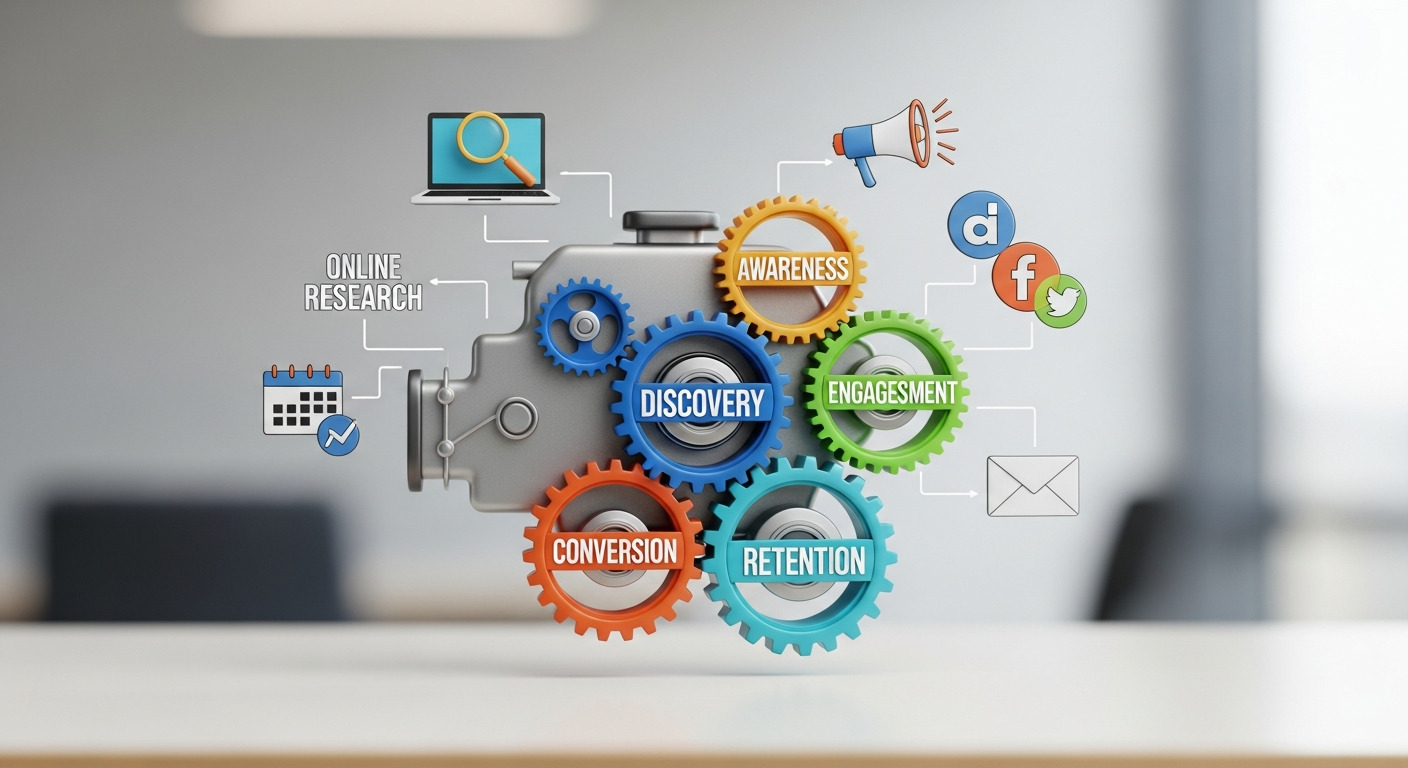
The right combination of lead generation tools can transform your marketing efforts and accelerate business growth. Start by identifying your biggest lead generation challenges and selecting tools that address those specific needs.
Remember that tools are only as effective as the strategy behind them. Focus on creating valuable content, understanding your audience, and providing excellent user experiences across all touchpoints.
Begin by implementing one or two tools that align with your immediate needs and budget. As you gain experience and see results, gradually expand your toolkit to create a comprehensive lead generation system that consistently delivers qualified prospects to your sales team.
Conclusion
Effective lead generation is not about using every available tool in the market; rather, it is about carefully selecting the tools that best align with your specific business goals, target audience, and overall marketing strategy. When the right tools are combined with a well-defined strategy, high-quality and relevant content, and a mindset of continuous testing and optimization, lead generation efforts become far more structured and impactful. These tools help automate processes, improve targeting accuracy, and ensure consistent engagement with potential customers at every stage of the buyer journey. Starting with a small, focused setup allows businesses to understand what works best for their audience. By regularly analyzing performance metrics, refining approaches, and scaling gradually, organizations can build a sustainable, reliable, and predictable pipeline of qualified leads that supports long-term business growth.
Frequently Asked Questions
1. What is a lead generation tool?
A lead generation tool is a software solution designed to help businesses attract, capture, organize, and manage potential customers. These tools collect user data from various channels and turn visitors into actionable sales prospects.
2. Which lead generation tool is best for small businesses?
HubSpot and Mailchimp are excellent choices for small businesses because they are affordable, easy to use, and offer scalable features that support growth without requiring advanced technical knowledge.
3. Are free lead generation tools effective?
Yes, free lead generation tools can be effective, especially for startups and small teams. However, they often come with feature limitations, usage caps, or reduced automation compared to paid versions.
4. How do lead generation tools improve conversion rates?
They improve conversion rates by automating targeting, personalizing communication, and ensuring timely follow-up, which helps engage prospects more effectively throughout the buyer journey.
5. Can I use multiple lead generation tools together?
Yes, using multiple lead generation tools together often produces better results, as each tool can handle different aspects such as traffic capture, nurturing, scoring, and conversion.
6. What is lead scoring?
Lead scoring is a method used to rank leads based on their behavior, engagement level, and demographic information to determine how likely they are to convert into paying customers.
7. How long does it take to see results?
Typically, results can be seen within 1–3 months, depending on your strategy, industry competition, traffic volume, and how consistently the tools are implemented and optimized.
8. Are lead generation tools suitable for B2B businesses?
Absolutely, many lead generation tools are specifically designed for B2B sales, focusing on longer sales cycles, decision-makers, account-based targeting, and relationship building.
9. Do these tools integrate with CRMs?
Most modern lead generation tools offer seamless integration with CRM systems, allowing businesses to manage leads, track interactions, and maintain accurate sales pipelines.
10. Is AI necessary for lead generation?
AI is not mandatory for lead generation, but it significantly improves efficiency, accuracy, and personalization by analyzing data patterns, predicting intent, and automating decision-making processes.
11. How do I measure lead generation success?
Lead generation success is measured by tracking key metrics such as conversion rate, cost per lead, lead quality, engagement levels, and the overall impact on revenue.
12. What is the biggest challenge in lead generation?
The biggest challenge in lead generation is attracting qualified leads consistently—prospects who not only show interest but also match your ideal customer profile and intent to buy.



Leave a Reply