

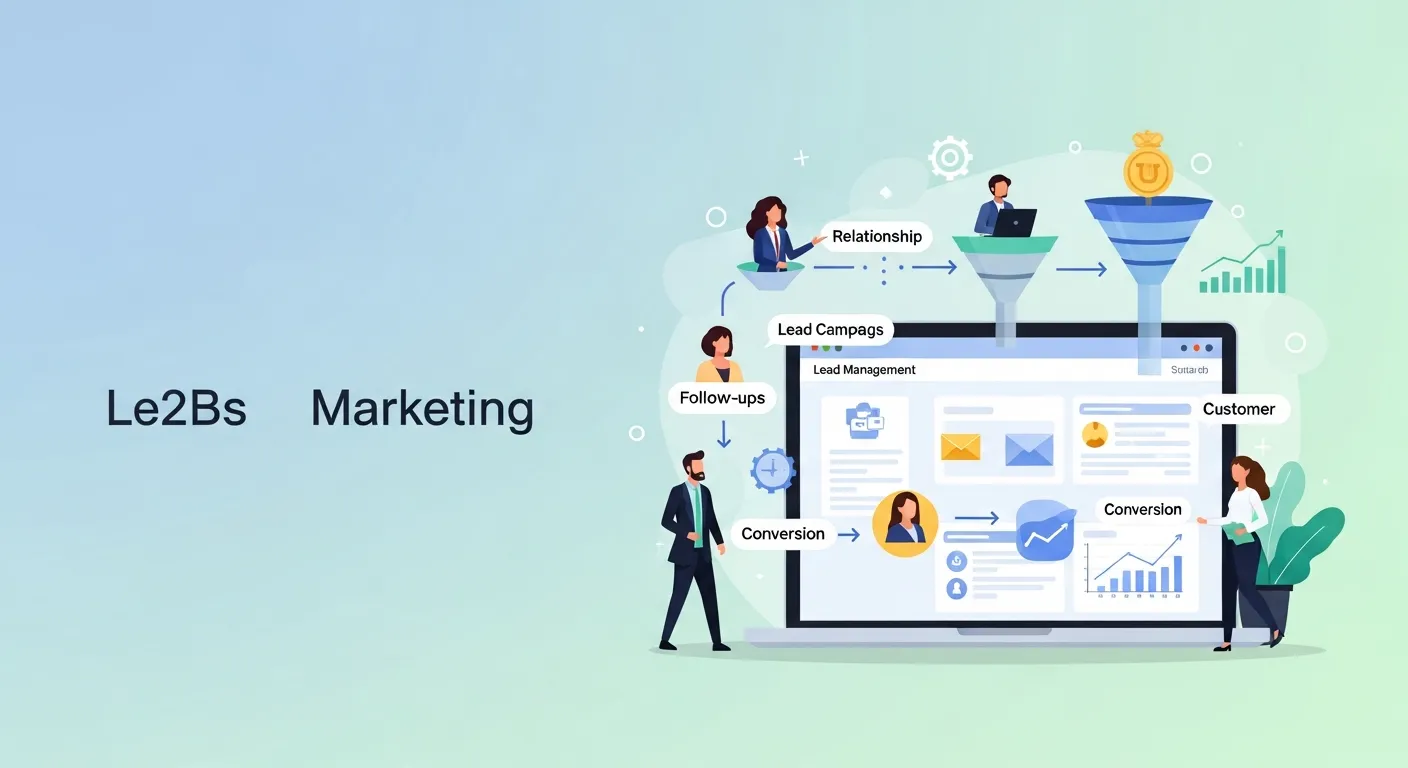
B2B lead nurturing is the process of building relationships with prospects at every stage of the buying journey until they’re ready to purchase. The most effective approach combines personalized email campaigns, marketing automation, and content that matches each buyer’s intent—turning cold leads into qualified, sales-ready opportunities.
Most B2B leads aren’t ready to buy the moment they find you. In fact, research from Marketo suggests that 96% of visitors to your website aren’t ready to make a purchase yet. That’s a sobering number for any sales team eager to hit their targets.
So what happens to those leads who download an ebook, attend a webinar, or sign up for your newsletter—then go quiet? Without a plan to stay top of mind, most of them slip away to a competitor who keeps showing up with the right message at the right time.
That’s where lead nurturing comes in. Done well, it shortens your sales cycle, increases deal sizes, and builds trust long before a sales rep ever picks up the phone. This guide breaks down the strategies, tools, and workflows you need to nurture B2B leads effectively—from your first email to the final handoff to sales.
What is B2B lead nurturing, and why does it matter?

B2B lead nurturing is the practice of developing relationships with potential buyers throughout the entire sales funnel. Instead of pushing for an immediate sale, you provide relevant information and value at each step, guiding prospects toward a purchase decision at their own pace.
This matters because B2B buying decisions are rarely quick. A typical purchase involves multiple stakeholders, longer evaluation periods, and higher price points than consumer sales. According to Gartner, the average B2B buying group includes six to ten decision-makers, each armed with their own research and priorities.
The payoff for getting nurturing right is significant. Companies that excel at lead nurturing generate 50% more sales-ready leads at a 33% lower cost, according to Forrester Research. Nurtured leads also tend to make larger purchases than non-nurtured ones.
In short, lead nurturing isn’t a nice-to-have. It’s how modern B2B companies build a predictable, scalable pipeline.
This matters because B2B buying decisions involve multiple stakeholders and long evaluation cycles. To improve targeting accuracy, many marketers now rely on data-driven approaches like zero-party data strategies to better understand customer intent from the beginning.
What are the most effective B2B lead nurturing strategies?
There’s no single formula for nurturing leads, but the strongest programs share a few core strategies. Here are the ones that consistently move the needle.
Map content to the buyer’s journey
Every lead sits somewhere on the path from awareness to decision. A prospect just discovering your brand needs different content than one comparing vendors. Map your assets—blog posts, case studies, demos, pricing guides—to each stage so you always have something relevant to share.
- Awareness stage: Educational blog posts, industry reports, and how-to guides.
- Consideration stage: Webinars, comparison guides, and product explainers.
- Decision stage: Case studies, free trials, demos, and ROI calculators.
Lead with value, not a sales pitch
The fastest way to lose a lead is to bombard them with “buy now” messaging before they trust you. Focus your early communications on solving problems and answering questions. When you consistently help, you earn the right to ask for the sale later.
Use lead scoring to prioritize
Not all leads deserve equal attention. Lead scoring assigns points based on a prospect’s behavior (like opening emails or visiting your pricing page) and attributes (like job title or company size). This helps your team focus energy on the leads most likely to convert, while letting automation handle the rest.
Engage across multiple channels
Email is the backbone of B2B nurturing, but it shouldn’t work alone. Combine it with retargeting ads, LinkedIn outreach, SMS, and personalized landing pages. A multi-channel approach keeps your brand visible without relying on a single touchpoint.
How do you build effective B2B email nurturing campaigns?
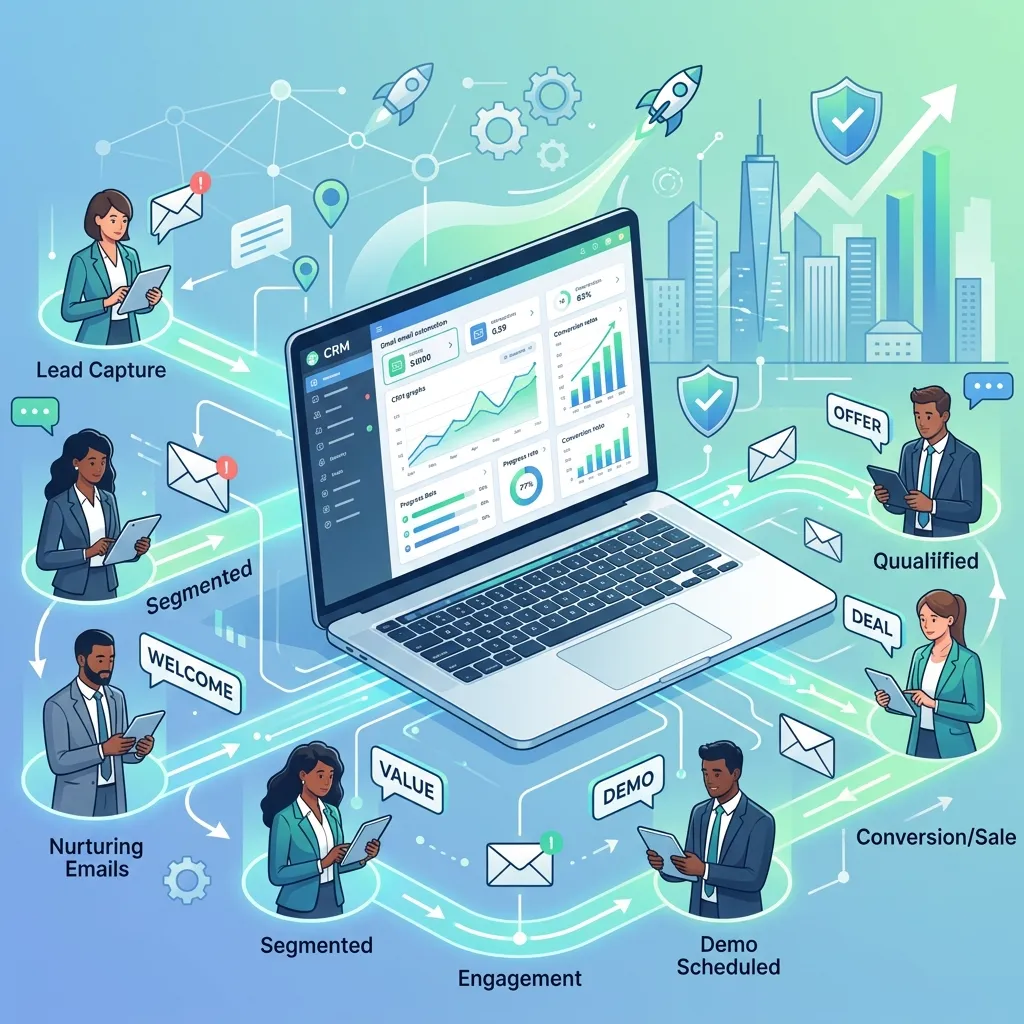
Email remains the workhorse of B2B lead nurturing—and for good reason. It’s cost-effective, measurable, and easy to personalize at scale. Here’s how to build campaigns that actually get read.
One growing channel is podcast marketing for lead generation, which helps brands build authority while nurturing audiences through storytelling and consistent value delivery.
Segment your audience. Sending the same email to everyone is a recipe for low engagement. Break your list into segments based on industry, role, behavior, or funnel stage, then tailor your message to each group.
Write subject lines that earn the open. Your nurturing efforts mean nothing if no one opens the email. Keep subject lines clear, specific, and benefit-driven. Personalization—like including the recipient’s name or company—can lift open rates noticeably.
Keep each email focused. One email, one goal. Whether you want a reader to download a guide, book a demo, or read a case study, make that single action obvious with a clear call to action.
Test and refine. A/B test your subject lines, send times, copy, and CTAs. Small, data-backed tweaks compound into meaningful gains over time.
How does lead nurturing automation work for B2B?
Manually emailing hundreds of leads is impossible to scale. Marketing automation solves this by triggering the right message based on a lead’s behavior—without your team lifting a finger.
Lead nurturing automation works by setting up workflows that respond to specific actions. For example, when someone downloads your pricing guide, an automated sequence might send a relevant case study two days later, followed by a demo invitation a few days after that.
Popular platforms like HubSpot, Marketo, and ActiveCampaign let you build these workflows visually. You define the trigger, set the conditions, and map out the sequence. From there, the system handles delivery, timing, and follow-up.
The biggest advantage of automation is consistency. Every lead gets a timely, relevant experience, regardless of how busy your team is. It also frees your salespeople to focus on the leads that are genuinely ready to talk.
To enhance reach and engagement, marketers often combine email with social channels like LinkedIn lead generation strategies to target decision-makers directly.
What are B2B drip email campaigns?
A drip campaign is a series of pre-written emails sent automatically on a set schedule or in response to triggers. The name comes from the idea of “dripping” information to leads gradually, rather than overwhelming them all at once.
A classic B2B drip sequence might look like this:
- Welcome email introducing your brand and what to expect.
- Educational email sharing a helpful resource tied to the lead’s interest.
- Social proof email featuring a customer success story.
- Offer email inviting the lead to a demo or free trial.
Drip campaigns are ideal for onboarding new subscribers, re-engaging cold leads, and guiding prospects through long sales cycles.
How do you build personalized B2B lead nurturing workflows?
Personalization separates good nurturing from great nurturing. A generic blast feels like spam; a workflow tailored to someone’s specific situation feels like a helpful conversation.
Start by collecting the right data. Use form fields, behavioral tracking, and CRM records to understand who your leads are and what they care about. The more you know, the more relevant your workflows can be.
Next, build branching paths. Instead of sending everyone down the same track, create workflows that adapt based on a lead’s actions. Someone who clicks a link about feature A should receive different follow-ups than someone interested in feature B.
Finally, add dynamic content. Many automation platforms let you swap out images, copy, and offers based on a lead’s profile—so a single email can feel custom-built for each recipient.
Choose deeper personalization if your sales cycle is long and your deals are high-value. Choose simpler workflows if you’re nurturing a high volume of smaller leads where speed matters more than precision.
How can you optimize your B2B marketing and sales funnel?
Lead nurturing doesn’t exist in a vacuum—it’s part of a larger funnel that should be continuously optimized. Here’s how to tighten the gaps.
Align marketing and sales. Friction between teams kills conversions. Agree on a shared definition of a “qualified lead,” set clear handoff criteria, and use a service-level agreement (SLA) to hold both sides accountable.
Identify and fix drop-off points. Use analytics to find where leads stall or disappear. If prospects consistently go cold after a demo, that’s a signal to rework your follow-up sequence.
Shorten the path to value. Remove unnecessary form fields, simplify your messaging, and make it easy for leads to take the next step. Every bit of friction you remove improves your conversion rate.
Measure what matters. Track metrics like conversion rate by stage, time-to-conversion, email engagement, and cost per qualified lead. Use these insights to keep refining your approach.
What are the best techniques for nurturing qualified leads?

Once a lead crosses the threshold into “qualified,” your nurturing should shift gears. These prospects are closer to buying, so the goal is to remove doubts and build confidence.
- Send bottom-funnel content like detailed case studies, ROI breakdowns, and competitor comparisons.
- Offer a personalized demo that speaks directly to the lead’s use case and pain points.
- Introduce a sales rep at the right moment, with full context on the lead’s history so the conversation feels seamless.
- Address objections proactively by sharing FAQs, security documentation, or implementation timelines before they’re even asked.
The key is timing. Push too hard too early and you’ll scare qualified leads off. Move too slowly and a competitor may swoop in. Use lead scoring and behavioral signals to find the sweet spot.
Turning nurtured leads into loyal customers
B2B lead nurturing isn’t about chasing quick wins—it’s about playing the long game with patience and precision. By mapping content to the buyer’s journey, automating thoughtful workflows, and personalizing every touchpoint, you build the kind of trust that turns curious prospects into committed customers.
Start small if you need to. Pick one segment, build a simple drip campaign, and measure the results. As you learn what resonates with your audience, expand your workflows and layer in more personalization. Over time, these efforts compound into a pipeline that practically nurtures itself.
The companies that win in B2B aren’t always the ones with the best product—they’re often the ones that show up consistently, helpfully, and at exactly the right moment. With a solid nurturing strategy, that company can be yours.
Frequently asked questions
What’s the difference between lead generation and lead nurturing?
Lead generation is about attracting new prospects and capturing their contact information. Lead nurturing is what happens next—building relationships with those prospects over time until they’re ready to buy. You need both: generation fills the top of your funnel, while nurturing moves leads toward a purchase.
How long does B2B lead nurturing take?
It depends on your sales cycle. Some B2B deals close in weeks, while others take a year or more, especially for high-value enterprise sales. The key is to match your nurturing timeline to your buyers’ actual decision-making pace rather than rushing them.
How many emails should a B2B nurturing campaign include?
There’s no fixed number, but most effective drip campaigns include between four and seven emails spaced several days apart. The right count depends on your sales cycle length and how much value you can offer at each step. Focus on quality and relevance over volume.
What tools do I need for B2B lead nurturing?
At a minimum, you’ll need a CRM to track leads and a marketing automation platform to deliver campaigns. Popular options include HubSpot, Marketo, Pardot, and ActiveCampaign. Many of these combine CRM and automation features, making them a strong starting point for most B2B teams.
How do you measure the success of a lead nurturing program?
Track metrics like email open and click rates, conversion rate by funnel stage, time-to-conversion, number of sales-qualified leads, and cost per qualified lead. Together, these reveal how effectively your nurturing turns prospects into customers and where you can improve.
What is B2B Lead Nurturing?
B2B Lead Nurturing is the process of building relationships with potential business customers through targeted content, emails, and automation until they are ready to buy.
Why is B2B Lead Nurturing important for businesses?
B2B Lead Nurturing is important because it helps convert cold leads into sales-ready prospects by delivering the right message at the right stage of the buying journey.
How does B2B Lead Nurturing work?
B2B Lead Nurturing works by tracking lead behavior and sending personalized emails, content, and follow-ups based on their interests and actions.
What tools are used in B2B Lead Nurturing?
Common tools for B2B Lead Nurturing include CRM systems like HubSpot, Salesforce, and marketing automation platforms such as Marketo or ActiveCampaign.
How long does B2B Lead Nurturing take?
The B2B Lead Nurturing process can take weeks or months depending on the sales cycle, industry, and complexity of the product or service.
What are the best strategies for B2B Lead Nurturing?
Effective B2B Lead Nurturing strategies include email segmentation, lead scoring, personalized workflows, and content aligned with the buyer journey.
How does email marketing help in B2B Lead Nurturing?
Email marketing plays a key role in B2B Lead Nurturing by delivering consistent, valuable content that keeps prospects engaged over time.
Can automation improve B2B Lead Nurturing?
Yes, automation improves B2B Lead Nurturing by sending timely and personalized messages based on user behavior without manual effort.
What is the difference between lead generation and B2B Lead Nurturing?
Lead generation focuses on attracting prospects, while B2B Lead Nurturing focuses on building relationships and converting those leads into customers.
How do you measure success in B2B Lead Nurturing?
Success in B2B Lead Nurturing is measured using metrics like conversion rate, email engagement, lead quality, and sales-qualified leads.



Leave a Reply