

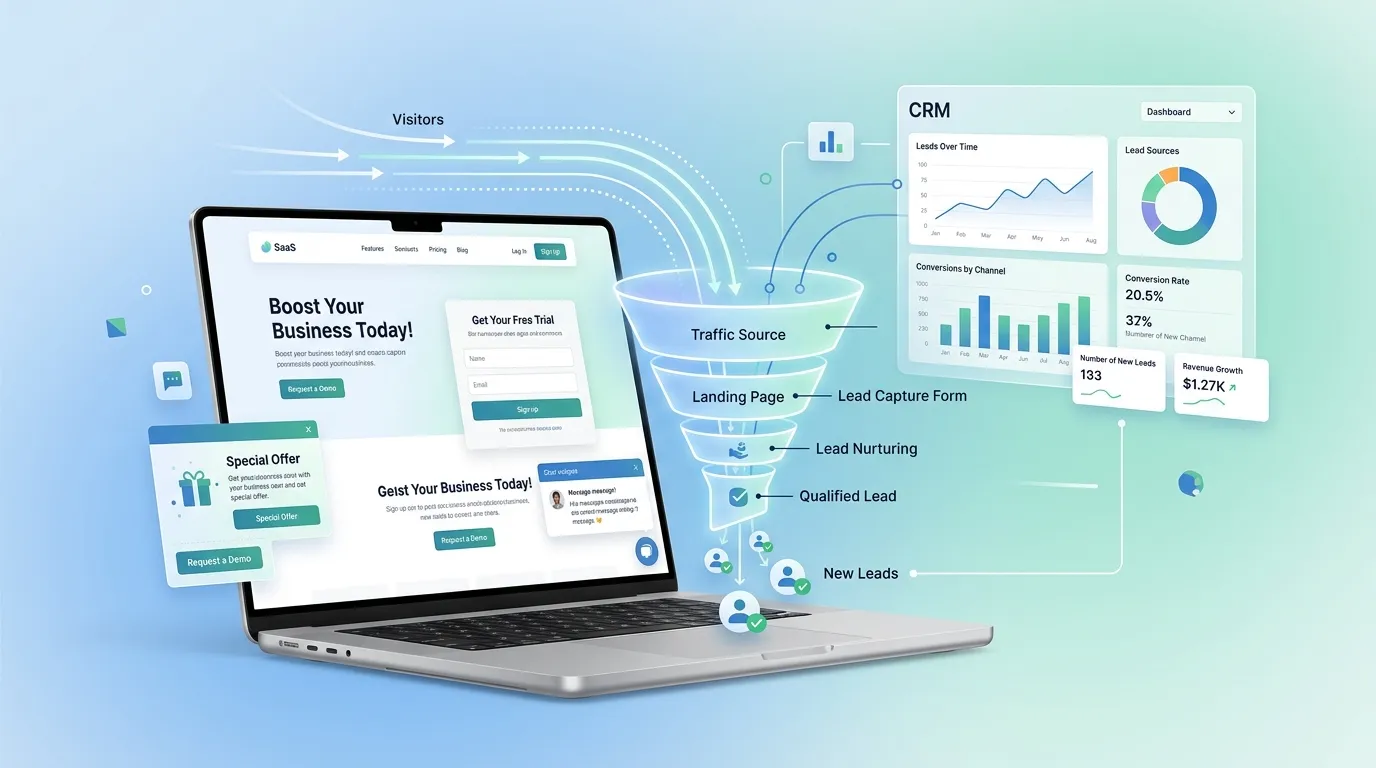
Lead generation from website means turning anonymous visitors into identifiable prospects by capturing their contact details through forms, offers, and calls-to-action. The most effective approach combines optimized landing pages, well-placed lead capture forms, valuable content offers, and a clear conversion funnel that guides visitors from first click to qualified lead.
Most websites attract visitors who leave without a trace. They browse a few pages, maybe read a blog post, then disappear—never to return. That silent exit is the single biggest leak in many marketing budgets. The good news? It’s fixable.
A high-performing website does more than look polished. It actively collects leads, nurtures interest, and feeds a steady stream of prospects into the sales pipeline. The difference between a site that converts and one that doesn’t usually comes down to strategy, structure, and a few well-tested tactics.
This guide breaks down the proven methods for generating leads through a website. It covers conversion-focused landing pages, smart lead capture forms, funnel design, and the optimization techniques that lift conversion rates over time. Each section includes practical steps that can be applied right away, whether the goal is a handful of high-value B2B leads or thousands of newsletter sign-ups.
What Is Lead Generation From Website?
Lead generation from website is the process of attracting visitors and converting them into leads who share contact information. Many businesses combine this with broader strategies like how to generate qualified leads to improve lead quality and conversion rates. A lead might be someone who downloads an ebook, requests a demo, signs up for a newsletter, or fills out a contact form.
There are two broad categories worth understanding:
- Marketing qualified leads (MQLs): Visitors who engage with content but aren’t ready to buy yet, such as someone who downloads a guide.
- Sales qualified leads (SQLs): Visitors who show clear buying intent, such as someone who requests pricing or books a consultation.
Knowing the difference matters because each type needs a different follow-up. An MQL needs nurturing; an SQL needs a fast response from sales.
Why Website Lead Generation Matters More Than Ever

A website runs around the clock. Unlike a sales team, it never sleeps, never takes a break, and can engage thousands of people at once. When set up correctly, it becomes the most scalable lead source a business owns.
Online lead generation also tends to cost less per lead than outbound methods like cold calling or paid events. Content-driven approaches, in particular, compound over time—a single blog post can attract and convert leads for years after it’s published.
There’s a measurement advantage, too. Every form submission, button click, and page view can be tracked. That data reveals exactly where prospects drop off and which pages do the heavy lifting, making it possible to improve results with precision rather than guesswork.
Compared to traditional methods, website-based lead generation is more measurable and cost-efficient. It also integrates well with tools such as automated lead generation tools for startups
Website Lead Generation Strategies That Actually Work
Strong results rarely come from a single tactic. The best-performing sites layer several strategies together so visitors encounter multiple opportunities to convert.
Offer Lead Magnets People Genuinely Want
A lead magnet is a free resource offered in exchange for contact details. Effective examples include ebooks, checklists, templates, webinars, free trials, and exclusive reports. The key is relevance: the offer should solve a specific problem for the exact audience the business wants to attract.
A generic “subscribe to our newsletter” prompt converts poorly. A targeted offer—say, “The 12-point website audit checklist”—performs far better because it promises a clear, immediate benefit.
Use Content Marketing to Pull Visitors In
Blog posts, guides, and resource pages attract organic traffic from search engines. When that content answers real questions, it builds trust and positions the brand as helpful before any sale is discussed. Adding relevant calls-to-action and content upgrades within these pages turns passive readers into active leads.
Add Live Chat and Chatbots
Chat tools capture visitors at the moment of highest interest. A chatbot can answer common questions, qualify prospects, and collect contact details—all without human involvement. For visitors who prefer instant answers over filling out a form, chat removes friction and speeds up conversion.
Run Targeted Pop-Ups and Slide-Ins
Timed pop-ups and exit-intent offers still work when used thoughtfully. A pop-up triggered after someone reads 60% of an article, or one that appears as a visitor moves to leave, can recover conversions that would otherwise be lost. Overdoing it frustrates users, so frequency and timing deserve careful testing.
Online Lead Generation Techniques for Higher Conversions
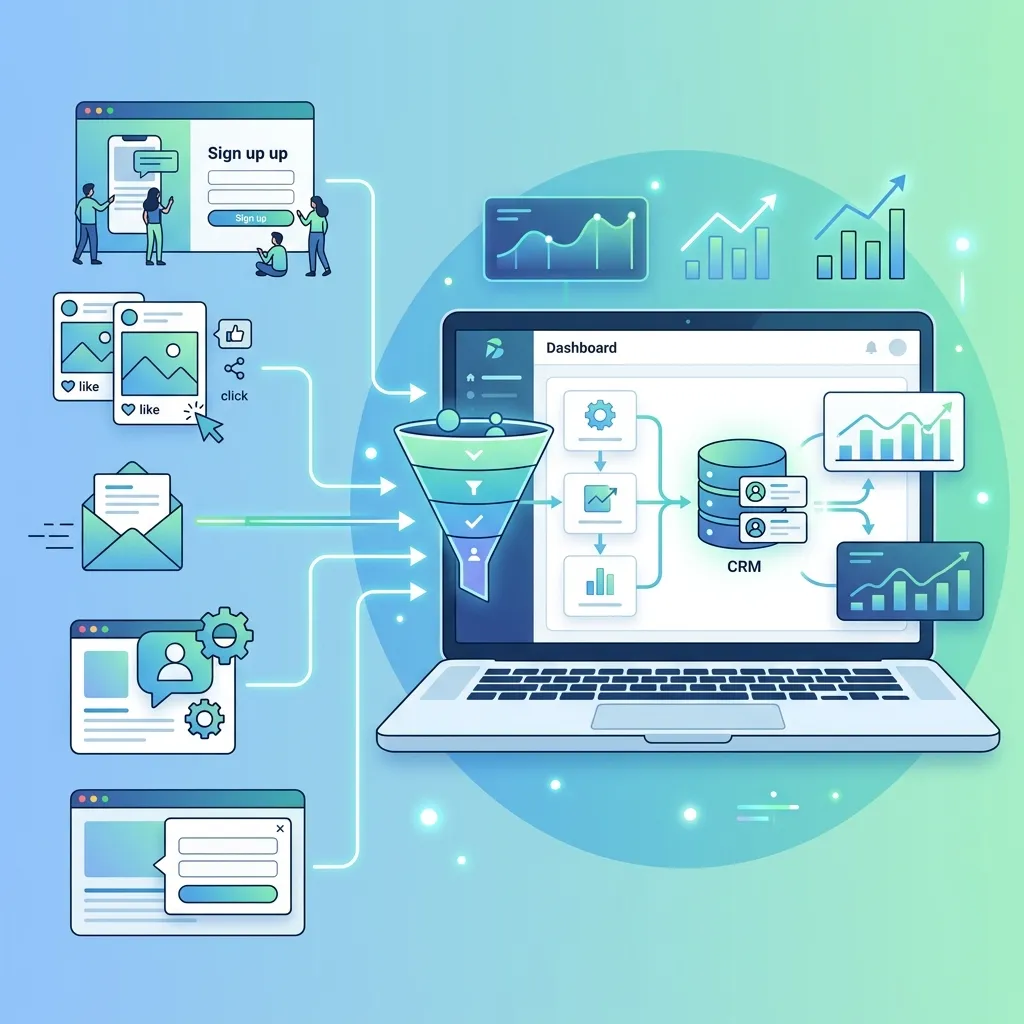
Beyond core strategies, several techniques sharpen performance and squeeze more leads from existing traffic.
- Social proof: Testimonials, reviews, client logos, and case studies reassure hesitant visitors and reduce the risk they feel in handing over their details.
- Gated content: Place high-value resources behind a form so access requires contact information.
- Webinars and events: Live sessions attract engaged prospects and collect registrations that double as qualified leads.
- Referral incentives: Reward existing customers for introducing new prospects through the site.
- Personalized offers: Show different content or offers based on a visitor’s location, behavior, or referral source.
These digital lead generation tactics work best when combined with clear tracking, so it’s easy to see which one delivers the strongest return.
How to Design Lead Capture Forms That Convert
Lead capture forms sit at the heart of website conversion. Simpler forms generally perform better, especially when combined with insights from lead generation metrics and KPIs. Get them right and conversions climb; get them wrong and visitors abandon them in seconds.
Keep Forms Short
Every extra field reduces completion rates. Ask only for what’s truly needed at this stage. A name and email may be enough for a newsletter, while a demo request might justify a few more fields. When in doubt, cut.
Write Clear, Benefit-Driven Labels
The form’s heading and button text should reinforce what the visitor gets. “Get my free guide” outperforms a plain “Submit” because it restates the reward at the exact moment of decision.
Reduce Friction With Smart Design
Multi-step forms can feel lighter than one long form, even when they ask for the same information. Auto-fill, inline validation, and mobile-friendly layouts all reduce the small frustrations that cause drop-off.
Place Forms Where Intent Is High
A form buried in the footer rarely performs. Position forms where interest peaks—at the end of a relevant blog post, on a dedicated landing page, or within a pricing page where buying intent runs high.
Landing Page Lead Generation: Building Pages That Convert
A landing page is a standalone page built for a single goal: capturing a lead. Because it removes the distractions of a typical web page, it’s one of the most powerful tools for website visitor conversion.
A high-converting landing page usually includes these elements:
- A focused headline that states the offer and its main benefit clearly.
- Supporting copy that explains the value and addresses common objections.
- A single, prominent call-to-action rather than competing links.
- Trust signals such as testimonials, ratings, or security badges.
- A clean lead capture form above the fold or repeated at logical points.
- Minimal navigation so visitors stay focused on the offer.
The golden rule: one page, one goal. Every element should push the visitor toward that single action. Sending paid traffic to a dedicated landing page rather than a homepage often produces dramatically better results because the message and the offer stay tightly aligned.
Mapping the Lead Generation Funnel
A lead generation funnel describes the journey a visitor takes from first arriving to becoming a qualified lead. Understanding each stage helps identify where prospects slip away.
Top of Funnel: Awareness
At this stage, visitors are discovering the brand—often through blog content, search, or social media. The goal here isn’t a hard sell. It’s to provide value and offer a low-commitment way to stay connected, such as a newsletter or free resource.
Middle of Funnel: Consideration
Now the visitor is weighing options. Case studies, comparison guides, webinars, and detailed resources help them evaluate the offer. Lead magnets at this stage tend to capture more serious prospects.
Bottom of Funnel: Decision
Here the visitor is close to buying. Demo requests, free trials, consultations, and pricing pages convert these high-intent prospects into sales-ready leads. Fast follow-up matters most at this stage.
Mapping content and offers to each stage ensures no prospect falls through the cracks—and that the right message reaches them at the right moment.
Website Conversion Optimization: Lifting Your Lead Conversion Rate
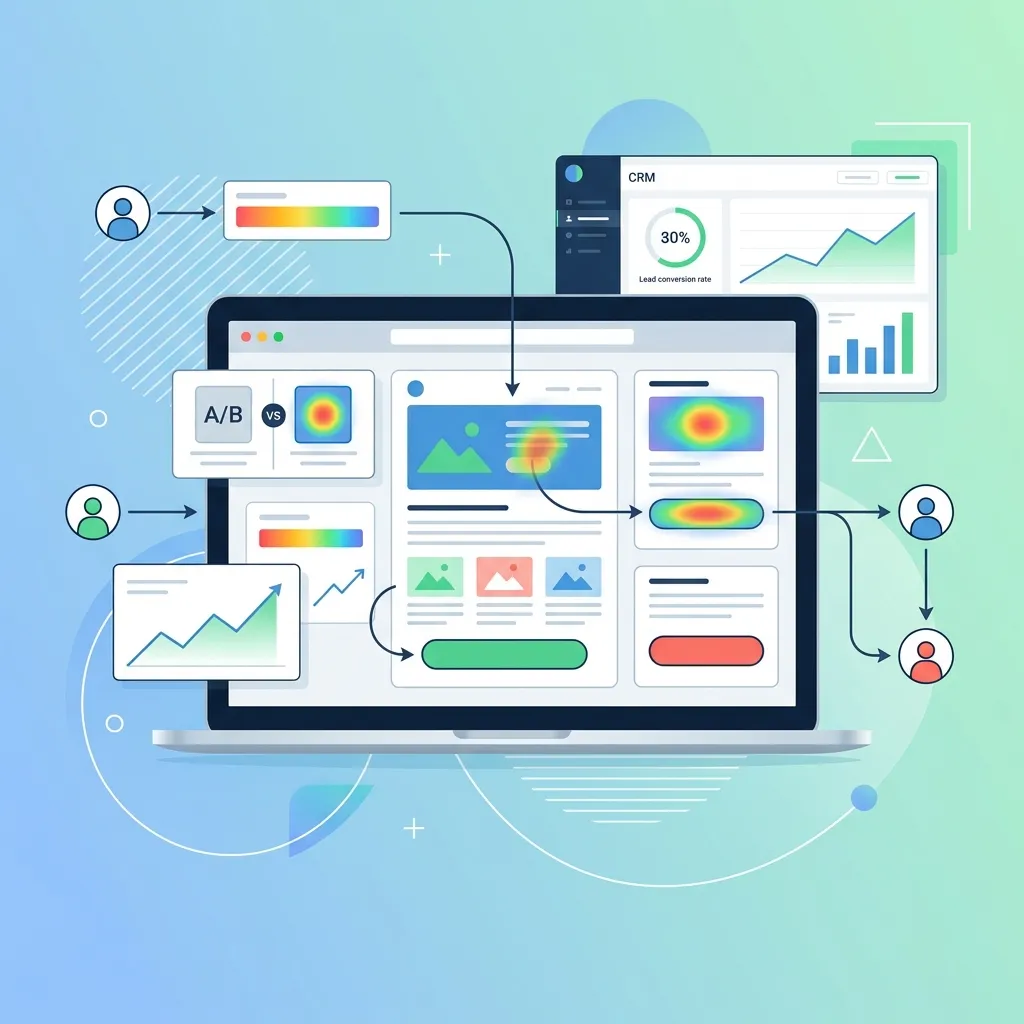
Generating traffic is only half the equation. Website conversion optimization focuses on turning more of that existing traffic into leads, which often delivers a better return than simply chasing more visitors.
Test Everything With A/B Testing
Small changes can produce surprising results. Test headlines, button colors, form lengths, and offer wording one variable at a time. Over months, these incremental gains compound into a meaningfully higher website lead conversion rate.
Improve Page Speed
Slow pages kill conversions. Research from Google has consistently shown that as page load time rises, the probability of a visitor bouncing increases sharply. Compressing images, reducing scripts, and using reliable hosting all help keep visitors engaged long enough to convert.
Clarify Your Calls-to-Action
A confused visitor rarely converts. Each page should make the next step obvious. Use contrasting colors, action-oriented language, and enough surrounding white space to make the call-to-action impossible to miss.
Use Heatmaps and Analytics
Heatmaps reveal where visitors click, scroll, and hesitate. Combined with analytics, they show exactly which parts of a page help or hinder conversion, turning optimization into a data-led process rather than guesswork.
Build Trust Throughout the Page
Trust drives conversion. Clear privacy statements near forms, recognizable security badges, real testimonials, and transparent contact details all reassure visitors that sharing their details is safe.
Turning Strategy Into Steady Results
A website that consistently produces leads isn’t the product of one clever trick. It’s the result of layered strategies working together—compelling offers, frictionless forms, focused landing pages, a clear funnel, and ongoing optimization that improves results month after month.
Start small. Pick one high-traffic page, add a relevant lead magnet, and tighten the form. Measure the change, then move to the next opportunity. Each improvement builds on the last, and over time these gains stack into a reliable engine for online lead generation.
The sites that win aren’t always the ones with the most traffic. They’re the ones that treat every visit as a chance to start a relationship—and design every page to make that easy.
Frequently Asked Questions
How long does it take to see results from website lead generation?
It depends on the approach. Paid traffic sent to a strong landing page can generate leads within days. Content-driven and SEO-based methods usually take three to six months to gain traction but tend to deliver more sustainable, lower-cost leads over time.
What is a good website lead conversion rate?
Conversion rates vary widely by industry and traffic source, but a commonly cited benchmark falls between 2% and 5% for many websites. Dedicated landing pages often convert higher. Rather than fixating on an industry average, focus on steadily improving the rate against past performance.
How many fields should a lead capture form have?
Fewer is usually better. For top-of-funnel offers, a single email field or a name-and-email combination often works best. For high-intent requests like demos, a few extra fields are acceptable because the visitor is more motivated to complete them.
Do pop-ups actually help generate leads?
Yes, when used carefully. Exit-intent and well-timed pop-ups can recover conversions that would otherwise be lost. The risk is overuse—too many pop-ups frustrate visitors and can harm the experience, so timing and frequency should be tested.
What’s the difference between a landing page and a homepage for lead generation?
A homepage serves many purposes and links to many destinations, which divides a visitor’s attention. A landing page focuses on a single offer with one clear call-to-action, which typically makes it far more effective for capturing leads from targeted traffic.
What is lead generation from website?
Lead generation from website is the process of converting website visitors into potential customers by collecting their contact information through forms, landing pages, lead magnets, and calls-to-action.
Why is lead generation from website important for businesses?
Lead generation from website helps businesses build a steady pipeline of prospects, reduce customer acquisition costs, and create opportunities for long-term sales growth.
What are the best strategies for lead generation from website?
Effective lead generation from website strategies include creating landing pages, offering lead magnets, optimizing forms, using live chat, and publishing valuable content that attracts qualified visitors.
How can landing pages improve lead generation from website?
Landing pages improve lead generation from website by focusing on a single offer, reducing distractions, and encouraging visitors to complete a specific action, such as filling out a form or requesting a demo.
What role do lead capture forms play in lead generation from website?
Lead capture forms are essential for lead generation from website because they collect visitor information and turn anonymous traffic into identifiable leads that can be nurtured through marketing campaigns.
How can content marketing support lead generation from website?
Content marketing supports lead generation from website by attracting organic traffic, answering customer questions, building trust, and encouraging visitors to exchange their contact details for valuable resources.
What is a good conversion rate for lead generation from website?
A typical conversion rate for lead generation from website ranges from 2% to 5%, although optimized landing pages and targeted campaigns can achieve significantly higher results.
Can pop-ups help with lead generation from website?
Yes, strategically placed pop-ups can boost lead generation from website by presenting relevant offers, capturing email addresses, and recovering visitors who are about to leave the site.
How do I measure the success of lead generation from website?
You can measure lead generation from website by tracking metrics such as conversion rate, form submissions, cost per lead, landing page performance, and the number of qualified leads generated.
How can website conversion optimization improve lead generation from website?
Website conversion optimization improves lead generation from website by enhancing page design, simplifying forms, improving calls-to-action, increasing page speed, and reducing friction throughout the conversion process.



Leave a Reply