

B2B qualified sales leads are high-intent prospects that match your ideal customer profile and are more likely to convert. Focusing on Qualified Sales Leads instead of volume helps businesses improve conversions, shorten sales cycles, and build a more predictable revenue pipeline through better targeting, scoring, and nurturing.
B2B qualified sales leads are prospects who match your ideal customer profile and have demonstrated genuine buying intent. Generating them consistently requires a combination of inbound marketing, smart prospecting, lead scoring, and structured nurturing—each stage of the process designed to move the right buyers closer to a decision.
Chasing unqualified leads is one of the most expensive habits a B2B sales team can have. Hours spent on prospects who were never going to buy, pipelines bloated with contacts that go cold, and conversion rates that don’t reflect the effort invested—it’s a familiar story.
The solution isn’t more leads. It’s better ones.
B2B qualified sales leads—prospects who fit your target profile and show genuine purchase intent—are the difference between a sales team that’s busy and one that’s productive. When your pipeline is built on quality rather than volume, your close rates improve, your sales cycles shorten, and your revenue becomes more predictable.
This guide breaks down exactly how to generate, qualify, and convert high-quality B2B leads at every stage of the funnel. From inbound B2B lead generation to B2B appointment setting services, you’ll find a clear, actionable framework for building a pipeline worth working.
What Makes a B2B Lead “Qualified”?
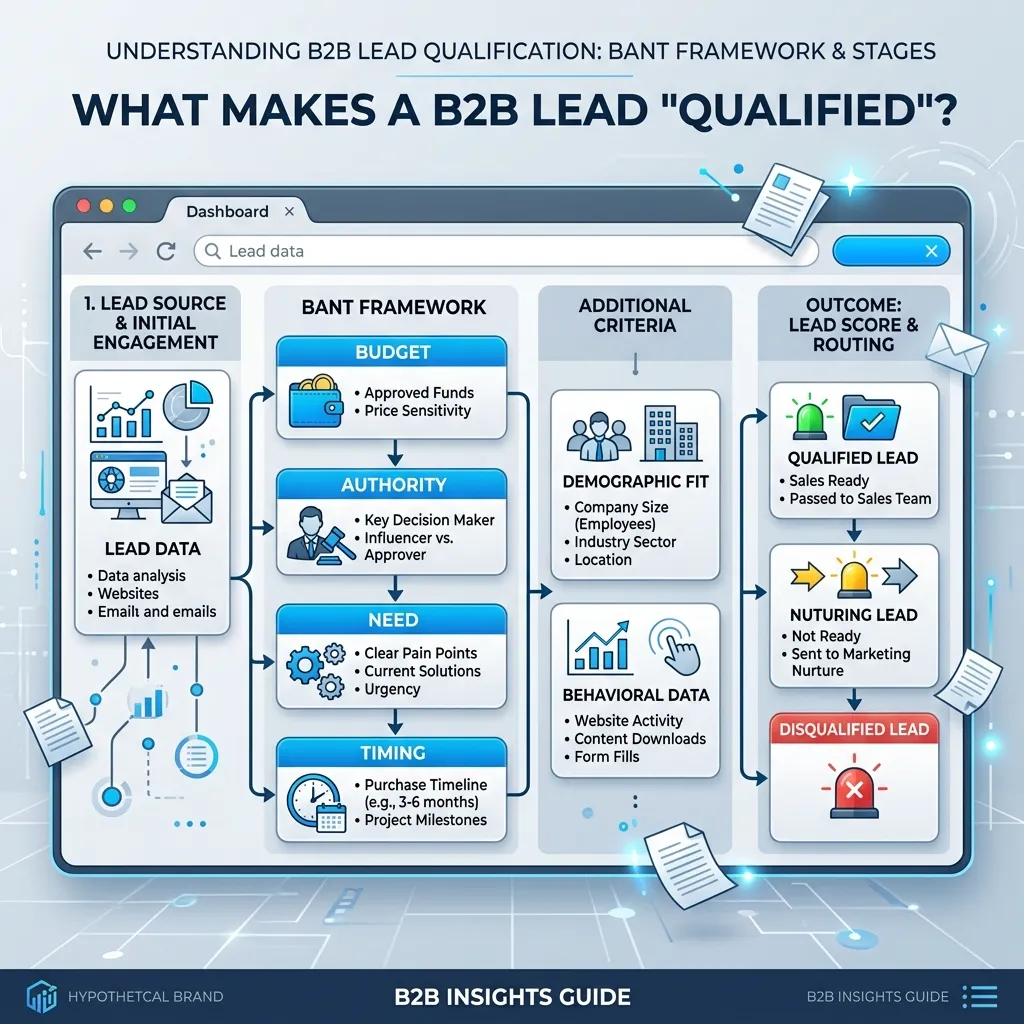
Not every contact is a lead. Not every lead is qualified. Understanding the distinction is foundational to any effective B2B lead generation strategy.
A Marketing Qualified Lead (MQL) is a prospect who has engaged with your content or campaigns—downloaded a whitepaper, attended a webinar, or filled out a form. They’ve shown interest, but haven’t yet signaled buying intent.
A Sales Qualified Lead (SQL) has crossed a higher threshold. An SQL has been evaluated against specific criteria—typically budget, authority, need, and timeline (BANT)—and is considered ready for direct sales engagement.
The gap between MQL and SQL is where most B2B pipelines leak. Closing that gap requires a shared definition between marketing and sales, consistent lead scoring, and a structured handoff process.
What Are the Most Effective B2B Lead Generation Strategies?
There is no single playbook for success, but combining inbound and outbound methods is key. One of the strongest approaches involves mastering how to generate B2B leads with proven methods that align marketing and sales teams.
How Does Inbound B2B Lead Generation Work?
Inbound lead generation attracts prospects by creating content and experiences that answer their questions and solve their problems. When done well, inbound marketing brings qualified buyers directly to you—rather than requiring your team to hunt them down.
Core inbound tactics include:
- SEO-optimized content: Blog posts, guides, and landing pages targeting the keywords your buyers search for. Long-tail keywords with clear commercial intent (like “best CRM for mid-market B2B companies”) tend to convert better than broad terms.
- Gated resources: High-value assets like industry reports, templates, or benchmark studies that prospects exchange their contact details to access.
- Webinars and virtual events: Live formats that generate leads while simultaneously demonstrating expertise.
- Case studies: Detailed proof of results that help prospects in the evaluation stage justify a buying decision.
Inbound leads typically take longer to generate than outbound, but they tend to be more sales-ready when they arrive—because the prospect initiated the engagement.
What B2B Prospecting Techniques Drive the Best Results?
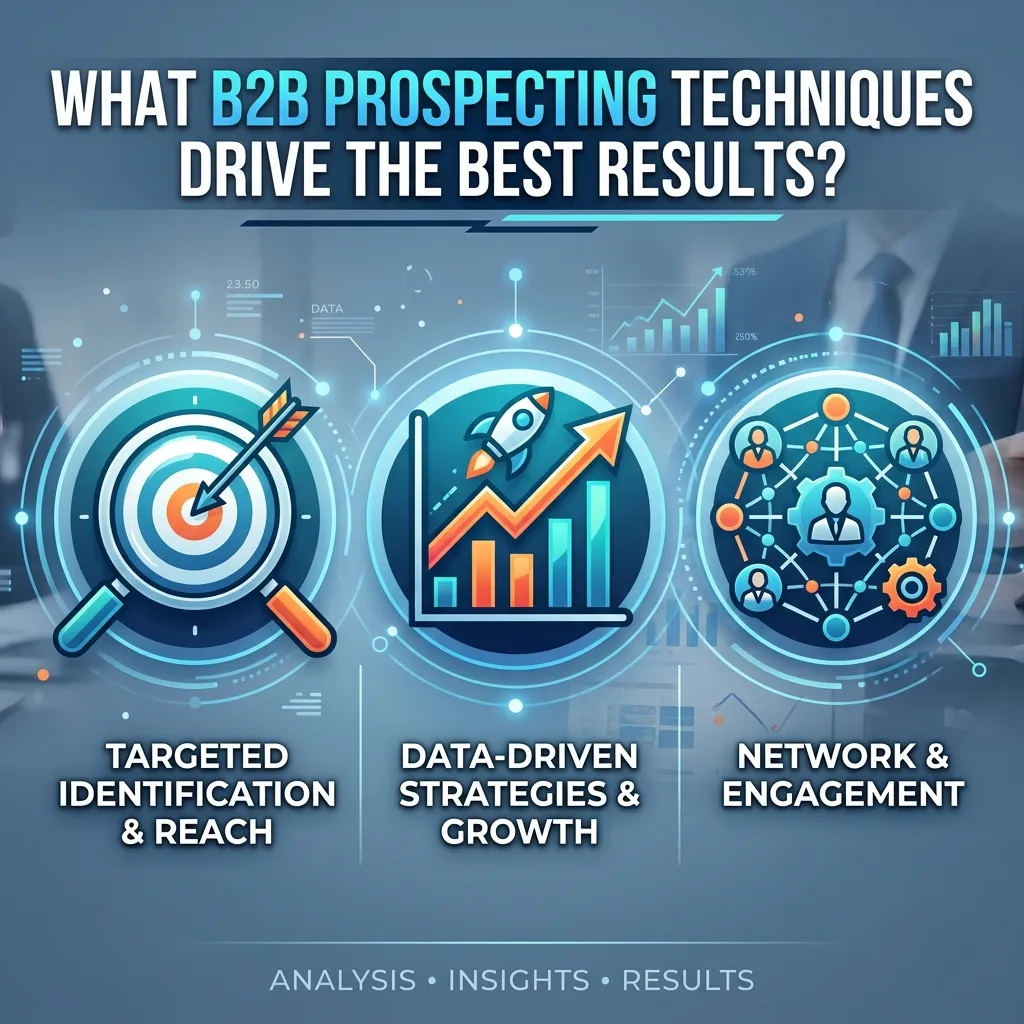
Outbound prospecting tools like LinkedIn Sales Navigator and intent data platforms work best when paired with structured outreach. Platforms such as LinkedIn lead generation strategies are especially effective for reaching decision-makers directly..
Effective B2B prospecting techniques include:
- Intent data targeting: Tools like Bombora and G2 Buyer Intent identify companies actively researching topics related to your solution—allowing you to reach out at exactly the right moment.
- LinkedIn Sales Navigator: Enables highly specific filtering by industry, company size, job title, and seniority, making it easier to reach decision-makers directly.
- Cold email sequences: When built around a specific pain point and personalized to the recipient’s context, cold email can generate strong response rates. Generic outreach rarely does.
- Account-Based Marketing (ABM): A strategy that concentrates resources on a defined list of high-value target accounts, aligning sales and marketing around the same prospects.
The most effective B2B sales teams combine inbound and outbound. Inbound builds awareness and nurtures interest; outbound accelerates pipeline by reaching prospects before they’ve raised their hand.
How Do You Build a Verified Business Leads List?
A verified leads list ensures your outreach actually reaches real decision-makers. Many businesses use best lead generation platforms and data tools to build accurate and up-to-date contact databases. Using unverified data is one of the most common—and costly—mistakes in B2B lead generation. Inaccurate contact details inflate bounce rates, damage sender reputation, and result in outreach that never reaches its intended audience.
There are two primary approaches to building a verified list:
- Third-party data providers: Platforms like Apollo.io, ZoomInfo, and Cognism offer access to large databases of business contacts with filters for firmographics, technographics, and intent signals. Most include verification tools or regularly refreshed data to reduce decay.
- First-party data collection: Building your own list through inbound content, event registrations, and direct outreach. First-party data is typically more accurate and comes with built-in consent, making it preferable for compliance-sensitive markets.
Whichever approach you use, schedule regular data hygiene checks. Contact data decays at a rate of approximately 22% per year, meaning a list that was accurate 12 months ago may already be significantly outdated.
What Is Lead Nurturing for B2B Sales, and Why Does It Matter?
Most B2B buyers aren’t ready to purchase the first time they encounter your brand. According to Demand Gen Report, 47% of B2B buyers consume three to five pieces of content before engaging with a sales representative. Lead nurturing is the process of building a relationship with those buyers over time—until they’re ready to have a commercial conversation.
Effective lead nurturing for B2B sales involves:
- Segmented email workflows: Automated sequences that deliver relevant content based on where a prospect is in the buying journey and what topics they’ve engaged with.
- Retargeting campaigns: Paid ads that keep your brand visible to prospects who have visited your website or engaged with your content but haven’t converted.
- Personalized outreach from sales: At defined trigger points—like a prospect revisiting your pricing page—automated alerts can prompt a timely, contextual follow-up from a sales rep.
- Content mapping: Aligning specific content formats (blogs, comparison guides, ROI calculators) to each stage of the funnel so prospects always have the right resource at the right time.
Nurturing doesn’t replace sales—it makes sales conversations more productive by warming prospects before the first direct engagement.
How Can You Optimize Your B2B Sales Funnel to Improve Conversion?
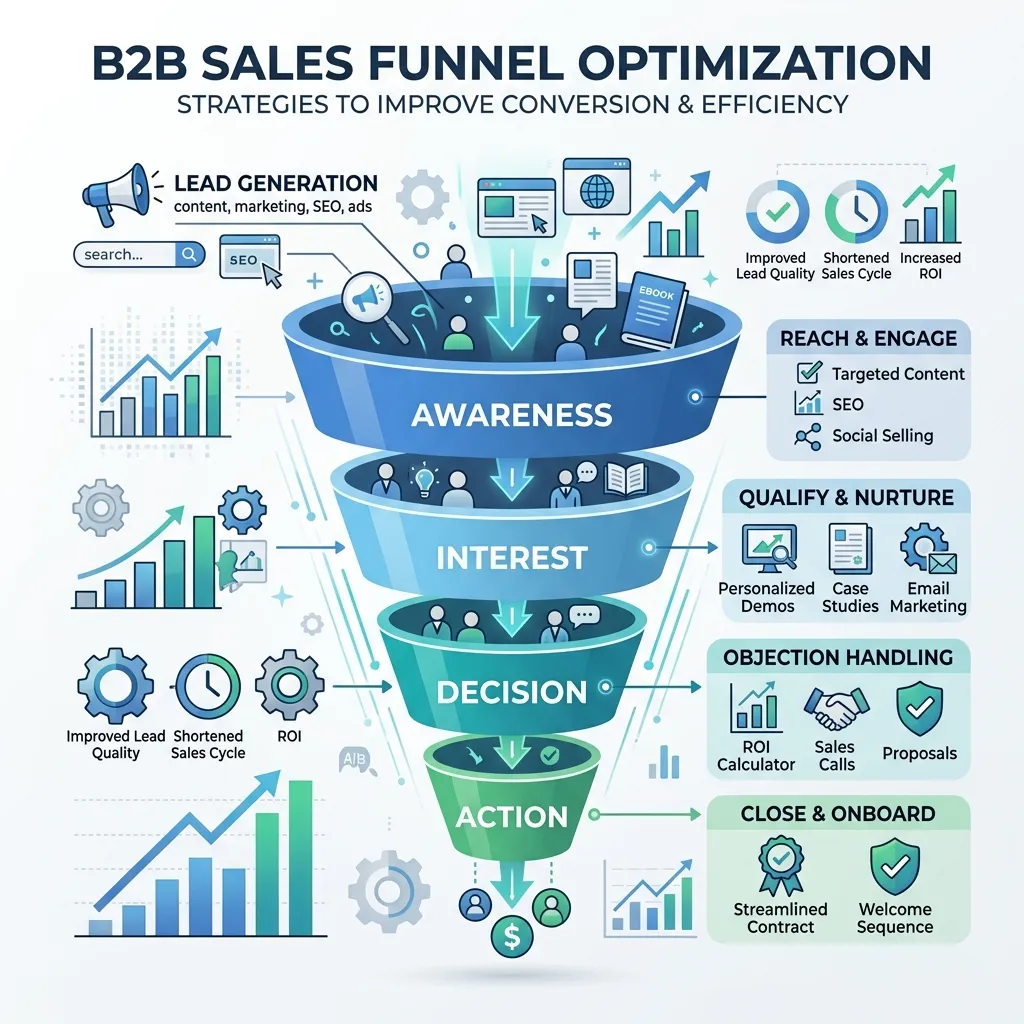
B2B sales funnel optimization is the process of identifying where prospects drop off, understanding why, and making targeted improvements to increase conversion at each stage.
Start with data. Map your funnel from first touch to closed-won and calculate conversion rates at each transition point: visitor to lead, lead to MQL, MQL to SQL, SQL to opportunity, opportunity to close. Benchmarking these rates reveals where the biggest leakage occurs.
Common areas for optimization include:
- Top of funnel: Improving the relevance and targeting of content to attract more qualified visitors.
- Lead capture: Testing form length, placement, and offer value to increase conversion rates on landing pages.
- MQL-to-SQL handoff: Establishing a clear lead scoring model so that sales only receives leads that meet agreed-upon qualification criteria.
- Sales engagement: Reviewing outreach cadences, messaging, and follow-up timing to improve response rates from qualified prospects.
- Proposal and close: Identifying objections that consistently stall late-stage deals and building resources or talk tracks to address them.
Small improvements compound. A 10% lift at each of five funnel stages doesn’t result in 50% more revenue—it can result in multiples of it.
When Should You Use B2B Appointment Setting Services?
B2B appointment setting services are third-party providers that prospect, qualify, and book meetings on behalf of your sales team. They’re particularly useful for companies that want to scale outbound activity quickly without building an internal SDR (Sales Development Representative) function.
These services work best when:
- Your average deal size justifies the cost of outsourced prospecting
- Your internal team lacks the capacity or expertise for high-volume outbound
- You’re entering a new market and need to build pipeline fast
- You want to test outbound messaging before committing to a full internal team
The quality of B2B appointment setting services varies significantly. When evaluating providers, prioritize those who offer transparent reporting, dedicated account management, and a qualification process aligned with your SQL definition. A booked meeting with an unqualified prospect costs your sales team time—arguably the most valuable resource in any revenue organization.
What to Do Next With Your B2B Lead Generation Strategy
Generating B2B qualified sales leads at scale isn’t a one-time project—it’s an ongoing system. The organizations that consistently outperform their competitors share a common trait: they treat lead generation as a discipline, not a campaign.
Start by auditing where you stand today. How well-defined is your ideal customer profile? What’s your current MQL-to-SQL conversion rate? Is your verified business leads list clean and current? The answers to these questions will tell you exactly where to focus first.
Build incrementally. Improve your inbound content strategy, tighten your lead scoring model, test new B2B prospecting techniques, and layer in nurturing workflows that keep warm prospects engaged. Measure everything, iterate consistently, and resist the temptation to chase volume at the expense of quality.
A smaller pipeline of well-qualified leads will almost always outperform a large one built on weak targeting—and it will make your sales team considerably more effective in the process.
Frequently Asked Questions
What is a B2B qualified sales lead?
A B2B qualified sales lead is a business prospect who meets your ideal customer profile and has demonstrated sufficient buying intent to warrant direct sales engagement. Qualification is typically assessed using criteria like budget, authority, need, and timeline (BANT).
What is the difference between an MQL and an SQL in B2B sales?
An MQL (Marketing Qualified Lead) has engaged with marketing content and shown interest, but hasn’t yet indicated purchase readiness. An SQL (Sales Qualified Lead) has been assessed against defined criteria and is considered ready for a sales conversation. SQLs are further along the buying journey than MQLs.
How long does B2B lead generation typically take to produce results?
Inbound strategies like SEO and content marketing typically take three to six months to generate consistent results. Outbound tactics like cold email and LinkedIn prospecting can produce pipeline within days or weeks, depending on targeting quality and messaging effectiveness.
How do I know if my B2B leads list is high quality?
A high-quality verified business leads list has accurate contact details, matches your target firmographic and demographic criteria, and has been recently validated. Data providers like Apollo.io, ZoomInfo, and Cognism offer tools to verify and enrich contact data on an ongoing basis.
What is the best way to nurture B2B leads that aren’t ready to buy?
Segmented email workflows, retargeting campaigns, and content mapped to each stage of the buyer’s journey are the most effective lead nurturing tactics for B2B sales. The goal is to stay relevant and visible until a prospect’s timing and priorities align with your solution.
Are B2B appointment setting services worth the investment?
B2B appointment setting services can deliver strong ROI for companies with high average deal values, limited internal SDR capacity, or a need to scale outbound quickly. Quality varies across providers, so prioritize transparency, clear qualification criteria, and detailed reporting when selecting a partner.
What are B2B qualified sales leads?
B2B qualified sales leads are prospects that fit your ideal customer profile and have shown clear interest or intent to purchase your product or service.
Why are Qualified Sales Leads more important than regular leads?
Because they have a higher chance of converting, helping sales teams save time and focus on prospects that are more likely to generate revenue.
What is the difference between MQL and SQL?
An MQL (Marketing Qualified Lead) shows interest in your content, while an SQL (Sales Qualified Lead) is vetted and ready for direct sales engagement.
How do you generate Qualified Sales Leads in B2B?
Through inbound marketing, SEO content, outbound prospecting, LinkedIn outreach, lead scoring, and targeted campaigns.
What is lead scoring in B2B sales?
Lead scoring is a system that ranks prospects based on behavior, engagement, and fit to determine if they are Qualified Sales Leads.
How does inbound marketing help generate Qualified Sales Leads?
It attracts prospects through content, SEO, and resources, bringing in higher-intent leads who are actively searching for solutions.
What tools are used to find B2B qualified leads?
Common tools include LinkedIn Sales Navigator, Apollo.io, ZoomInfo, Google Analytics, and intent data platforms.
How long does it take to generate Qualified Sales Leads?
Inbound strategies may take 3–6 months, while outbound methods can generate Qualified Sales Leads within weeks.
Why do businesses struggle with unqualified leads?
Because of poor targeting, lack of lead scoring, and focusing on quantity over quality in lead generation.
How can small businesses improve Qualified Sales Leads?
By targeting niche audiences, using personalized outreach, improving content quality, and refining their lead qualification process.



Leave a Reply