

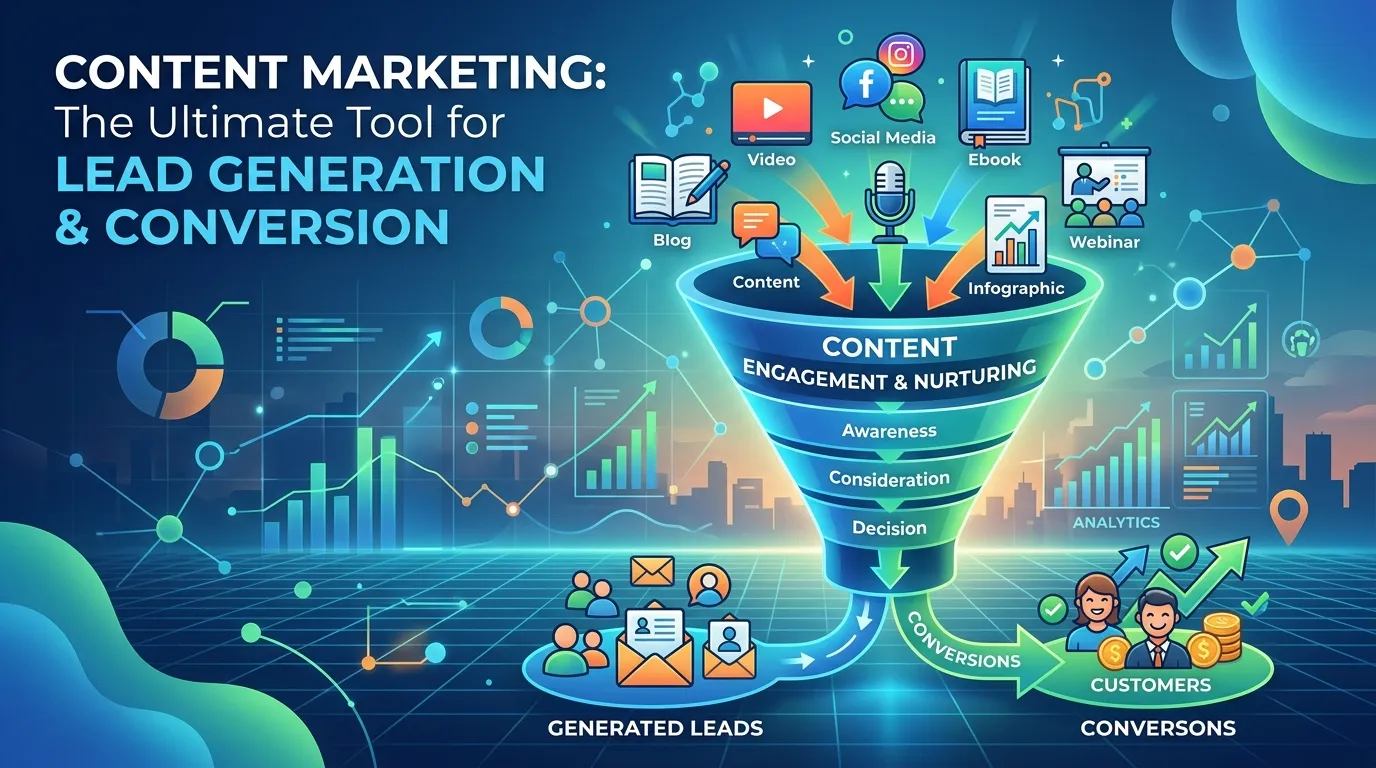
Content marketing generates leads by attracting potential customers through valuable, relevant content—then guiding them through a structured funnel toward conversion. The most effective strategies combine SEO-optimized blog posts, gated assets, targeted email sequences, and social proof to turn organic traffic into qualified pipeline.
Most companies treat content marketing as a brand-awareness play. Publish a few blog posts, grow some social media followers, and call it a day. The problem? Brand awareness doesn’t pay the bills. Leads do.
The good news: content marketing is one of the most powerful lead generation tools available to B2B and B2C businesses alike—when it’s built with conversion in mind. According to the Content Marketing Institute, content marketing generates three times as many leads as traditional outbound marketing, at 62% lower cost. Those numbers aren’t an accident. They reflect a deliberate approach to creating content that doesn’t just attract readers, but turns them into customers.
This guide breaks down exactly how to build a content marketing strategy that drives inbound lead generation, from the foundational tactics to the funnel-level optimizations that separate average content programs from genuinely high-performing ones.
What Is Content Marketing Lead Generation?
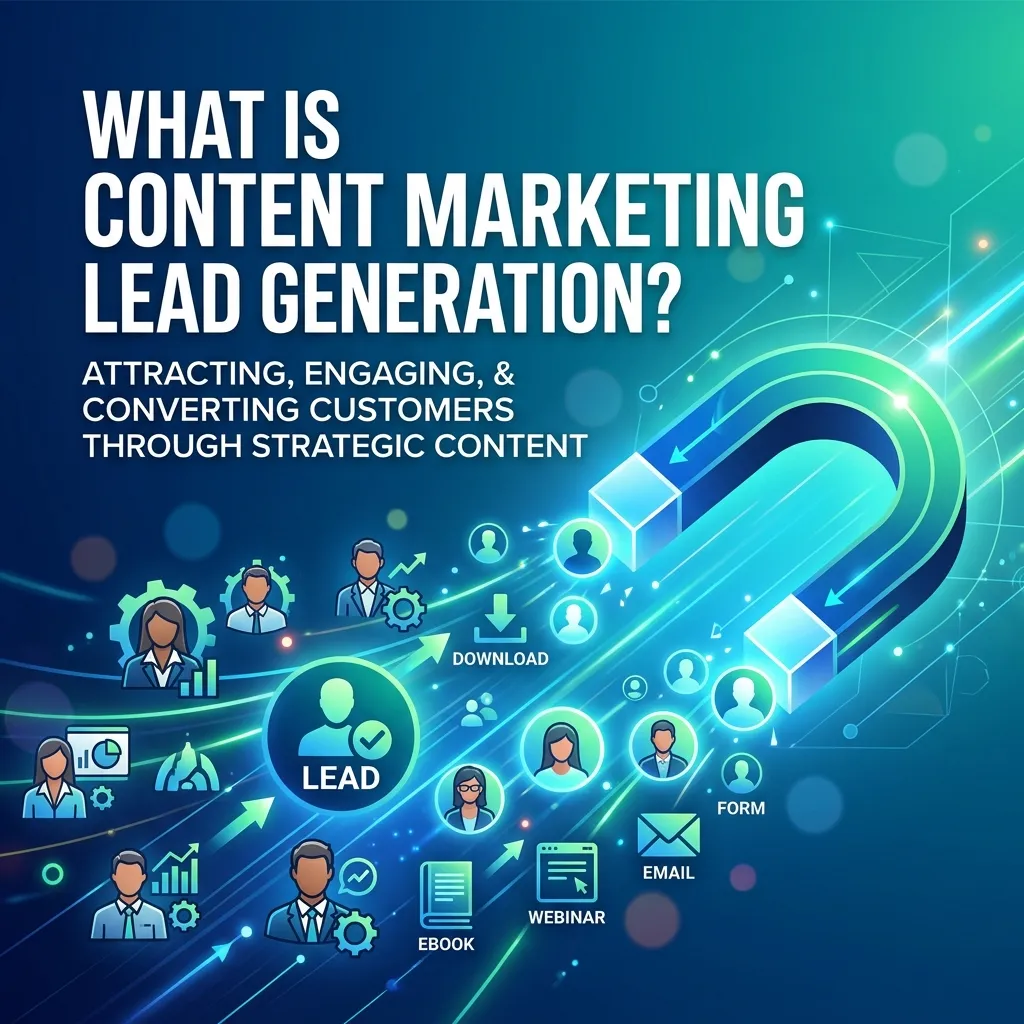
Content marketing lead generation is the practice of using valuable, targeted content to attract potential customers and convert them into leads. Rather than interrupting your audience with ads, content marketing earns their attention—through blog posts, whitepapers, videos, webinars, and more—and then captures that attention via lead magnets, email sign-ups, gated content, and other conversion mechanisms.
The core distinction from traditional lead generation is intent. Content-driven leads typically arrive already educated about their problem. They’ve read your articles, consumed your case studies, and begun to associate your brand with expertise. That prior engagement shortens sales cycles and improves close rates.
It is closely tied to broader systems like what is lead generation for business growth, which explains how different channels combine to build predictable pipelines.
How Does Content Marketing Fit Into the Lead Generation Funnel?
A content marketing funnel maps content types to stages of the buyer’s journey: awareness, consideration, and decision. Each stage requires a different type of content and a different conversion mechanism.
Top-of-Funnel: Attracting the Right Audience
Top-of-funnel (TOFU) content focuses on attracting prospects who are problem-aware but not yet solution-aware. This is where SEO content for lead generation does most of its work.
Blog posts and SEO articles are the most scalable TOFU assets. By targeting keywords your potential customers are searching for, you drive consistent organic traffic without ongoing ad spend. A SaaS company selling project management software, for example, might publish articles like “How to manage remote teams effectively” or “Signs your team needs a project management tool”—capturing readers who haven’t yet started evaluating software vendors.
Social media content and short-form video also play a TOFU role, particularly for B2C brands and companies targeting younger professional audiences on platforms like LinkedIn or Instagram.
The conversion goal at this stage is simple: get the visitor to take a next step. That might mean subscribing to a newsletter, downloading a free resource, or clicking through to a product page.
Middle-of-Funnel: Building Trust and Capturing Leads
Middle-of-funnel (MOFU) content serves prospects who are actively researching solutions. This is where gated content becomes a powerful tool for lead capture.
Gated assets—such as eBooks, industry reports, webinars, and templates—offer enough value that prospects willingly exchange their contact information to access them. According to Demand Gen Report, 76% of B2B buyers are willing to share personal information in exchange for a whitepaper or original research. The key is that the gated asset must feel genuinely valuable, not like a marketing brochure in disguise.
Email nurture sequences then take over once a lead has been captured. A well-structured sequence delivers relevant content over time, building trust and moving the prospect closer to a purchase decision. The sequence might include case studies, product comparison guides, or customer testimonials—each piece designed to address a specific objection or concern.
Webinars are particularly effective for B2B content marketing strategies because they combine education with direct interaction. Attendees self-select as highly engaged, making them some of the most qualified leads a content program can produce.
Bottom-of-Funnel: Converting Leads into Customers
Bottom-of-funnel (BOFU) content speaks directly to prospects who are close to making a decision. At this stage, the goal is to remove friction and build confidence.
Case studies are the single most persuasive BOFU content format in B2B. They demonstrate real-world results in the prospect’s industry, making the value proposition concrete rather than abstract. A case study showing a 40% reduction in customer acquisition cost is far more compelling than a landing page that promises “better results.”
Product comparison pages and FAQ content also perform well here, capturing high-intent search queries like “[Your brand] vs. [Competitor]” or “Is [product] worth it?” These pages intercept prospects in their final evaluation stage and give your brand a chance to frame the decision on its own terms.
Free trials and demos function as both BOFU content and conversion mechanisms. Offering a free trial removes the financial risk from the decision, while a structured demo ensures the prospect understands the product’s value before committing.
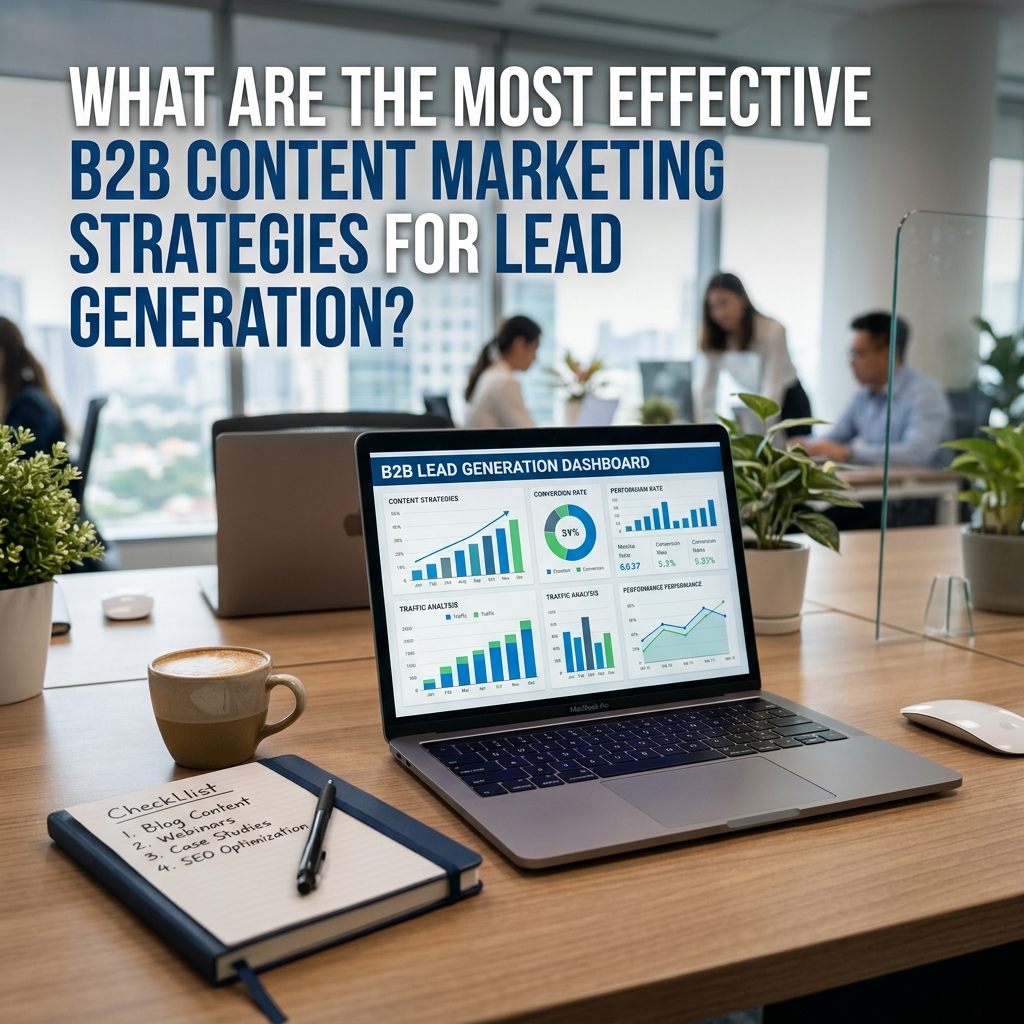
What Are the Most Effective B2B Content Marketing Strategies for Lead Generation?
Build a Content Strategy Around Buyer Intent, Not Just Keywords
Keyword research is essential, but keyword intent is what separates content that ranks from content that converts. A keyword like “project management software” has commercial intent—the searcher is likely evaluating options. A keyword like “what is project management” is informational—useful for brand awareness, but unlikely to generate immediate leads.
Prioritize keywords that signal buying intent at each funnel stage. Use tools like Ahrefs, Semrush, or Google Search Console to identify the queries your audience uses when they’re ready to act, then build content specifically designed to meet them there.
Use Lead Magnets Strategically
Not all lead magnets are created equal. The most effective ones solve a specific, immediate problem for a defined audience. A generic “Ultimate Guide to Marketing” attracts a broad but shallow audience. A “B2B Email Outreach Template Pack for SaaS Companies” attracts a narrow but highly qualified one.
Match the lead magnet to the traffic source. A blog post about email marketing should offer a lead magnet that extends the value of that post—not something unrelated that breaks the reader’s momentum.
Optimize Existing Content for Conversion
Many companies focus all their energy on creating new content while ignoring the conversion potential of what they’ve already published. A blog post that receives 5,000 monthly visitors but converts at 0.5% is leaving dozens of leads on the table every month.
Audit your top-performing posts and add clear calls-to-action, relevant internal links, and contextual lead magnet offers. Even a well-placed inline CTA—positioned naturally within the body of the article, not just at the end—can double or triple conversion rates on high-traffic pages.
Repurpose Content Across Channels
Creating content from scratch for every channel is neither efficient nor necessary. A single well-researched blog post can become a LinkedIn carousel, an email newsletter, a short-form video script, a webinar outline, and a podcast episode. Repurposing extends the reach of your best ideas without proportionally increasing production costs.
For lead generation specifically, repurposing also means different audiences encounter your content in different contexts—some through search, some through social, some through email—which increases the likelihood of conversion across the funnel.
Publish Original Research and Data
Original research is among the most powerful content formats for B2B lead generation. Reports, surveys, and industry benchmarks attract inbound links, generate press coverage, and give sales teams a credible resource to share with prospects. They also tend to rank well for high-value search queries because they offer something competitors can’t replicate.
If commissioning original research feels out of reach, start smaller: compile publicly available data into a novel analysis, survey your existing customers, or partner with a complementary brand to share research costs.
How to Measure Content Marketing Lead Generation Performance
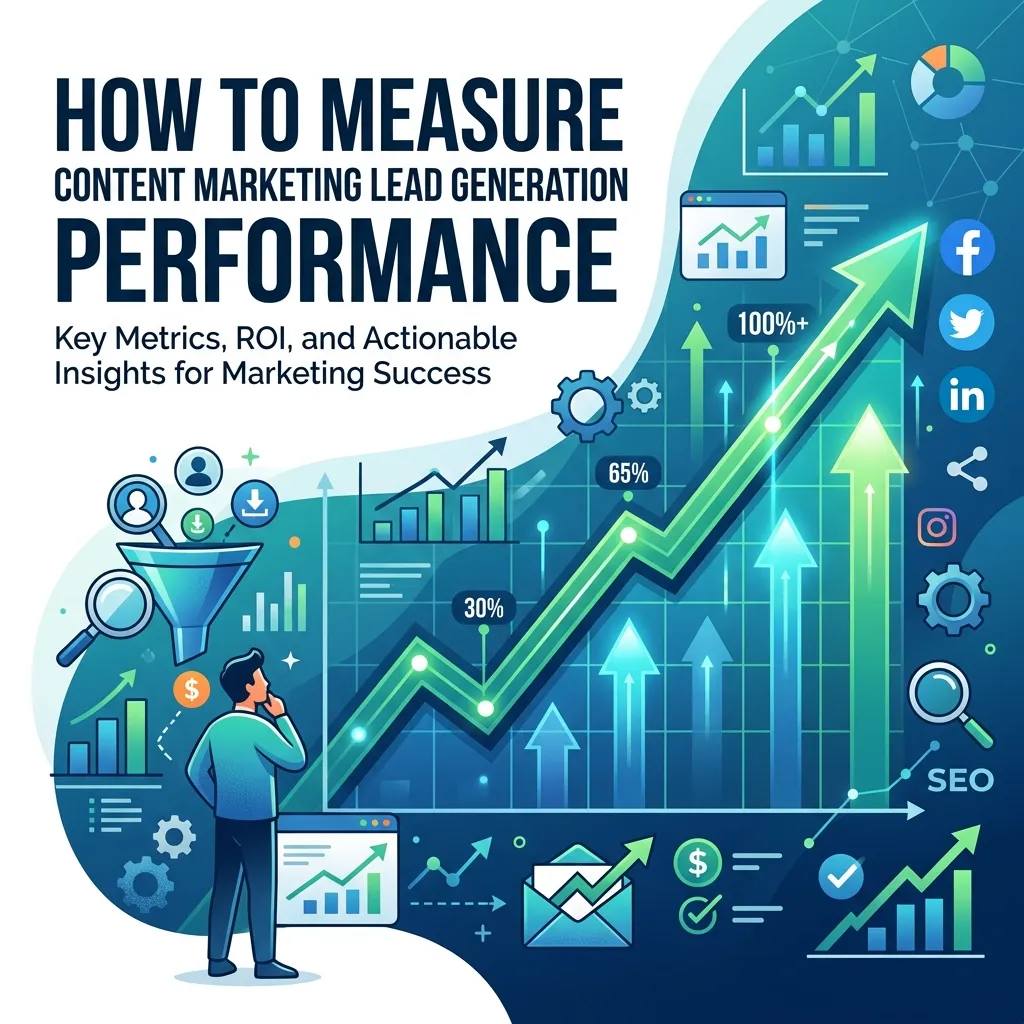
Generating leads through content is only valuable if you can measure what’s working. The metrics that matter most depend on your funnel stage, but the following provide a solid baseline:
- Organic traffic by page: Identifies which content is driving the most awareness
- Lead conversion rate by content asset: Shows which gated assets and CTAs are most effective
- Lead quality score: Measures how sales-ready content-generated leads actually are
- Content-attributed pipeline: Tracks how much revenue can be traced back to specific content touchpoints
- Time to conversion: Indicates how efficiently content moves leads through the funnel
Use a CRM like HubSpot or Salesforce to connect content touchpoints to revenue. Without this attribution, it’s nearly impossible to make informed decisions about where to invest your content budget.
Build a Content Engine That Compounds Over Time
Content marketing lead generation is not a campaign—it is a compounding asset. A well-optimized blog post published today can generate leads for months or years with minimal ongoing investment. Case studies published last quarter continue to close deals. Email sequences built last year still nurture new subscribers every day.
The companies that win with content are those that commit to a consistent, strategic approach: publishing content that serves real buyer needs, optimizing it for search and conversion, and measuring the results closely enough to improve over time.
Start by auditing what you already have. Identify your top-performing content, find the gaps in your funnel, and build from there. The best content strategy is rarely the most ambitious one—it is the one that gets executed.
If you want to scale faster, this guide on best lead generation platforms shows how to combine content with tools for maximum impact.
Frequently Asked Questions
How long does content marketing take to generate leads?
Content marketing typically begins generating measurable leads within three to six months of consistent publishing, though this varies depending on domain authority, content quality, and keyword competition. SEO-driven content compounds over time, meaning results often accelerate significantly after the first six months as more pages gain search traction.
What types of content generate the most leads for B2B companies?
For B2B companies, the highest-converting content formats are gated assets (eBooks, reports, templates), webinars, case studies, and SEO-optimized blog posts with embedded lead capture. The most effective combination varies by industry and audience, but gated assets paired with targeted blog traffic consistently rank among the top performers.
How do you convert blog readers into leads?
Converting blog readers into leads requires clear, relevant calls-to-action placed strategically within and below each post. The most effective CTAs offer a contextual next step—a related lead magnet, a free trial, or a newsletter sign-up—rather than a generic “contact us” prompt. Exit-intent popups and inline content upgrades also improve blog conversion rates meaningfully.
What is a content marketing funnel?
A content marketing funnel maps content types to stages of the buyer’s journey—awareness (TOFU), consideration (MOFU), and decision (BOFU). Each stage uses different content formats to attract, educate, and convert prospects. Blog posts and social content drive awareness; gated assets and webinars capture and nurture leads; case studies and demos close them.
Is content marketing effective for lead generation compared to paid advertising?
Content marketing typically delivers a lower cost-per-lead than paid advertising over the long term, because organic content continues to generate traffic and leads without ongoing spend. However, content marketing is slower to produce results. Many businesses use both in tandem—paid ads for immediate pipeline, content marketing for sustainable, compounding lead generation.
What is content marketing lead generation?
Content marketing lead generation is the process of using blogs, videos, and other content to attract potential customers and convert them into leads.
How does content marketing generate leads?
Content marketing generates leads by providing valuable information that attracts users and encourages them to take actions like signing up or downloading resources.
Why is content marketing important for lead generation?
It builds trust, improves brand visibility, and attracts high-intent users who are more likely to convert into customers.
What types of content generate the most leads?
Blog posts, ebooks, webinars, case studies, and gated content are among the most effective for lead generation.
How does SEO help in content marketing lead generation?
SEO helps content rank higher on search engines, bringing in consistent organic traffic that can be converted into leads.
What is a content marketing funnel?
It is a structured system that guides users from awareness to conversion using targeted content at each stage.
How do you convert blog readers into leads?
By using strong CTAs, lead magnets, email sign-ups, and relevant offers within blog content.
Is content marketing effective for B2B lead generation?
Yes, content marketing generates leads effectively in B2B by educating prospects and building trust before sales engagement.
What is a lead magnet in content marketing?
A lead magnet is a free resource like an ebook, checklist, or guide offered in exchange for contact information.
How long does it take for content marketing to generate leads?
It typically takes 3–6 months to start seeing consistent lead generation results, depending on strategy and competition.



Leave a Reply