

Lead generation services help businesses attract, qualify, and convert potential customers into sales opportunities. Whether you choose outsourced lead generation, demand generation, appointment setting, or a full-service agency, the right strategy can build a consistent pipeline, improve conversion rates, and support long-term business growth.
B2B lead generation services help businesses identify, attract, and convert potential buyers into qualified sales opportunities. Companies can choose from outsourced lead generation, demand generation, appointment setting, and online lead generation services—each suited to different goals, budgets, and sales cycles.
Finding new customers is one of the hardest parts of running a business. You can have an exceptional product, a talented sales team, and a polished pitch—but without a reliable pipeline of qualified leads, growth stalls. That’s where B2B lead generation services come in.
These services exist to solve a fundamental business problem: connecting the right sellers with the right buyers, at the right time. But not all lead generation solutions are created equal. The landscape includes everything from full-service lead generation agencies to specialized appointment setting services and data-driven demand generation platforms. Choosing the wrong approach can drain your budget without moving the needle.
This guide breaks down everything you need to know about business lead generation solutions. You’ll learn what each type of service does, how to evaluate a sales lead generation company, and which lead generation strategies for businesses are delivering the best results right now.
What Are B2B Lead Generation Services?
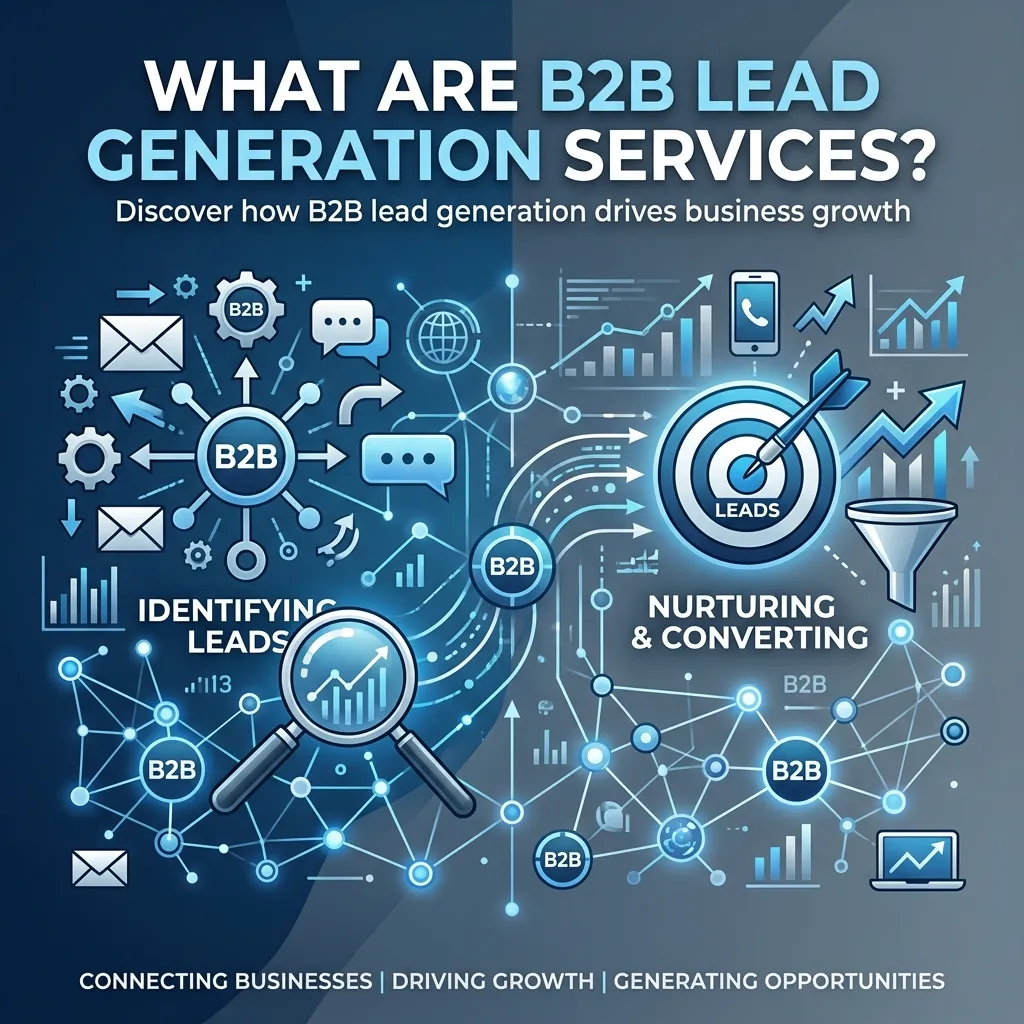
B2B lead generation services are specialized solutions designed to identify and attract potential business customers on behalf of a company. Rather than relying solely on inbound marketing or cold outreach from internal sales teams, businesses use these services to build a consistent, scalable pipeline of prospects.
The output varies by provider. Some deliver raw contact lists. Others deliver fully qualified prospects who have expressed genuine interest in your product. The best services deliver sales-ready opportunities—buyers who are actively evaluating solutions like yours.
According to HubSpot’s State of Marketing Report, 61% of marketers cite generating traffic and leads as their top challenge. That statistic explains why the global lead generation market was valued at over $3.1 billion in 2023 and continues to grow year over year.
What Types of Business Lead Generation Solutions Exist?
Outsourced Lead Generation Services
Outsourced lead generation services transfer the prospecting function entirely to an external team. Rather than hiring in-house SDRs (Sales Development Representatives), businesses contract a specialized agency to handle outreach, qualification, and pipeline development.
This model suits companies that need to scale quickly without taking on full-time headcount. It’s particularly common among mid-sized B2B companies expanding into new markets or verticals.
Key advantages include faster ramp-up times, access to proven outreach frameworks, and lower overhead compared to building an internal team from scratch.
Demand Generation Services
Demand generation services operate higher up the funnel. Where lead generation focuses on converting interest into contacts, demand generation focuses on creating that interest in the first place.
These services typically involve content marketing, paid advertising, email nurture campaigns, and account-based marketing (ABM) strategies. The goal is to make potential buyers aware of a problem your product solves—before they’re even actively searching for a solution.
Demand generation services are best suited to companies selling complex, high-value solutions with longer sales cycles. A SaaS company selling enterprise software, for example, benefits from demand generation because the buying journey often spans months and involves multiple stakeholders.
Appointment Setting Services
Appointment setting services focus on one specific outcome: getting qualified prospects onto a call with your sales team. A dedicated team handles prospecting, outreach, and follow-up, delivering confirmed meetings directly to your calendar.
This model works well for businesses with strong closers but limited prospecting bandwidth. Rather than having your account executives spend half their time on cold outreach, appointment setting services let them focus entirely on selling.
When evaluating an appointment setting provider, pay close attention to how they define a “qualified” appointment. Some providers count any booked meeting; the best providers only count meetings that meet pre-agreed qualification criteria.
Lead Generation Agency vs. In-House Team
Many businesses face a straightforward choice: hire a lead generation agency or build an internal team.
An in-house team offers deeper product knowledge, tighter alignment with your culture, and more control over messaging. But it comes with significant costs—recruiting, training, management overhead, and attrition risk.
A lead generation agency brings an existing infrastructure, a trained team, and experience across multiple industries. The tradeoff is less brand intimacy and a contract relationship rather than an employment one.
Choose an in-house team if your sales process is highly technical, your product requires deep domain knowledge, and you have the budget and time for a 6–12 month ramp period.
Choose a lead generation agency if you need results within 90 days, you’re entering a new market, or you want to test a new go-to-market approach before committing to headcount.
How Does Qualified Lead Generation Work?
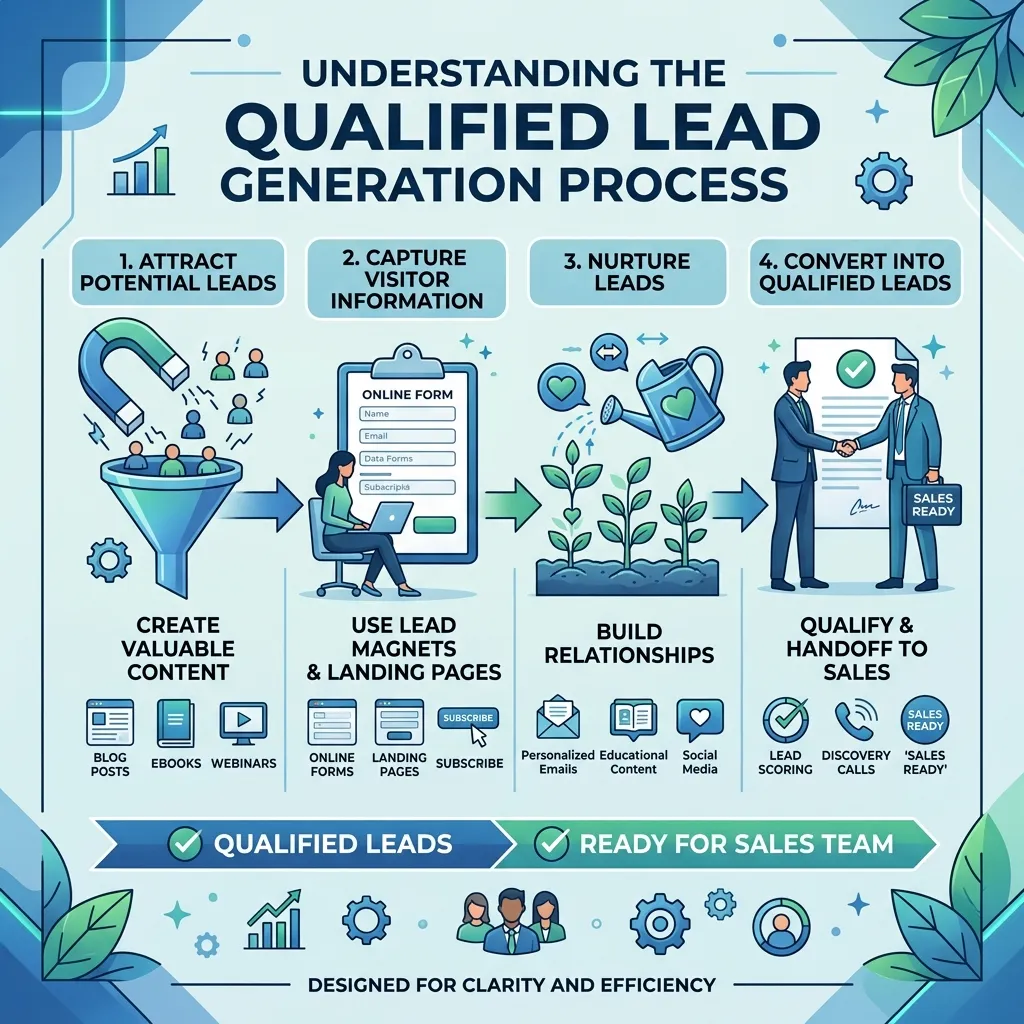
Not all leads are worth pursuing. A contact who downloaded a whitepaper two years ago is very different from a decision-maker actively researching solutions this quarter. Qualified lead generation separates the two.
Most lead generation frameworks use some version of BANT (Budget, Authority, Need, Timeline) or MEDDIC to score and qualify leads. A qualified lead typically meets criteria like:
- Firmographic fit: The company matches your ideal customer profile (ICP) in terms of industry, size, and geography.
- Role fit: The contact holds decision-making or influencing authority over the relevant purchase.
- Behavioral signals: The contact has taken actions suggesting active interest—visiting pricing pages, requesting demos, engaging with targeted content.
- Timeline: The company is evaluating solutions within a relevant time window.
Qualified lead generation services use a combination of data enrichment tools, intent data platforms (like Bombora or G2 Buyer Intent), and human qualification calls to ensure leads meet these standards before handing them to sales.
Online Lead Generation Services: Channels and Tactics That Work
Online lead generation services leverage digital channels to attract and convert prospects. The specific channels vary by audience, but the most effective for B2B include:
LinkedIn Outreach and Paid Social
LinkedIn remains the highest-performing social platform for B2B lead generation. According to LinkedIn’s own data, 80% of B2B leads sourced from social media come from LinkedIn. Paid campaigns using LinkedIn’s Lead Gen Forms can achieve conversion rates two to three times higher than standard landing pages because they pre-populate contact information from a user’s profile.
Search Engine Marketing (SEM) and SEO
High-intent keyword targeting through Google Ads captures buyers who are actively searching for solutions. Combined with a well-optimized content strategy, SEM can deliver a steady flow of inbound leads at a predictable cost per acquisition.
Email Outreach Campaigns
Contrary to what some marketers claim, cold email is far from dead—but it has evolved. Modern email outreach relies on hyper-personalized messaging, tight ICP targeting, and multi-touch sequences. Providers like Apollo.io, Outreach, and Salesloft support this kind of sequenced, data-driven outreach at scale.
Content Syndication
Content syndication distributes your best-performing assets—whitepapers, case studies, webinars—across third-party publisher networks. When a reader downloads your content, their contact information is passed to your team as a lead. This channel works particularly well for enterprise audiences, where content consumption is high and buying cycles are long.
Lead Generation Strategies for Businesses: What’s Working Right Now
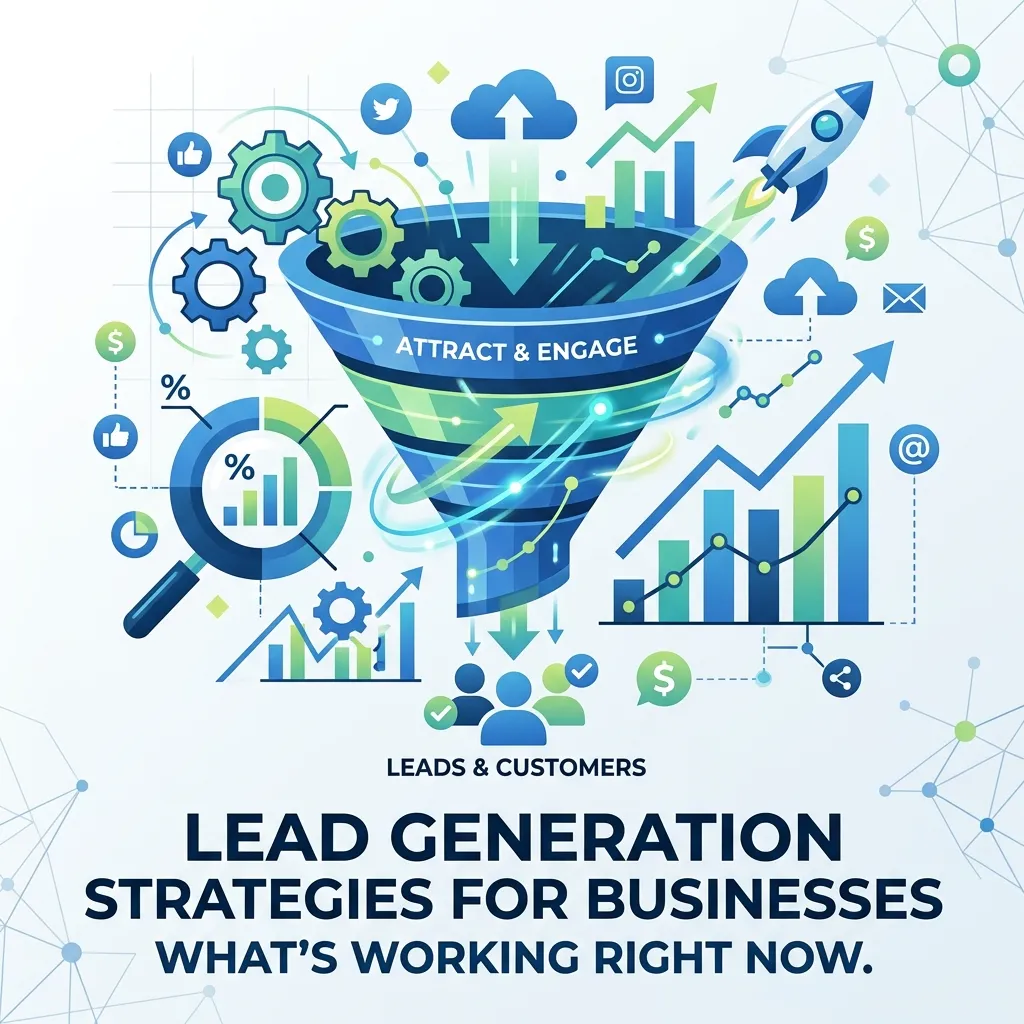
The tactics that filled pipelines five years ago don’t deliver the same results today. Buyers are more informed, inboxes are noisier, and gatekeepers are better at filtering unsolicited outreach. These are the lead generation strategies delivering results in 2024.
Account-Based Marketing (ABM)
ABM flips the traditional funnel. Rather than casting a wide net and hoping for the right fish, ABM starts with a defined list of high-value target accounts and orchestrates personalized campaigns around them. Research from ITSMA suggests that 87% of marketers that measure ROI say ABM outperforms every other marketing investment.
Intent Data Targeting
Intent data platforms monitor online behavior—content consumption, search activity, review site visits—to identify companies showing early buying signals. Reaching out to a prospect who has spent the last two weeks reading about your category is fundamentally different from cold outreach to a static list.
Video Prospecting
Personalized video messages in outreach emails have been shown to increase reply rates significantly. Tools like Vidyard and Loom make it easy for SDRs to record short, relevant videos that cut through the noise in a crowded inbox.
Community-Led Growth
B2B buyers increasingly trust peer recommendations over vendor claims. Companies that invest in building active communities—Slack groups, LinkedIn communities, user forums—create environments where organic referrals and word-of-mouth drive lead flow without direct sales effort.
How to Choose the Right Sales Lead Generation Company
Before signing a contract with any lead generation provider, these are the questions worth asking:
- How do you define a qualified lead? Get this in writing. Misaligned definitions are the most common source of friction between clients and agencies.
- What does your ICP development process look like? A good provider should want to understand your ideal customer deeply before launching any outreach.
- What data sources do you use? Top providers use a combination of ZoomInfo, Apollo, LinkedIn Sales Navigator, and intent data platforms—not a single static list.
- How do you handle compliance? Ensure the provider operates in accordance with GDPR, CAN-SPAM, and any relevant data privacy regulations.
- What does success look like at 30, 60, and 90 days? Reputable agencies set clear, measurable milestones—not vague promises about pipeline potential.
Building a Pipeline That Doesn’t Stop
Lead generation services are not a one-and-done investment. The most effective B2B growth strategies treat lead generation as an ongoing system—one that’s continuously tested, refined, and optimized based on what’s converting downstream.
Whether you choose to outsource to a specialist agency, invest in demand generation, or build out your own SDR team, the underlying principle stays the same: consistent, qualified pipeline is the lifeblood of any B2B business. The companies that grow reliably are those that make lead generation a strategic priority—not an afterthought.
Start by auditing your current pipeline. Where are leads dropping off? Which channels are producing the highest-quality opportunities? Use that data to inform whether you need a full-service lead generation agency, a targeted appointment setting service, or a shift in your demand generation strategy.
Frequently Asked Questions
What is the difference between lead generation and demand generation?
Lead generation focuses on converting known interest into contact information and sales opportunities. Demand generation focuses on creating awareness and interest among audiences who may not yet know they need your solution. Both are complementary—demand generation feeds the top of the funnel, while lead generation converts that awareness into pipeline.
How much do B2B lead generation services typically cost?
Costs vary widely. Appointment setting services typically range from $2,000–$10,000 per month depending on volume and qualification standards. Full-service outsourced lead generation agencies may charge $5,000–$25,000+ per month. Pay-per-lead models exist but require careful scrutiny of how leads are sourced and qualified.
How long does it take to see results from outsourced lead generation?
Most outsourced lead generation engagements require a 30–60 day ramp period for onboarding, ICP development, and messaging calibration. Early meetings and pipeline activity typically appear in the first 60–90 days. Full optimization usually takes three to six months.
What industries benefit most from B2B lead generation services?
Technology (SaaS and enterprise software), financial services, professional services, manufacturing, and healthcare IT are among the most active users of B2B lead generation services. Any industry with a defined business buyer, a clear ICP, and a consultative sales process is a strong candidate.
What’s the difference between an MQL and a SQL?
An MQL (Marketing Qualified Lead) has demonstrated interest through marketing engagement—downloading content, attending a webinar, or visiting key pages. A SQL (Sales Qualified Lead) has been vetted by a sales team and meets specific criteria for budget, authority, need, and timeline. Lead generation services should ideally deliver SQLs, not just MQLs.
Is outsourcing lead generation better than building an in-house SDR team?
It depends on your situation. Outsourcing is faster to deploy and requires no recruiting or management overhead. An in-house team offers deeper brand knowledge and tighter alignment with your sales culture. Many companies start with an outsourced partner to validate their go-to-market approach, then transition to in-house once the model is proven.



Leave a Reply