

An Opcity-style lead generation model emphasizes predictive analytics, smart routing, fast response times, and personalized follow-up. By combining automation, data insights, and team alignment, businesses can improve lead quality, boost conversions, and scale sustainable revenue growth efficiently.
For any sales-oriented business, generating high-quality leads is the lifeblood. But with such many strategies and tools to choose from, it is difficult to say which work best for you. That is where Opcity’s approach comes in. Equipped-increasingly-in today’s market to link the best quality leads with their ideal business or service provider, Opcity has carved itself a unique niche.
What Makes the Opcity Lead Generation Model Different?
For any sales-oriented business, generating high-quality leads is the lifeblood. But with such many strategies and tools to choose from, it is difficult to say which work best for you. That is where Opcity’s approach comes in. Equipped-increasingly-in today’s market to link the best quality leads with their ideal business or service provider, Opcity has carved itself a unique niche.
Key Features of the Opcity Model:
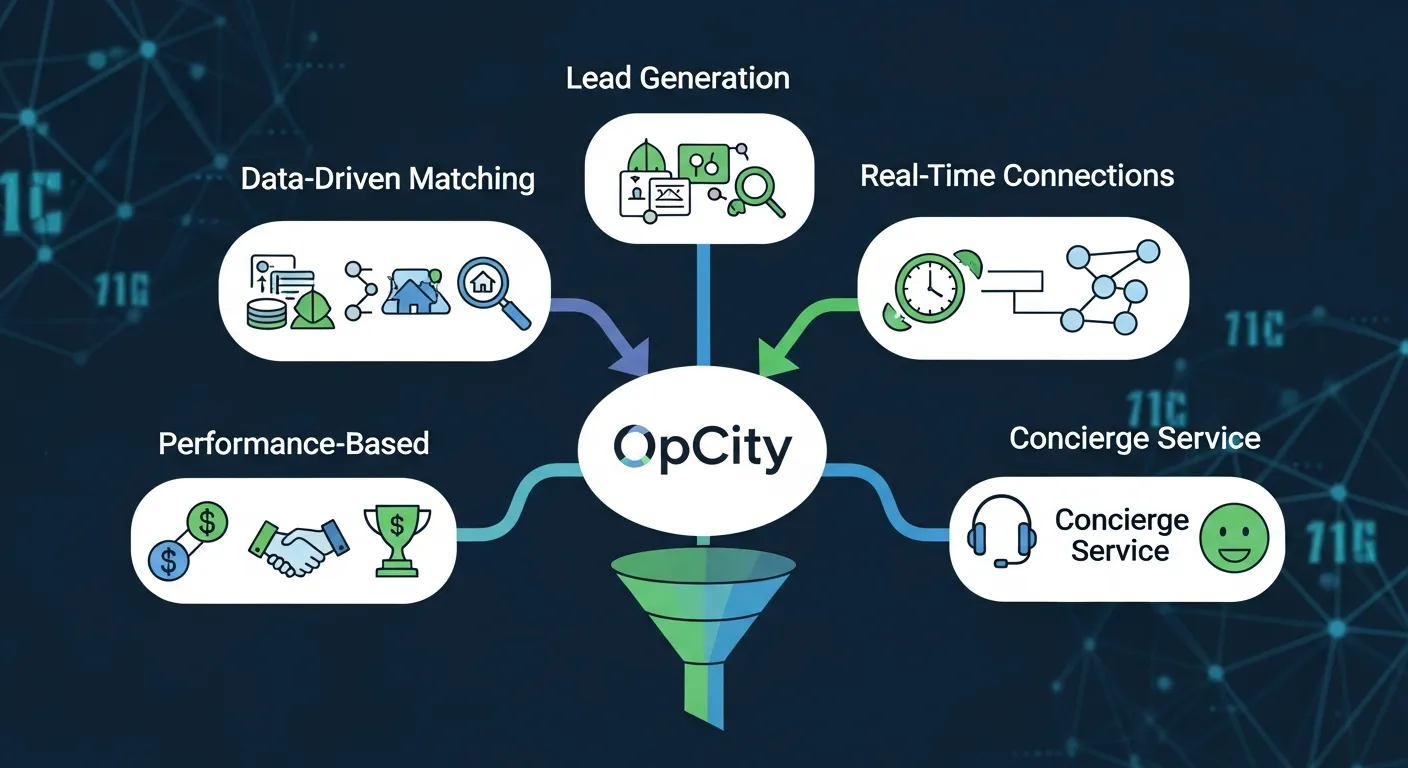
- Lead Pre-Qualification: Opcity separates high-quality leads from casual browsers using a meticulous vetting process.
- Speed to Lead: Leads are routed to businesses within minutes of being generated, ensuring the highest chance of conversion.
- Smart Matching Algorithms: Leveraging data science, Opcity matches leads to the businesses most likely to close the deal.
- Follow-Up Support: With live concierge teams, Opcity ensures leads don’t fall through the cracks during follow-up processes.
Understanding this model is crucial before we discuss how to replicate it for your business. Let’s break it down further.
The Benefits of Opcity-Style Lead Generation
Why should you adopt a lead generation model like Opcity’s? Here are some major benefits:
- Higher Conversion Rates: By delivering leads who are ready to take action, your sales team can focus on closing deals rather than chasing cold leads.
- Efficient Use of Resources: Predictive scoring ensures your time and money are spent pursuing the most promising opportunities.
- Scalable Processes: An Opcity-style model can grow alongside your business, making it ideal for companies looking to scale quickly.
- Enhanced Customer Experiences: Matching leads with suitable service providers ensures a personalized experience, which boosts customer satisfaction.
How to Implement an Opcity-Inspired Lead Generation Strategy
Now that we’ve examined what makes Opcity’s approach stand out, here’s how to replicate their success:
Step 1. Capture Leads at Every Stage of the Funnel
The first step toward effective lead generation is to attract potential customers to your business. Opacity focuses on leads at every stage of the buying process, and you should aim to do the same.
Example Tactics:
- Top Funnel Tactics (Awareness Stage): Leverage content marketing efforts like blog posts, social media ads, and webinars to drive traffic to your website or platform.
- Middle Funnel Tactics (Consideration Stage): Offer valuable gated content, such as eBooks or exclusive guides, in exchange for contact information.
- Bottom Funnel Tactics (Decision Stage): Use free trials, consults, or demo offers to capture decision-ready leads.
Step 2. Qualify Leads with Predictive Analytics or Scoring Systems
Not every lead that fills out a form is a good fit for your business. A crucial part of Opcity’s success is its rigorous lead qualification process. They use predictive analytics and scoring to prioritize leads that are more likely to convert.
Here’s how you can qualify leads effectively:
- Create a Lead Scoring Framework: Assign scores to leads based on factors like demographic fit, behaviour (e.g., how many resources they’ve downloaded), and intent.
- Use Data to Predict Intent: Implement tools like HubSpot, Salesforce, or Zoho CRM that leverage AI to score and segment leads based on their purchase likelihood.
- Ask Qualification Questions: Integrate targeted questions into your forms to filter out leads who do not meet your criteria.
Step 3. Implement a Speed to Lead Approach
Opcity excels at connecting businesses with leads in real time, dramatically increasing the likelihood of conversion. Timing is everything. Research shows that businesses that respond to leads within the first five minutes are 400% more likely to make contact than those who wait even 10 minutes.
To streamline your response time:
- Use Automation: Set up automated lead notifications to instantly alert your sales team when new leads come in.
- Enable Real-Time Routing: Invest in a CRM or lead funnel system that can route leads to the right reps or departments within seconds.
- Leverage Chatbots: Deploy smart chatbots to engage leads on your website while routing their information to your team.
Step 4. Match Leads to the Right Team Members
One of the signature features of Opcity is its smart matching algorithms that pair leads with the right businesses. You can create a similar system by using person-to-lead matching strategies.
Ideas to Try:
- Match leads based on location for geographically relevant services.
- Assign leads to team members who have specific expertise in certain industries.
- Use AI-based CRMs like Pipedrive to analyze lead data and suggest the best match.
Step 5. Follow Up with Concierge-Like Support
54% of companies admit they don’t follow up with their leads effectively. Opcity counters this issue by offering live support teams to nurture leads. While you may not need a concierge team, you can still strengthen your follow-up processes by:
- Creating Multi-Touch Campaigns: Develop sequences of emails, calls, and SMS messages to engage leads over time.
- Leveraging CRM Tools: Tools like Marketo, ActiveCampaign, or Outplay can automate and track follow-ups at scale.
- Personalizing Communication: Use lead data to craft personalized, highly relevant messages.
Step 6. Monitor Results and Optimize Continuously
Finally, Opcity’s model thrives on data-driven decision-making. By frequently analyzing performance, they tweak their system for better results. Here’s how you can do the same:
- Track key metrics like conversion rates, cost-per-lead (CPL), and time-to-conversion.
- Split-test different messages and offers to determine what resonates best with your audience.
- Regularly gather customer feedback to fine-tune your approach.
Challenges to Consider and How to Overcome Them
While implementing an Opcity-style system offers significant benefits, there are a few challenges to watch out for:
- High up-front investment in technology and resources to build the necessary systems.
- Solution: Start small by implementing scalable tools. Focus on low-cost AI-driven CRMs and grow from there.
- Complexity in predictive analytics for those unfamiliar with the method.
- Solution: Partner with data experts or training resources to upskill your team in analytics.
- Lead conversion gaps due to poor alignment between marketing and sales.
- Solution: Foster collaboration between teams and use CRM system platforms to maintain alignment.
Leverage an Opcity-Like System for Unparalleled Results
It’s no longer about getting names and e-mail addresses, lead generation has evolved into something else completely. It’s now all about connecting businesses to customers at exactly the right time through contextually relevant touchpoints, so that converting leads and staying ahead of the competition just becomes business as usual. With Opcity-inspired methods, such as working from property to productivity, you can maximize efficiency, reduce missing the boat for no good reason by at least 75%, and provide an unparalleled experience for potential customers. Can we help you to get started? Make use of AI tool or CRM right now, and enhance your lead generation strategy to another level.
AI and Automation in Lead Management

Artificial intelligence enhances every stage of lead generation. AI-powered CRMs analyze customer data to predict conversion likelihood, automate segmentation, and recommend next-best actions. Automation reduces manual tasks, allowing sales teams to focus on closing deals. Chatbots can qualify prospects instantly by asking targeted questions before passing them to sales. Automated email workflows nurture leads based on behavior triggers. By combining AI with automation, businesses replicate the efficiency and responsiveness that make Opcity’s system effective.
Aligning Sales and Marketing Teams
Successful lead generation depends on strong alignment between marketing and sales. Both teams must agree on lead definitions, scoring thresholds, and handoff processes. Regular meetings ensure communication flows smoothly. Shared dashboards allow transparency in performance tracking. Misalignment often causes lead drop-offs and poor conversion rates. By creating clear service-level agreements (SLAs), businesses ensure timely follow-up and accountability. Collaboration improves pipeline velocity and strengthens revenue performance.
Personalization at Scale
Personalization increases engagement and conversion rates. Using CRM data, businesses can personalize emails, landing pages, and follow-up messages based on location, industry, behavior, or stage in the funnel. Dynamic content tools enable customized messaging without manual effort. Personalization makes prospects feel understood and valued. An Opcity-inspired model ensures that every lead receives relevant communication, improving trust and responsiveness. Scalable personalization balances automation with human connection.
Real-Time Lead Distribution Systems
Speed is a competitive advantage in lead generation. Implement automated routing systems that instantly assign leads to the appropriate sales representative based on expertise, geography, or workload. Immediate alerts via email or mobile apps ensure no delay in response. Studies consistently show that faster responses lead to higher contact and conversion rates. Real-time systems reduce friction and maximize sales efficiency.
Lead Nurturing Campaigns for Long-Term Value
Not every lead converts immediately. A structured nurturing system keeps prospects engaged over time. Drip email sequences, retargeting ads, SMS follow-ups, and educational content help maintain interest. Segment nurturing campaigns based on behavior and engagement level. Providing consistent value positions your brand as a trusted advisor. Over time, nurtured leads are more likely to convert compared to cold prospects.
Measuring Lead Quality Beyond Volume
Lead quantity doesn’t guarantee revenue growth. Focus on measuring lead quality using metrics like conversion rates, sales-qualified leads (SQLs), average deal size, and lifetime value (LTV). Evaluating quality ensures marketing budgets are allocated effectively. High-quality leads shorten sales cycles and reduce acquisition costs. Data-driven insights allow continuous refinement of targeting strategies.
Scaling the Model for Long-Term Growth
 Once systems are optimized, scaling becomes easier. Expand lead sources, invest in advanced analytics, and introduce new automation layers gradually. Monitor ROI at every stage to avoid overspending. Scaling should be strategic, not rushed. A sustainable growth approach ensures operational stability while increasing lead volume. Continuous improvement keeps your system competitive in evolving markets.
Conclusion
An Opcity-inspired lead generation strategy focuses on quality, speed, precision, and personalization. By integrating predictive analytics, automation, smart routing, and consistent follow-up, businesses can dramatically improve conversion rates and customer experiences. The key lies in building strong data systems, aligning teams, and responding to leads quickly. While implementing such a model requires investment and planning, the long-term rewards include scalable growth and increased revenue efficiency. With the right tools and strategy, you can transform your lead generation process into a powerful competitive advantage.



Leave a Reply