

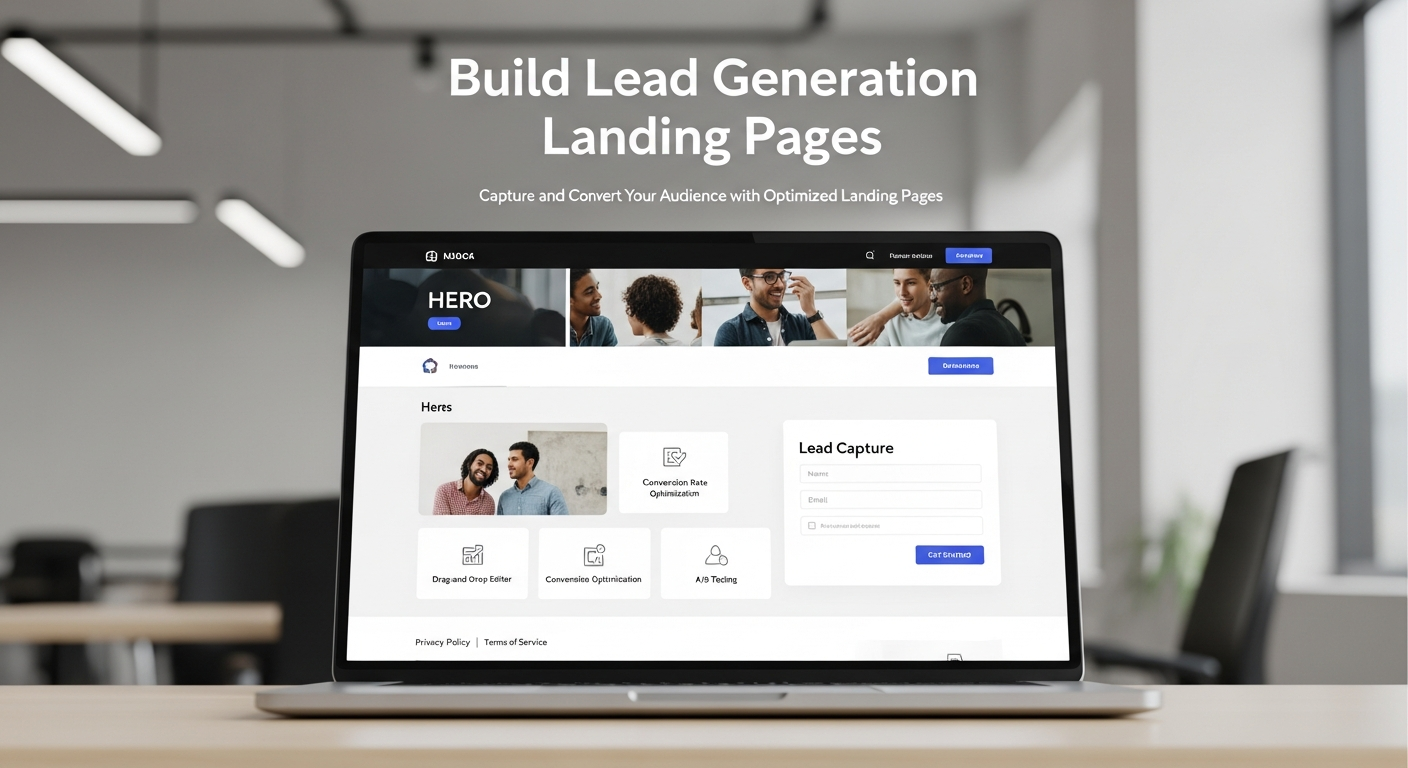
High-converting landing pages focus on a single goal, strong offers, audience relevance, and continuous optimization. By combining persuasive copy, mobile-friendly design, trust signals, and data-driven testing, businesses can dramatically improve lead generation performance and turn traffic into measurable growth.
Creating a landing page that actually converts visitors into leads isn’t just about pretty design—it’s about understanding your audience, crafting compelling offers, and optimizing every element for maximum impact. Whether you’re launching a new product, promoting a webinar, or building an email list, your landing page serves as the critical bridge between interest and action.
High-converting landing pages can transform your marketing efforts from cost centers into profit generators. The difference between a 2% conversion rate and a 15% conversion rate can mean the difference between struggling to justify your marketing budget and scaling your business exponentially.
Understanding Lead Generation Landing Page Fundamentals
What Makes Lead Generation Different
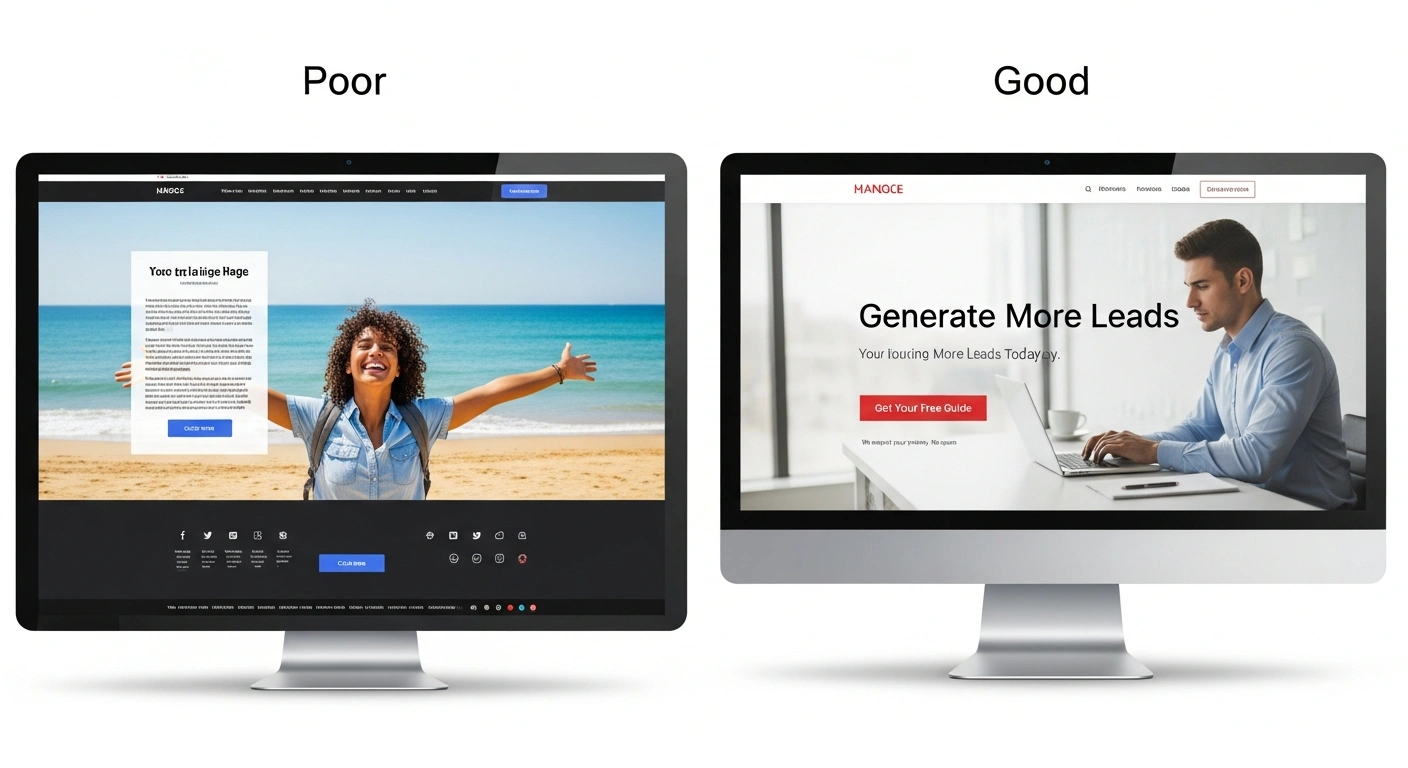
Lead generation landing pages have one primary goal: collecting contact information from potential customers. Unlike product pages that focus on immediate sales, these pages aim to build relationships and nurture prospects through your sales funnel.
The value exchange is crucial for lead generation success. Visitors trade their contact information for something valuable—an ebook, free trial, consultation, or exclusive content. This exchange must feel fair and beneficial to your audience.
Effective lead generation pages reduce friction while maximizing perceived value. Every element should either increase the appeal of your offer or make it easier for visitors to convert. Read more about Interactive Lead Generation.
The Psychology of Conversion
Understanding visitor psychology helps you design pages that naturally guide people toward conversion. Most visitors arrive with some level of skepticism and need reassurance before sharing their information.
Trust signals like testimonials, security badges, and professional design reduce anxiety about providing personal details. Social proof demonstrates that others have found value in your offer, making conversion feel safer.
Urgency and scarcity can motivate immediate action, but they must be authentic. False urgency damages trust and can harm your brand reputation over time.
Essential Elements of High-Converting Landing Pages
Compelling Headlines and Value Propositions
Your headline is the first—and often only—chance to capture visitor attention. It should clearly communicate your offer’s primary benefit while addressing your audience’s main pain point or desire.
Effective headlines often follow proven formulas: “How to [achieve desired outcome],” “Get [specific benefit] in [timeframe],” or “[Number] Ways to [solve problem].” The key is specificity and relevance to your target audience.
Your value proposition should explain what visitors get, why it matters, and why they should choose your offer over alternatives. This explanation should be clear within seconds of landing on your page.
Strategic Form Design
Form design significantly impacts conversion rates. Longer forms typically convert at lower rates but generate higher-quality leads, while shorter forms maximize volume but may attract less qualified prospects.
Only request information you truly need. Each additional form field reduces conversion rates, so prioritize essential contact details and qualifying questions.
Progressive profiling allows you to collect basic information initially, then gather additional details through follow-up interactions. This approach reduces initial friction while building comprehensive prospect profiles over time.
Trust-Building Elements
Social proof is one of the most powerful conversion tools available. Customer testimonials, user reviews, and case studies provide third-party validation of your offer’s value.
Include specific metrics and outcomes in your testimonials when possible. “Increased leads by 300%” is more compelling than “great results” because it provides concrete evidence of success.
Security badges, privacy statements, and professional certifications help build credibility, especially for offers requiring sensitive information like phone numbers or business details.
Optimization Strategies for Maximum Impact
Mobile-First Design Principles
Mobile optimization is non-negotiable for modern lead generation landing pages. Over 60% of web traffic comes from mobile devices, making mobile content marketing and mobile-optimized design essential for success.
Mobile forms should be particularly user-friendly, with large input fields, clear labels, and minimal typing requirements. Consider using dropdown menus, checkboxes, and auto-complete features to reduce friction.
Page load speed becomes even more critical on mobile devices. Compress images, minimize scripts, and use responsive design to ensure fast, smooth experiences across all screen sizes.
A/B Testing Your Way to Success
Systematic testing helps you identify which elements drive the highest conversions. Test one element at a time to isolate the impact of each change.
Start with high-impact elements like headlines, call-to-action buttons, and form length. These changes often produce the most significant improvements in conversion rates.
Document your testing results and build a knowledge base of what works for your audience. This information becomes invaluable for future campaigns and landing page optimizations.
Conversion Rate Optimization Techniques
Heat mapping tools like Hotjar or Crazy Egg reveal how visitors interact with your landing pages. This data helps identify areas where people lose interest or encounter friction.
Exit-intent popups can capture visitors who are about to leave without converting. These popups should offer additional value or address common objections that might prevent conversion.
Chatbots and live chat features can answer questions and overcome objections in real-time. Many visitors have simple questions that, once answered, lead to immediate conversion.
Technical Considerations for Lead Generation Success
Page Speed and Performance
Page speed directly impacts conversion rates. Even a one-second delay can reduce conversions by 7%, making performance optimization crucial for lead generation success.
Optimize images by compressing files and using appropriate formats. Large images are often the biggest culprit in slow-loading pages.
Minimize HTTP requests by combining CSS and JavaScript files, and consider using content delivery networks (CDNs) to improve load times for visitors in different geographic locations.
SEO and Traffic Generation
While landing pages are primarily conversion-focused, basic SEO practices help attract organic traffic and improve overall performance.
Include relevant keywords naturally in your headlines, meta descriptions, and content. However, avoid keyword stuffing, which can harm both SEO and user experience.
Create valuable content that addresses your audience’s questions and concerns. This content can attract organic traffic while pre-qualifying visitors for your main offer.
Analytics and Tracking
Proper tracking is essential for understanding landing page performance and identifying improvement opportunities. Set up conversion tracking in Google Analytics and any advertising platforms you use.
Track micro-conversions like time on page, scroll depth, and form starts in addition to actual conversions. These metrics provide insights into visitor behavior and potential optimization opportunities.
Use UTM parameters to track traffic sources and campaign performance. This data helps you understand which marketing channels drive the highest-quality leads.
Content Strategy for Lead Generation Landing Pages
Writing Copy That Converts
Focus on benefits rather than features when describing your offer. Visitors care more about what they’ll achieve than about technical specifications or process details.
Address common objections directly in your copy. If price is a concern, emphasize value. If time is an issue, highlight efficiency. If credibility is questioned, showcase social proof.
Use action-oriented language that creates urgency and motivation. Words like “discover,” “unlock,” “transform,” and “accelerate” inspire action better than passive language.
Video Content and Multimedia
Video content can significantly boost conversion rates by providing more engaging explanations of your offer. Keep videos short and focused on key benefits.
Testimonial videos are particularly powerful for building trust and demonstrating real results. Short, authentic testimonials often outperform polished promotional videos.
Use multimedia strategically to support your message without overwhelming visitors. Too many elements can distract from your primary call-to-action.
Integration with Marketing Automation
Lead Nurturing Sequences
Capturing leads is only the beginning—nurturing them through email sequences transforms prospects into customers. Design email sequences that provide value while gradually building toward a sales conversation.
Segment your leads based on their interests, behaviors, and characteristics. Targeted messaging performs better than generic campaigns because it addresses specific needs and concerns.
Track engagement metrics like open rates, click-through rates, and conversion rates to optimize your nurturing sequences over time.
CRM Integration
Connect your landing pages to your CRM system to ensure seamless lead management. Automated data transfer reduces manual work and prevents leads from falling through the cracks.
Set up lead scoring based on actions taken on your landing pages. Visitors who download multiple resources or spend significant time on your site may be more sales-ready than those who only provide basic contact information.
Create automated workflows that assign leads to appropriate sales representatives based on criteria like location, company size, or expressed interests.
Measuring Success and Continuous Improvement
Key Performance Indicators
Conversion rate is the primary metric for landing page success, but other metrics provide valuable insights into performance and optimization opportunities.
Cost per lead helps you understand the efficiency of your marketing spend across different channels and campaigns. Track this metric to identify your most cost-effective traffic sources.
Lead quality metrics like sales-qualified lead percentage and customer lifetime value help you understand the long-term value of your lead generation efforts.
Iterative Optimization Process
Successful lead generation requires ongoing optimization based on data and testing results. Establish regular review cycles to analyze performance and plan improvements.
Look for patterns in your highest-converting traffic sources, times of day, and visitor characteristics. These insights can inform future campaigns and targeting strategies.
Stay current with industry trends and best practices, but always validate new approaches through testing rather than implementing changes based on assumptions.
Building Your Lead Generation Success

Creating high-converting lead generation landing pages requires attention to detail, understanding of your audience, and commitment to continuous improvement. Start with solid fundamentals like compelling headlines, trust-building elements, and mobile optimization.
Remember that mobile content marketing considerations are crucial for modern lead generation success. With the majority of traffic coming from mobile devices, every aspect of your landing page must work seamlessly across all screen sizes and connection speeds.
Test systematically, measure consistently, and optimize continuously. The most successful marketers treat their landing pages as living documents that evolve based on data and user feedback.
Focus on providing genuine value to your visitors. When your offers truly help people solve problems or achieve goals, conversion becomes a natural result of delivering on your promises.
Conclusion
High-converting lead generation landing pages are built on clarity, value, and continuous optimization. By understanding your audience, offering meaningful value, eliminating friction, and testing consistently, you can transform landing pages into powerful growth engines. When strategy, design, content, and data work together, conversion becomes a natural outcome rather than a challenge.
FAQs
What is a lead generation landing page?
A lead generation landing page is a dedicated web page designed to capture visitor information through a focused and valuable offer, such as an ebook, free trial, webinar, or consultation. Its primary goal is to convert visitors into leads by guiding them toward a single, clear action without distractions.
How do landing pages increase conversions?
Landing pages increase conversions by eliminating distractions and focusing visitors on one goal. Every element—from headlines to CTA buttons—is strategically designed to guide users toward taking action, improving the likelihood that visitors will share their contact information or engage with your offer.
What makes a landing page high-converting?
High-converting landing pages feature clear messaging, compelling value propositions, persuasive CTAs, trust-building elements like testimonials and certifications, fast page speed, and mobile optimization. Each component works together to reduce friction and guide visitors toward conversion.
How long should a landing page be?
Landing pages should be long enough to clearly explain the value of your offer, address visitor objections, and provide social proof, yet concise enough to keep users engaged. Scannable sections, bullet points, and visuals help visitors absorb information quickly.
Do landing pages help SEO?
Yes, landing pages can support SEO when optimized with relevant keywords, fast loading times, mobile-friendly design, and high-quality content. Proper SEO helps attract organic traffic and improves the likelihood of reaching the right audience for your offer.
Is mobile optimization necessary?
Absolutely. With most traffic coming from smartphones and tablets, mobile-friendly landing pages are essential. Forms, buttons, and content must display properly on smaller screens, load quickly, and remain easy to navigate to prevent lost leads.
What is a good conversion rate?
A typical conversion rate for landing pages ranges from 5% to 15%, depending on industry, traffic quality, and offer type. Continuous testing and optimization can help improve this rate over time.
Should landing pages include navigation menus?
Usually not. Navigation menus can distract visitors from the primary goal. By removing unnecessary links, visitors stay focused on your CTA, increasing the likelihood of conversion.
How often should landing pages be tested?
Landing pages should be continuously tested using A/B testing, heatmaps, and analytics. Regular testing of headlines, CTAs, form fields, and layout ensures ongoing improvement and maximizes lead capture effectiveness.
Can landing pages work for B2B businesses?
Yes. Landing pages are highly effective for B2B lead generation, including demos, consultations, gated content, and whitepapers. Tailoring offers to professional audiences helps generate qualified leads for sales teams.
What tools help optimize landing pages?
Tools like Google Analytics, Hotjar, Crazy Egg, A/B testing platforms, and CRM integrations allow marketers to monitor behavior, track conversions, identify bottlenecks, and improve landing page performance.
Are landing pages a long-term strategy?
Yes. When properly designed and optimized, landing pages scale effectively, supporting ongoing lead generation and helping businesses consistently convert visitors into prospects and customers over time.



Leave a Reply