

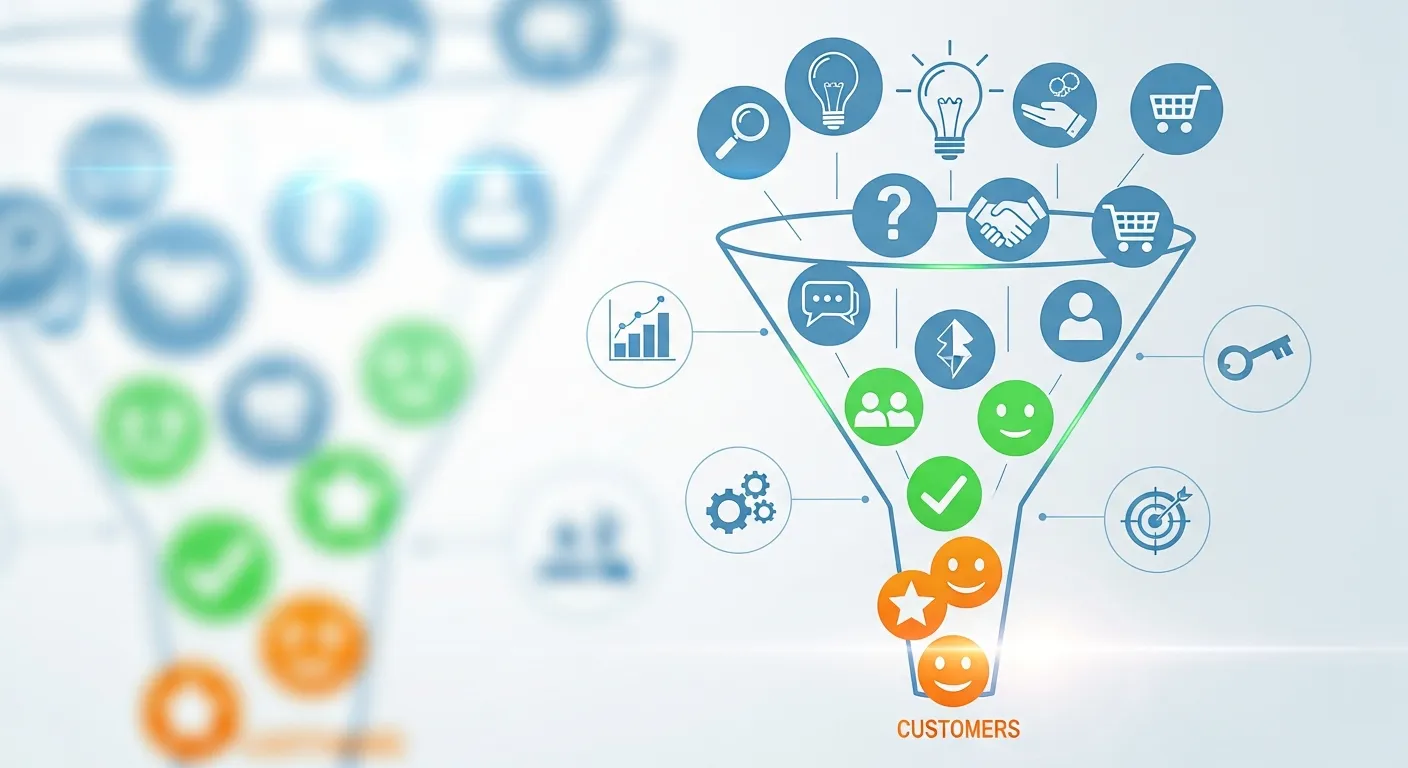
Lead conversion strategies are tactics that move prospects from interest to purchase. The most effective methods include optimizing your sales funnel, building high-converting landing pages, nurturing leads with targeted content, and improving website conversion rate optimization (CRO). Together, these approaches help you turn more of your existing traffic into paying customers.
Getting people to your website is only half the battle. The harder part? Convincing those visitors to take action—whether that’s filling out a form, booking a demo, or making a purchase. Most businesses pour money into traffic and ads, then watch the majority of that interest slip away without converting.
Here’s the good news: small improvements in your conversion process can deliver outsized results. If you double your conversion rate, you double your revenue without spending an extra cent on traffic. That’s the power of focusing on conversion rather than just acquisition.
This guide breaks down practical lead conversion strategies you can apply across your sales funnel, landing pages, website, and nurturing campaigns. You’ll learn how to identify where leads drop off, how to fix those leaks, and how to build a conversion-focused marketing system that compounds over time.
What is lead conversion, and why does it matter?

Lead conversion is the process of turning a prospect into a customer by guiding them through a series of decisions and actions. A “conversion” can mean different things depending on your goal—signing up for a newsletter, requesting a quote, starting a free trial, or completing a sale.
The reason conversion matters so much comes down to economics. According to data from Ruler Analytics, the average website conversion rate across industries sits around 2.9%. That means roughly 97 out of every 100 visitors leave without converting. Even a modest lift—from 2% to 3%—represents a 50% increase in customers from the same amount of traffic.
Lead conversion also reveals the health of your marketing funnel. If you want to understand how leads enter and move through systems, explore how lead generation works for businesses. Fixing that gap is often cheaper and faster than chasing more clicks.
How do you optimize your sales funnel for more conversions?
Your sales funnel is the path a prospect takes from first contact to final purchase. Many modern funnels are built using insights from CRM for lead management systems.
Map every stage of the buyer journey
Start by defining your funnel stages clearly: awareness, interest, consideration, intent, and purchase. For each stage, identify what action you want the prospect to take and what might stop them. A common mistake is treating all leads the same. Someone just discovering your brand needs different messaging than someone comparing pricing.
Identify and fix the biggest leaks
Use analytics to find where prospects abandon the journey. If 80% of visitors reach your pricing page but only 5% click through to checkout, you’ve found a leak worth investigating. Common culprits include unclear pricing, too many form fields, hidden costs, or a confusing next step.
Match content to buyer intent
Each funnel stage calls for different content. Top-of-funnel prospects respond to educational blog posts and guides. Middle-funnel leads want case studies, comparisons, and webinars. Bottom-funnel prospects need demos, free trials, and clear pricing. Serving the right content at the right moment keeps momentum going.
What makes a high-converting landing page?

A landing page exists for one purpose: conversion. Many of these principles align with high-converting lead generation landing page frameworks.
Lead with one clear, specific offer
The strongest landing pages promote a single offer with a single call-to-action. Multiple competing offers split attention and lower conversions. Decide what you want the visitor to do, then design everything around that goal.
Write a headline that matches the visitor’s expectation
Your headline should reflect the ad, email, or link that brought the visitor there. This “message match” reassures people they’re in the right place. A disconnect between the promise and the page is one of the fastest ways to lose a lead.
Reduce form friction
Every extra form field lowers your conversion rate. Research from HubSpot has shown that reducing form fields can meaningfully increase submissions. Ask only for what you truly need now—you can gather more details later in the relationship.
Add proof that lowers risk
Testimonials, reviews, case studies, security badges, and client logos all reduce the perceived risk of taking action. Place social proof near your call-to-action where hesitation peaks.
How can you improve website conversion rate optimization (CRO)?
Website conversion rate optimization (CRO) is the systematic practice of increasing the percentage of visitors who complete a desired action. Unlike one-off fixes, CRO is an ongoing process built on testing and data.
Run A/B tests on high-traffic pages
Test one variable at a time—a headline, a button color, a form layout—to learn what actually moves the needle. Focus your testing on pages with enough traffic to reach statistical significance, like your homepage, pricing page, and top landing pages.
Improve page speed and mobile experience
Slow pages kill conversions. According to Google, the probability of a bounce increases 32% as page load time goes from one second to three seconds. Since most web traffic is now mobile, a clunky mobile experience can quietly cost you a large share of potential conversions.
Use clear, action-oriented calls-to-action
Vague buttons like “Submit” or “Click here” underperform. Specific, benefit-driven CTAs like “Get my free quote” or “Start my 14-day trial” tell visitors exactly what they’ll get. Make your primary CTA visually distinct and easy to find.
Use heatmaps and session recordings
Tools like Hotjar or Microsoft Clarity show where visitors click, scroll, and hesitate. These insights reveal friction points that raw analytics miss, helping you prioritize what to fix first.
What are the best digital marketing lead generation tactics?
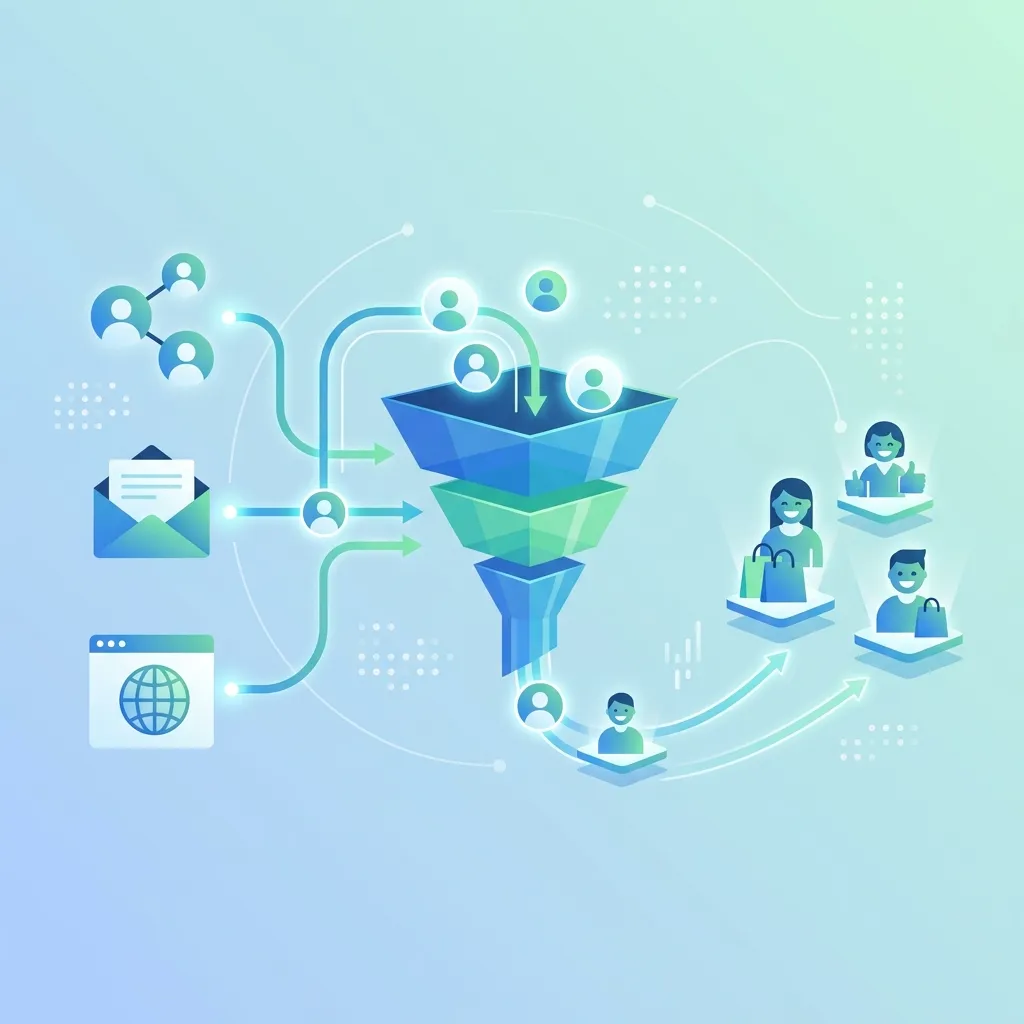
Conversion starts with quality leads. Digital marketing lead generation tactics that attract the right audience make every downstream conversion easier.
- Content marketing: Helpful blog posts, guides, and videos attract prospects actively searching for solutions. These leads tend to convert better because they arrive with intent.
- Search engine optimization (SEO): Ranking for keywords your buyers search means a steady flow of qualified traffic without ongoing ad spend.
- Paid search and social ads: Targeted campaigns let you reach specific audiences quickly, though you’ll pay for every click.
- Lead magnets: Free resources—templates, checklists, ebooks—exchange genuine value for contact details.
- Webinars and live events: These build trust and capture engaged, sales-ready leads.
The key is alignment. The traffic you generate should match the offers and pages designed to convert it. A flood of unqualified leads will tank your conversion rate no matter how polished your funnel is.
How do you nurture leads who aren’t ready to buy?
Most leads won’t convert on their first visit. Marketing funnel lead nurturing strategies keep your brand top of mind until prospects are ready to act.
Build segmented email sequences
Group leads by behavior, interest, or funnel stage, then send relevant content to each segment. Someone who downloaded a pricing guide is closer to buying than someone who read a single blog post—and your emails should reflect that difference.
Use lead scoring to prioritize follow-up
Assign points based on actions like opening emails, visiting your pricing page, or downloading resources. Lead scoring helps your sales team focus energy on the prospects most likely to convert, rather than chasing everyone equally.
Follow up quickly
Speed matters enormously. A widely cited study from Harvard Business Review found that companies contacting leads within an hour were nearly seven times more likely to have a meaningful conversation than those who waited even an hour longer. Fast follow-up signals attentiveness and catches prospects while interest is high.
Retarget visitors who didn’t convert
Retargeting ads remind people who visited but didn’t act. A gentle nudge—paired with a relevant offer or piece of social proof—often brings hesitant prospects back to complete the action.
How do you measure and improve lead conversion rates?
You can’t improve what you don’t measure. Tracking the right metrics tells you whether your customer acquisition and conversion methods are working.
Focus on these core metrics:
- Conversion rate: The percentage of visitors or leads who complete your desired action.
- Cost per conversion: How much you spend to acquire each conversion.
- Lead-to-customer rate: The percentage of leads that ultimately become paying customers.
- Time to conversion: How long it takes a lead to move from first contact to purchase.
Review these numbers regularly, then form a hypothesis, test a change, and measure the result. This cycle of testing and learning is what separates businesses that steadily increase website leads and conversions from those that plateau.
Putting your conversion strategy into action
Strong lead conversion doesn’t come from a single tactic—it comes from a connected system. When your traffic matches your offers, your landing pages stay focused, your funnel removes friction, and your nurturing keeps leads warm, conversions climb naturally.
Start small. Pick the single biggest leak in your funnel and fix it this week. Maybe that’s shortening a form, rewriting a weak headline, or setting up a follow-up email sequence. Measure the impact, then move to the next opportunity. These compounding improvements are how conversion-focused marketing strategies deliver lasting growth.
The businesses that win aren’t always the ones with the most traffic. They’re the ones that convert the traffic they already have.
Frequently asked questions
What is a good lead conversion rate?
A good conversion rate depends heavily on your industry, traffic source, and goal. The average website conversion rate is around 2.9%, but top performers often reach 5% or higher. Rather than chasing a benchmark, focus on steadily improving your own rate over time.
How long does it take to improve lead conversion rates?
Quick wins—like fixing a broken form or clarifying a CTA—can show results within days. Larger gains from systematic CRO, A/B testing, and lead nurturing typically take two to three months as you gather enough data to make confident decisions.
What’s the difference between lead generation and lead conversion?
Lead generation focuses on attracting prospects and capturing their interest, while lead conversion focuses on turning those prospects into customers. Both matter, but if you’re spending heavily on generation with weak conversion, you’re leaving revenue on the table.
Which lead conversion strategy should I start with?
Start with website conversion rate optimization (CRO) if you already have steady traffic, since you can improve results without spending more on acquisition. If your traffic is low, prioritize lead generation tactics first so you have enough volume to optimize.
Do I need expensive tools to improve conversions?
No. Many powerful tools offer free tiers, including Google Analytics, Microsoft Clarity for heatmaps, and most email platforms for basic nurturing. Start with free tools to identify problems, then invest in paid solutions once you know where the biggest opportunities lie.
What are the most effective Lead Conversion Strategies for small businesses?
The most effective Lead Conversion Strategies for small businesses include optimizing landing pages, using simple CRM follow-ups, improving call-to-action clarity, and nurturing leads through email marketing. Small businesses benefit most from quick-win improvements like reducing form fields and adding social proof.
How do Lead Conversion Strategies improve sales performance?
Strong Lead Conversion Strategies improve sales performance by increasing the percentage of existing leads that turn into paying customers. Instead of relying only on more traffic, businesses maximize revenue from their current audience through better funnel optimization and targeted messaging.
Which Lead Conversion Strategies work best for eCommerce websites?
For eCommerce, the best Lead Conversion Strategies include abandoned cart emails, product page optimization, trust signals (reviews and ratings), and urgency-based offers. These strategies help reduce hesitation and increase purchase completion rates.
How do I measure the success of Lead Conversion Strategies?
You can measure Lead Conversion Strategies by tracking key metrics such as conversion rate, cost per lead, lead-to-customer ratio, and average time to conversion. Improvements in these metrics indicate that your strategies are effectively driving more sales.
Can Lead Conversion Strategies work without paid advertising?
Yes, Lead Conversion Strategies can work without paid ads. Organic traffic from SEO, content marketing, and referrals can convert well when supported by strong landing pages, email nurturing, and CRO (conversion rate optimization) techniques.
What role does content play in Lead Conversion Strategies?
Content plays a major role in Lead Conversion Strategies by educating prospects, building trust, and guiding them through the buyer journey. Blog posts, case studies, and comparison guides help move users from awareness to decision-making stages.
How often should I update my Lead Conversion Strategies?
You should review and update your Lead Conversion Strategies at least every 2–3 months. Regular testing, A/B experiments, and performance analysis help ensure your funnel stays optimized as user behavior and market trends change.
What are common mistakes in Lead Conversion Strategies?
Common mistakes in Lead Conversion Strategies include using long forms, unclear CTAs, poor mobile optimization, and ignoring follow-up systems. Many businesses also focus too much on traffic instead of fixing conversion leaks in their funnel.
How do Lead Conversion Strategies help reduce marketing costs?
Effective Lead Conversion Strategies reduce marketing costs by increasing revenue from the same amount of traffic. When conversion rates improve, businesses spend less on ads and acquisition because they get more value from each visitor.
What tools support modern Lead Conversion Strategies?
Modern Lead Conversion Strategies are supported by tools like Google Analytics, Hotjar, Microsoft Clarity, HubSpot, and email automation platforms. These tools help track behavior, analyze drop-offs, and automate lead nurturing for better conversions.



Leave a Reply