


Meta Leads are a highly effective Facebook and Instagram ad format that captures user information without redirecting to external pages. By reducing friction, improving mobile experience, and integrating with CRM systems, Meta Leads help businesses generate high-quality leads at lower costs while supporting scalable, long-term growth.
Small businesses and marketing teams are constantly searching for efficient ways to capture high-quality leads without breaking the bank. Facebook’s Meta Leads offers a streamlined solution that eliminates friction from the lead generation process while keeping users within the platform they’re already browsing.
What Are Meta Leads?

Meta Leads are a specialized Facebook advertising format designed to capture user information directly within the Facebook or Instagram platform. Unlike traditional ads that redirect users to external landing pages, Meta Lead ads present a pre-populated form that users can complete without leaving their social media experience.
When users click on your lead ad, Facebook automatically fills in their contact information using data from their profile. This seamless process significantly reduces abandonment rates and increases conversion likelihood. Users can review, edit, and submit their information with just a few taps or clicks.
The format works across Facebook’s entire family of apps, including Facebook, Instagram, and Messenger. This broad reach allows you to connect with potential customers wherever they spend their time on social media.
How Meta Leads Work
The Meta Leads process follows a simple three-step flow that maximizes user experience while capturing valuable prospect information.
Step 1: User Engagement
Your target audience sees your lead ad in their Facebook or Instagram feed. The ad includes compelling visuals, persuasive copy, and a clear call-to-action button that encourages users to take the next step.
Step 2: Form Completion
When users click your call-to-action button, Facebook opens a lead form overlay. The form is pre-populated with information from the user’s Facebook profile, including their name, email address, and phone number. Users can review, modify, or add additional information as needed.
Step 3: Lead Capture
Once users submit the form, their information is immediately captured and stored in Facebook’s system. You receive notifications about new leads and can access the data through Facebook’s Ads Manager or integrate it with your customer relationship management system.
Benefits of Using Meta Leads
Meta Leads offer several advantages over traditional lead generation methods, making them an attractive option for businesses of all sizes.
Reduced Friction
The biggest advantage of Meta Leads is the elimination of redirect friction. Users don’t need to navigate to external websites, wait for pages to load, or manually enter information they’ve already provided to Facebook. This streamlined experience significantly improves conversion rates.
Higher Conversion Rates
Studies show that lead ads typically achieve 2-3 times higher conversion rates compared to traditional landing page campaigns. The pre-populated forms and seamless user experience contribute to these improved performance metrics.
Mobile-Optimized Experience
Meta Leads are designed specifically for mobile users, who represent the majority of Facebook’s audience. The forms load quickly and are easy to complete on smartphone screens, addressing the common challenge of mobile landing page optimization.
Cost-Effective Lead Generation
By improving conversion rates and reducing the need for external landing pages, Meta Leads often deliver lower cost-per-lead compared to traditional campaigns. This efficiency makes them particularly valuable for small businesses with limited marketing budgets.
Integrated Data Management
Facebook’s platform provides built-in tools for managing and exporting lead data. You can also integrate Meta Leads with popular CRM systems and marketing automation platforms to streamline your follow-up processes.
Setting Up Your First Meta Lead Campaign
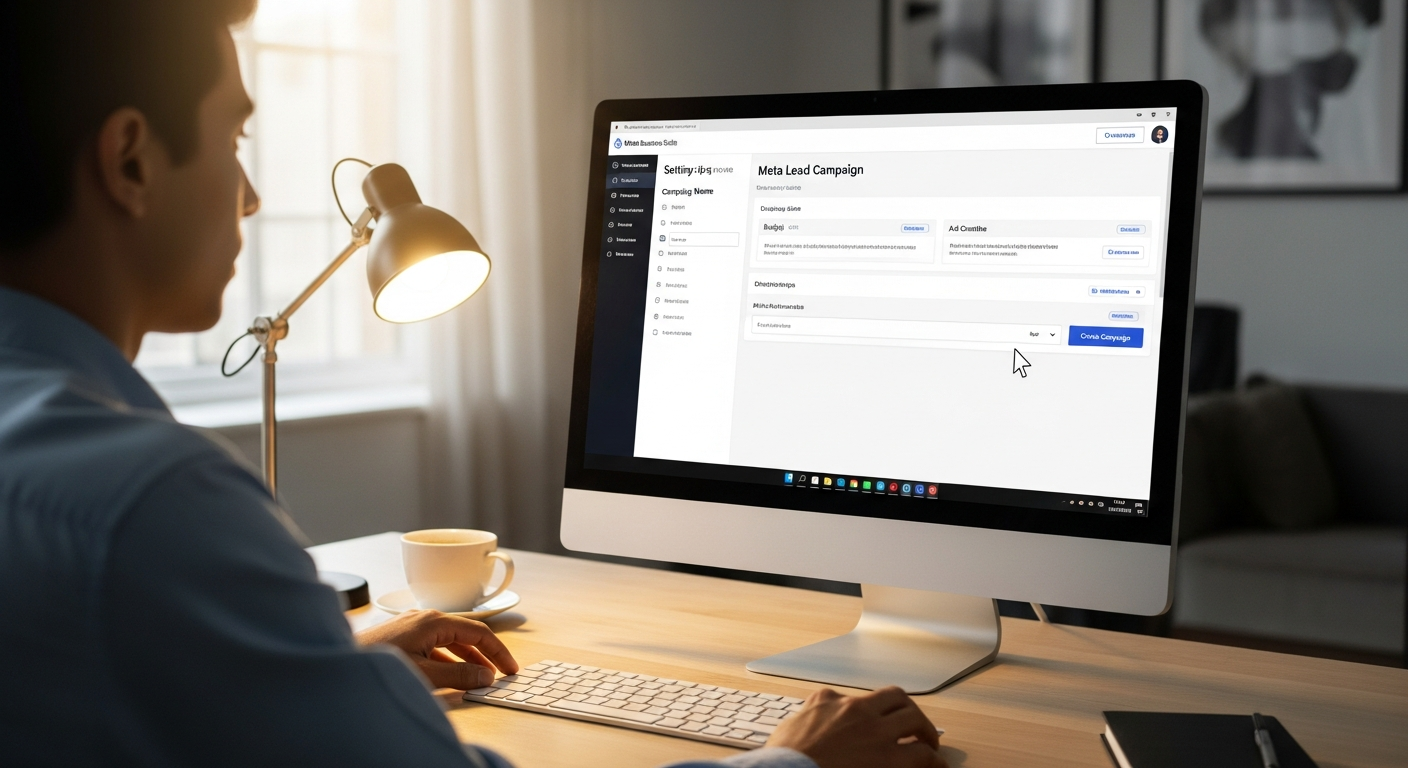
Creating effective Meta Lead campaigns requires careful planning and strategic execution. Follow these steps to launch your first campaign successfully.
Define Your Campaign Objective
Start by clearly defining what you want to achieve with your lead generation campaign. Common objectives include:
- Building email lists for newsletter subscribers
- Generating sales qualified leads for your sales team
- Collecting contact information for event registrations
- Capturing interest for new product launches
- Gathering information for consultations or demos
Identify Your Target Audience
Facebook’s detailed targeting options allow you to reach highly specific audiences. Consider these targeting strategies:
Demographic Targeting: Age, gender, location, education level, and relationship status help you reach users who match your ideal customer profile.
Interest-Based Targeting: Target users based on their interests, hobbies, and behaviors. Facebook’s algorithm identifies users who have shown interest in topics related to your business.
Custom Audiences: Upload your existing customer lists to create lookalike audiences or retarget previous website visitors.
Detailed Targeting: Combine multiple targeting criteria to create highly specific audience segments.
Create Compelling Ad Creative
Your ad creative needs to capture attention and clearly communicate your value proposition. Focus on these elements:
Visual Content: Use high-quality images or videos that represent your brand and offering. Test different creative styles to identify what resonates best with your audience.
Headline and Copy: Write clear, benefit-focused headlines that explain what users will receive. Keep your copy concise and action-oriented.
Call-to-Action: Choose call-to-action buttons that align with your campaign goals. Options include “Learn More,” “Sign Up,” “Get Quote,” and “Download.”
Design Your Lead Form
The lead form is where conversion happens, so every element matters. Consider these best practices:
Keep It Simple: Only ask for information you absolutely need. Each additional field reduces completion rates.
Use Clear Labels: Make sure form fields are clearly labeled and easy to understand.
Add Context: Include a brief description of what users will receive and how you’ll use their information.
Privacy Assurance: Address privacy concerns by explaining how you’ll protect and use their data.
Set Up Lead Delivery
Configure how you want to receive and manage leads:
Manual Download: Download leads directly from Facebook Ads Manager on a regular schedule.
CRM Integration: Connect Meta Leads with your CRM system for automatic lead import and follow-up workflows.
Email Notifications: Set up email alerts to notify you when new leads are captured.
Webhook Integration: Use Facebook’s API to send leads directly to your marketing automation platform.
Advanced Meta Lead Strategies
Once you’ve mastered the basics, these advanced strategies can help you maximize your lead generation results.
Multi-Step Lead Forms
For high-value offerings, consider using multi-step lead forms that gradually collect more detailed information. Start with basic contact details, then ask for additional qualifying information on subsequent screens.
Dynamic Lead Ads
Use Facebook’s dynamic capabilities to automatically customize your lead ads based on user behavior and preferences. This personalization can significantly improve conversion rates and lead quality.
Retargeting Strategies
Create custom audiences based on lead form interactions:
- Users who opened your lead form but didn’t submit
- Users who submitted forms but haven’t converted to customers
- Users who engaged with your lead ads but didn’t complete forms
A/B Testing Optimization
Continuously test different elements of your lead campaigns:
Creative Testing: Test different images, videos, headlines, and copy variations to identify top performers.
Audience Testing: Compare performance across different audience segments to optimize your targeting.
Form Testing: Experiment with different form lengths, field types, and privacy statements.
Offer Testing: Test different lead magnets and value propositions to see what drives the highest quality leads.
Lead Scoring and Qualification
Implement lead scoring systems to prioritize follow-up efforts:
- Score leads based on form responses and demographic information
- Create different follow-up sequences for different lead quality levels
- Use progressive profiling to gather more information over time
Common Meta Lead Mistakes to Avoid
Learning from common pitfalls can help you avoid costly mistakes and improve your campaign performance from the start.
Asking for Too Much Information
One of the most common mistakes is creating forms that are too long or ask for unnecessary information. Each additional field creates another opportunity for users to abandon the process. Only collect information that’s essential for your immediate follow-up needs.
Neglecting Mobile Experience
While Facebook automatically optimizes lead forms for mobile, your ad creative and offer must also work well on mobile devices. Test your entire campaign experience on various mobile devices to ensure smooth functionality.
Poor Follow-Up Processes
Capturing leads is only the first step. Many businesses fail to follow up quickly or provide value to new leads. Develop automated follow-up sequences that nurture leads and guide them toward conversion.
Ignoring Lead Quality
Focusing solely on lead quantity often results in poor-quality prospects who never convert to customers. Monitor your lead-to-customer conversion rates and adjust your targeting and qualifying questions accordingly.
Inadequate Testing
Launching campaigns without proper testing limits your ability to optimize performance. Plan to test multiple variations of your ads, audiences, and forms to identify the most effective combinations.
Measuring and Optimizing Performance
Successful Meta Lead campaigns require ongoing monitoring and optimization. Focus on these key metrics and optimization strategies.
Key Performance Indicators
Lead Volume: Track the total number of leads generated and monitor trends over time.
Cost Per Lead: Calculate your average cost per lead and compare it to your target acquisition costs.
Conversion Rate: Monitor what percentage of people who see your ad complete the lead form.
Lead Quality: Track how many leads convert to customers and their lifetime value.
Return on Investment: Calculate the overall ROI of your lead generation efforts.
Optimization Strategies
Bid Strategy Optimization: Experiment with different bidding strategies to find the most cost-effective approach for your goals.
Audience Refinement: Continuously refine your targeting based on performance data and lead quality feedback.
Creative Refresh: Regularly update your ad creative to prevent audience fatigue and maintain engagement.
Form Optimization: Test different form configurations to improve completion rates and lead quality.
Landing Page Alignment: Ensure your follow-up communications and landing pages align with the expectations set in your lead ads.
Maximizing Your Lead Generation Success

Meta Leads represent a powerful opportunity to efficiently capture high-quality prospects while they’re actively engaging with social media content. The key to success lies in understanding your audience, creating compelling offers, and maintaining a seamless user experience throughout the conversion process.
Start with simple campaigns that focus on clear value propositions and essential information collection. As you gain experience and data, gradually implement more sophisticated strategies like dynamic ads, advanced targeting, and automated follow-up sequences.
Remember that lead generation is just the beginning of your customer acquisition process. The real value comes from effectively nurturing these leads into paying customers. Invest in robust follow-up systems and continue optimizing based on both lead quality and conversion data.
By combining Facebook’s powerful targeting capabilities with strategic campaign design and ongoing optimization, Meta Leads can become a cornerstone of your digital marketing strategy, delivering consistent, high-quality prospects that drive sustainable business growth.
Conclusion
Meta Leads offer a powerful, frictionless way to capture high-quality prospects directly within Facebook and Instagram. By removing unnecessary steps, improving mobile experiences, and integrating seamlessly with CRM systems, Meta Leads help businesses generate more leads at lower costs. When combined with strategic targeting, compelling creatives, and fast follow-ups, Meta Leads become a scalable and sustainable growth engine. Businesses that focus on lead quality, automation, and continuous optimization will see long-term success and stronger ROI from their Meta advertising efforts.
1. What are Meta Leads?
Meta Leads are Facebook and Instagram ad formats that collect user information directly within the platform without redirecting users to external websites. They use pre-filled forms based on a user’s profile data, making it faster and easier for people to submit their details. This seamless experience reduces drop-offs and improves conversion rates for businesses running lead generation campaigns.
2. Are Meta Leads mobile-friendly?
Yes, Meta Leads are designed specifically for mobile users, which is critical since most Facebook and Instagram traffic comes from smartphones. The forms load instantly, are easy to scroll, and require minimal typing. This mobile-first design significantly improves user experience and increases form completion rates compared to traditional mobile landing pages.
3. Do Meta Leads work for small businesses?
Yes, Meta Leads are highly effective for small businesses because they are cost-efficient, easy to launch, and require no complex landing page setup. Small teams can generate leads quickly while competing with larger brands by leveraging precise targeting and lower cost-per-lead, even with modest advertising budgets.
4. How much do Meta Leads cost?
The cost of Meta Leads varies depending on audience targeting, industry competition, and ad quality. However, they typically deliver a lower cost-per-lead compared to traditional landing page campaigns because the conversion process is faster and friction-free. This makes them ideal for businesses looking to maximize ROI.
5. Are Meta Leads better than landing pages?
For top-of-funnel campaigns, Meta Leads often convert faster and at lower costs than landing pages. Since users stay within Facebook or Instagram, there are fewer distractions and loading delays. While landing pages offer deeper customization, Meta Leads excel at speed, scalability, and lead volume.
6. Can Meta Leads integrate with CRMs?
Yes, Meta Leads integrate with most major CRM and marketing automation platforms. Leads can be synced automatically, enabling instant follow-ups, email sequences, SMS notifications, and lead scoring. CRM integration ensures no leads are lost and improves conversion chances through timely and personalized communication.
7. How do I improve lead quality?
Lead quality can be improved by using clear ad messaging, setting accurate expectations, and adding qualifying questions to the lead form. Multiple-choice or short-answer questions help filter serious prospects while still keeping the form simple enough to maintain high completion rates.
8. Can Meta Leads be used for B2B?
Yes, Meta Leads work very well for B2B campaigns, especially for demos, consultations, webinars, audits, and whitepaper downloads. They support longer sales cycles by capturing interest early and allowing businesses to nurture leads through email, retargeting, and sales outreach.
9. How fast should I follow up leads?
Ideally, leads should be followed up within minutes of submission. Fast response times significantly increase conversion rates, as prospects are most engaged immediately after submitting their information. Automated CRM workflows and notifications help businesses respond quickly and consistently.
10. Do Meta Leads support retargeting?
Yes, Meta Leads fully support retargeting. You can create custom audiences based on users who opened a form, submitted a form, or engaged with your ads. Retargeting helps nurture undecided users, reinforce trust, and guide leads further down the conversion funnel.
11. Is user data secure?
Meta provides built-in privacy controls, consent options, and compliance features to protect user data. Lead forms include privacy disclaimers and policy links, helping businesses remain compliant with data protection regulations while building trust with potential customers.
12. Are Meta Leads scalable?
Yes, Meta Leads are highly scalable when paired with optimization and automation. Businesses can scale by increasing budgets, expanding audiences, launching lookalike campaigns, and refining creatives. With proper systems in place, Meta Leads can become a long-term, sustainable lead generation channel.



Leave a Reply