

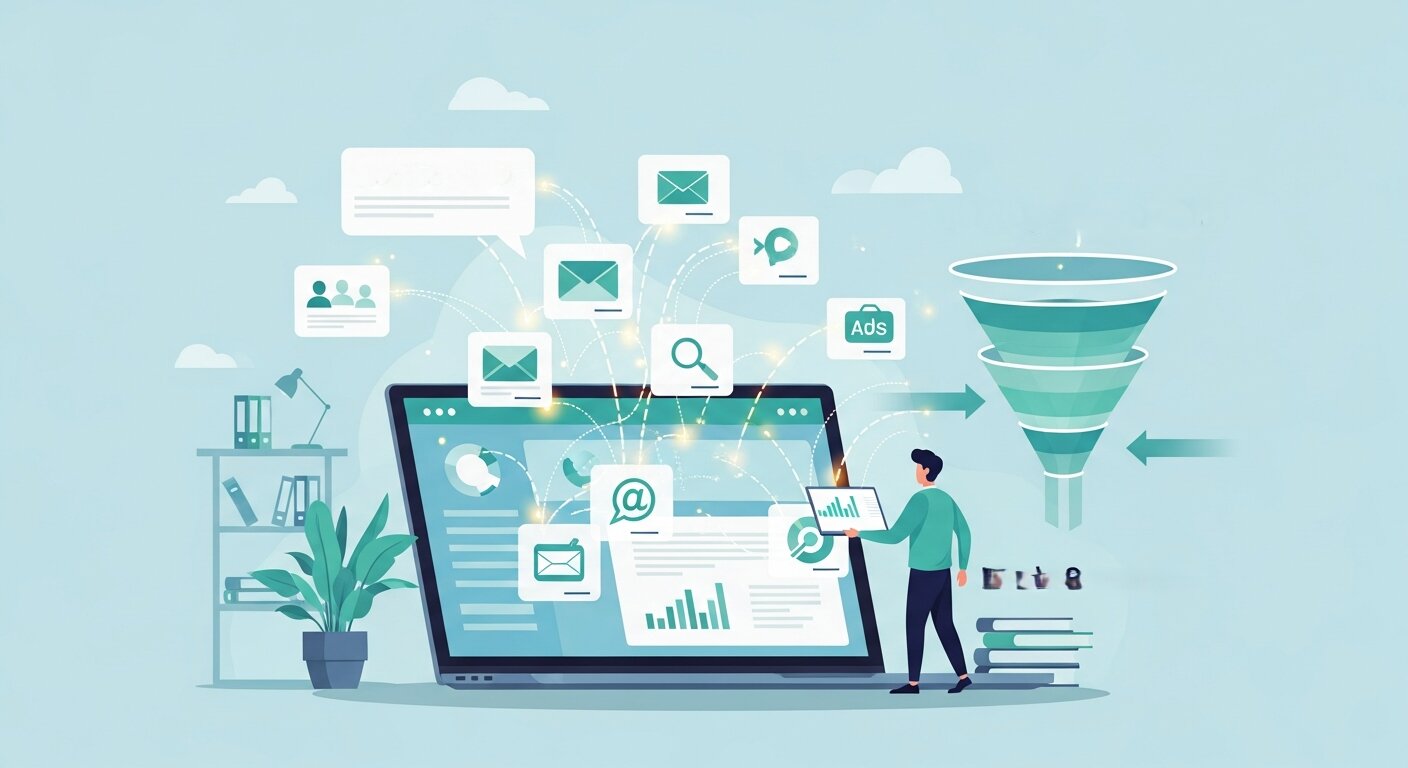
Every business needs a steady stream of potential customers to survive and grow. But waiting for people to stumble across your website is not a viable strategy. You need a proactive approach to attract and convert your target audience.
Learning how to generate leads online can completely transform your sales pipeline. It shifts your focus from cold outreach to attracting people who are genuinely interested in what you have to offer. By meeting your customers where they spend their time online, you build trust before you even make a pitch.
This guide covers everything you need to know to build a sustainable pipeline. We will explore practical techniques, from optimizing your digital presence to leveraging social media and email. By the time you finish reading, you will have a clear roadmap to capture the attention of your ideal prospects and turn them into loyal customers.
Online lead generation strategies
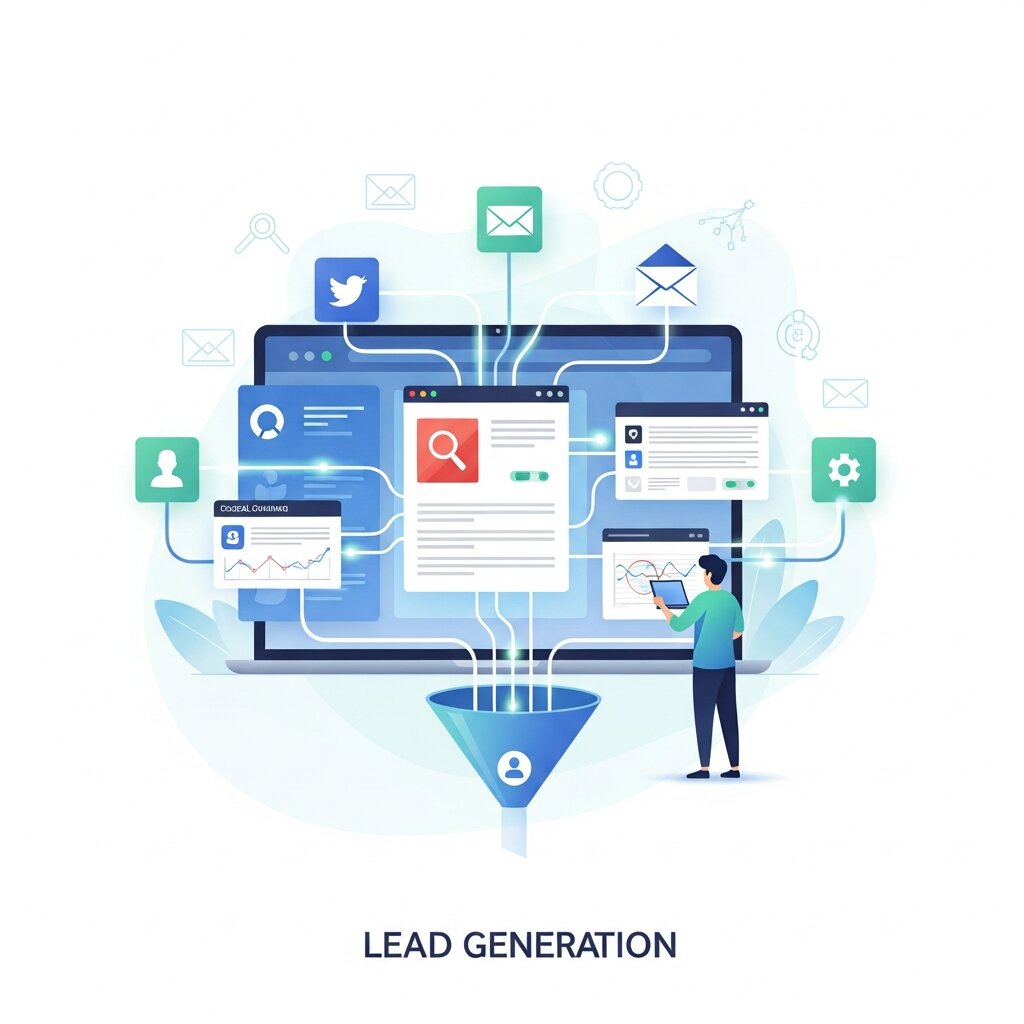
A strong strategy to generate leads online requires a well-balanced combination of inbound and outbound marketing approaches working together. Inbound tactics focus on attracting users organically through high-value content such as blogs, SEO pages, videos, and guides that solve real customer problems. Outbound strategies, on the other hand, involve proactively reaching targeted audiences through email campaigns, paid ads, and direct outreach.
The most effective businesses do not rely on a single channel. Instead, they build an integrated system using SEO to capture organic traffic, content marketing to educate prospects, and paid advertising to scale reach quickly. When these channels work together, they create multiple touchpoints across the customer journey, helping to warm up prospects gradually and improve conversion rates significantly.
For beginners, mastering SEO lead generation strategies is one of the most effective ways to build long-term organic traffic and consistent lead flow.
How to generate leads for business online
To effectively generate leads online, businesses must start with deep audience research. This means creating detailed buyer personas that define demographics, pain points, goals, buying behavior, and preferred platforms. Understanding your audience ensures every piece of content and campaign is aligned with real user intent rather than assumptions.
Once personas are defined, businesses should map content to each stage of the funnel—awareness, consideration, and decision. Educational content builds trust in the early stage, while comparison pages, case studies, and testimonials help influence decisions later. Consistency across messaging, visuals, and tone across all platforms strengthens brand authority and increases lead conversion probability over time.
Digital marketing lead generation techniques

Digital marketing provides some of the most scalable ways to generate leads online with precision and measurable results. Pay-per-click (PPC) advertising allows businesses to target users actively searching for solutions, ensuring high purchase intent traffic. Advanced targeting options like demographics, interests, and behaviors make campaigns highly efficient.
Retargeting campaigns are equally powerful, allowing businesses to re-engage visitors who interacted with the website but didn’t convert. These reminders significantly improve conversion rates by keeping the brand visible during the decision-making process. Additionally, webinars, virtual workshops, and gated content downloads act as strong lead capture tools because users willingly exchange their contact information for valuable insights.
You can explore advanced strategies in this Meta lead generation guide, which shows how to capture leads directly from Facebook ads with minimal friction.
Best ways to get online leads

Free methods to generate leads online
It is completely possible to generate leads online without spending heavily on ads by using organic strategies. Search engine optimization (SEO) is one of the most powerful long-term methods. By publishing optimized blog content targeting relevant keywords, businesses can attract consistent organic traffic over time.
Another effective method is community engagement. Participating in niche forums, Reddit discussions, Quora answers, and LinkedIn groups allows businesses to demonstrate expertise and build trust naturally. When done correctly, this approach generates inbound interest without feeling like direct selling, resulting in higher-quality leads.
B2B online lead generation tactics
B2B companies often require more strategic efforts to generate leads online because the sales cycle is longer and involves multiple stakeholders. LinkedIn is one of the most powerful platforms for this purpose, offering advanced targeting through Sales Navigator to reach decision-makers directly.
In B2B marketing, content plays a critical role. Case studies, whitepapers, industry reports, and ROI-focused content help demonstrate credibility and build trust. Personalized outreach combined with value-driven insights performs significantly better than generic sales messages. Consistent thought leadership also helps position the brand as an authority in its industry.
Lead generation funnel for websites
A well-structured website funnel is essential to generate leads online consistently. The top of the funnel focuses on attracting visitors through SEO blogs, social media content, and paid ads. This stage is all about awareness and education.
The middle of the funnel nurtures interest using gated content such as webinars, ebooks, or in-depth guides that require users to submit contact details. The bottom of the funnel focuses on conversion through strong calls-to-action like free consultations, demos, pricing pages, or trial offers. A properly optimized funnel ensures visitors are guided smoothly from awareness to conversion.
Social media lead generation strategies
Social media is one of the most effective platforms to generate leads online when used strategically. Paid lead generation ads on platforms like Facebook, Instagram, and LinkedIn allow users to submit their details directly without leaving the platform, reducing friction and increasing conversions.
Organic strategies are equally important. Regular posting of valuable content, educational insights, and engaging visuals helps build audience trust over time. Promoting lead magnets such as free guides or webinars through posts and stories drives traffic to landing pages, while active engagement with comments and messages strengthens relationships and increases lead quality.
Landing page optimization for lead generation
A dedicated landing page must have one single goal: capturing user information. Remove navigation menus and external links that might distract the visitor. Use clear, benefit-driven headlines. Ensure your lead capture form only asks for essential information, as longer forms drastically reduce conversion rates. Add social proof, such as client testimonials, to increase trust.
Email marketing for online lead generation
Once you capture an email address, the work has only just begun. Use automated email sequences to nurture your new leads. Send a mix of educational content, company news, and promotional offers. Segment your email list based on user behavior and interests to ensure your messaging remains highly relevant and engaging.
Frequently Asked Questions
1. What does it mean to generate leads online?
It means identifying and attracting potential customers through digital channels like search engines, social media, and email, usually by collecting their contact information.
2. How much does online lead generation cost?
Costs vary wildly. Organic methods like SEO cost time, while paid advertising requires a financial budget. You can start for free or spend thousands a month.
3. What is a lead magnet?
A lead magnet is a free item or service given away to gather contact details. Common examples include newsletters, trial subscriptions, and free consultations.
4. Which social media platform is best for B2B leads?
LinkedIn is widely considered the most effective platform for B2B lead generation due to its professional user base and advanced targeting tools.
5. How long does it take to see results from SEO?
SEO is a long-term strategy. It typically takes three to six months to start seeing significant increases in organic traffic and lead volume.
6. Are paid ads worth it for lead generation?
Yes, paid ads offer immediate visibility and precise targeting, making them an excellent way to generate leads online quickly while your organic strategies build momentum.
7. What makes a good landing page?
A good landing page has a clear headline, compelling copy, a single call-to-action, minimal distractions, and a simple form.
8. How many fields should my lead capture form have?
Keep it as short as possible. Usually, asking for a name and an email address results in the highest conversion rates.
9. What is lead nurturing?
Lead nurturing is the process of building relationships with prospects at every stage of the sales funnel, usually through targeted email marketing.
10. Why is my website getting traffic but no leads?
Your site might lack clear calls-to-action, your lead magnets might not appeal to your audience, or your landing pages might be poorly optimized.
11. Can a small business generate leads online for free?
Absolutely. Small businesses can leverage local SEO, social media engagement, and content marketing to attract leads without ad spend.
12. What is a conversion rate?
The conversion rate is the percentage of visitors who complete a desired action, such as filling out a form or downloading an ebook.
13. How do I know if a lead is qualified?
A qualified lead matches your ideal customer profile and has shown a clear interest in your product, usually determined by their engagement with your content.
14. Should I buy email lists?
No. Buying lists often violates anti-spam laws, harms your email deliverability, and yields poor results because the contacts never opted in to hear from you.
15. How often should I email my leads?
Frequency depends on your industry and audience, but generally, emailing once a week keeps your brand top-of-mind without overwhelming their inbox.



Leave a Reply