


Hacking photosynthesis could revolutionize renewable energy by producing green hydrogen, biofuels, and carbon-neutral fuels. Inspired by nature, scientists are developing artificial systems to convert sunlight into sustainable power, offering promising solutions to climate change and global energy challenges.
As the world searches for sustainable solutions to the growing energy crisis, scientists are turning to nature’s own power plants—plants and algae—for inspiration. Photosynthesis Hacks explore ways to replicate or enhance the natural process that converts sunlight, water, and carbon dioxide into chemical energy. By studying and “hacking” photosynthesis, researchers aim to create clean, renewable energy sources like hydrogen, biofuels, and carbon-neutral fuels that are both environmentally friendly and cost-efficient. These innovations could transform industries, reduce reliance on fossil fuels, and provide scalable energy solutions for the future. In essence, Photosynthesis Hacks bridge biology and technology, unlocking the potential to power tomorrow sustainably.
What Is Photosynthesis About?

Before we address how photosynthesis hacks can be hacked for energy solutions, it is crucial to understand what this life-giving function is all about. At heart, photosynthesis hacks marks the process that converts light energy into chemical energy using water and carbon dioxide from the air as raw materials- not unlike how a battery stores power when charged. Plants and animals, all life forms on Earth, for that matter, require functioning sunlight-digesters to survive. While one might expect such a process in all the plants and algae that do it, there are also certain bacteria which can photosynthesize. As well as the carbon compounds that keep themselves alive, drive their metabolism and fashion ingrowing points of new tissue, they form into food for all wild creatures. In return, they produce oxygen as a by product.
What Exactly Makes Photosynthesis Such A Good Subject For Renewable Energy Research?
Abundant Solar Energy:
The solar energy flux crossing the surface of Earth amounts to about 175 petawatts. Nature’s technology of photosynthesis demonstrate combining harnessing this new form of energy at least partly in a sustainable way provides a blueprint for future clean energy sources. A light-driven process that uses water and carbon dioxide to produce oxygen can be expected to have multiple applications. This enormous grand Light-That-Is-t Baltimore, however has clearly not been engineered to handle sudden evolutionary switches-shape segments of its output converge on the one straight line. How do we adapt this efficient process that’s billions of years older unchanged to generate energy for people in today’s world?
Sustainability:
Both sustainable natural gas and oil which produce–not consume–oxygen have been depleted. This restricts conventional ways humans can survive; so it
Since its invention, photosynthesis has produced the perfect complement to the devices that now create the brilliant clean power; such as wind generators as well as huge solar panels. In a 1976 quote from Ralph Waldo Emerson. “There is] a single natural principle from inherent force coursing up through and stimulating every organ down into its minutest cell at every moment of eight only-thousandths a second.” The human eye, eight millimeters wide and one sixth of an inch thick in its paper-plane incarnation, are generally said to operate lungs (especially those that substitute for lobed gills) are the main reason these devices work so well: they carry in fresh air the last thing new safe-world energy supply of this kind added to itself in the last century.
The Science Behind Photosynthesis Hacks
To hack photosynthesis is by means of alteration to produce the process in an energy form suitable for humans such as hydrogen or other biofuels Impossible is glucose. Various methods are being investigated –
Boosting Photosynthetic Efficiency
Most plants only convert 1–2 percent of sunlight they absorb into usable energy. Researchers are trying to engineer plant cells to raise this figure by bringing in synthetic components or modifying enzymes found naturally.
Introducing Better Enzymes
Scientists are working on optimizing enzymes like RuBisCO, which plays a major part in the photosynthesis process. Give it more speed to become faster and make them more efficient.
Artificial Photoreactors
Artificial photoreactors will use synthetic systems to model the early steps of photosynthesis and convert sunlight into chemical energy far more effectively.
Carbon-Neutral Fuels from Artificial Photosynthesis
Artificial photosynthesis takes its basic inspiration from nature, but with a technological spin. This process sends photosynthesis into the lab, typically using materials such as semiconductors to capture sunlight and promote chemical reactions.
Key advances:
-
Hydrogen Production Through Modified Systems:
Requiring no additional power other than sunlight, researchers have made systems that divide water molecules into hydrogen and oxygen. -
Methanol Generation:
Another possible use is that light-driven reactions could convert carbon dioxide into methanol, offering renewable alternatives to fossil fuels.
Genetically Modified Organisms in Photosynthesis
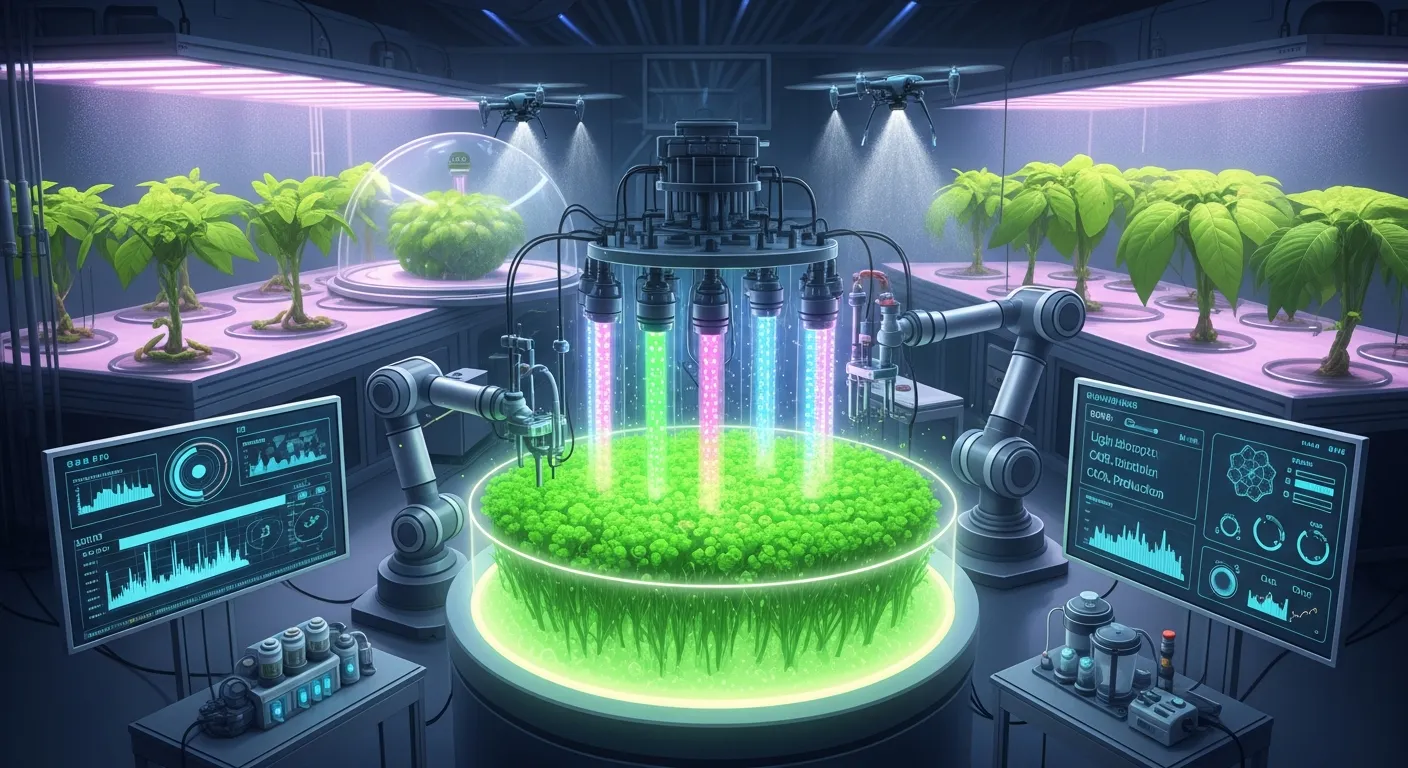
Super Algae:
Some researchers are trying to make algae generate biofuels more efficiently through genetic engineering. In ten years, these could conceivably replace traditional crude oil completely.
Plants That Generate Energy:
Imagine crops that not only yield food but also create bioelectricity at the same time through their photosynthesis.
Solar Energy
To the extent that it can be stored as chemical energy, rather than simply in the growing bodies of plants or algae, any surplus will go into generating electricity using technology such as splitting water into hydrogen fuel.
Green Hydrogen Economy
Hydrogen fuels are a rapidly growing, sustainable form of power. By splitting water through photosynthesis into hydrogen and oxygen, it can be done on a large enough scale that, in principle, carbon-neutral hydrogen would have numerous applications—from car fuels to lighting.
Carbon Capture
Images reveal how photosynthesis-inspired technologies might help with climate control: converting CO2 emissions outright into fuels or materials reduces the concentration of greenhouse gases in our atmosphere.
Challenges and Limitations
Despite encouraging signs for photosynthesis hacks, several challenges remain.
-
Scaling: Scaling up photosynthesis-inspired technologies from lab to real world.
-
Cost: Artificial photosynthesis and genetic engineering methods are expensive.
-
Energy Conversion Rates: May struggle to meet large-scale energy demands.
-
Ethical Concerns: Genetic manipulation raises ecological and ethical issues.
Yet the research community remains optimistic. Breakthroughs are expected from this field.
Carbon Utilization
Systems of artificial photosynthesis reduce the content of atmospheric CO2, with the bonus of environmental friendliness over traditional renewable energy. In this way, the technology is still in its infancy relative to mature renewables like wind or photovoltaic solar.
Biofuels from Engineered Algae
Algae grow faster than traditional crops and can produce biofuels efficiently. Scientists are genetically engineering algae to increase oil production for biodiesel. Unlike food crops, algae can grow in wastewater or non-arable land, minimizing environmental conflict. Photosynthesis drives algae growth, making it a renewable energy source. Large-scale algae farms could supply sustainable fuels for transportation and aviation. Continued innovation in genetic modification and cultivation methods may unlock its full potential.
Carbon Capture Through Photosynthesis Technology
One of the greatest benefits of photosynthesis-based systems is carbon capture. Natural photosynthesis removes CO2 from the atmosphere. Artificial systems aim to replicate this process by converting carbon dioxide into fuels or useful chemicals. This dual function—energy generation and carbon reduction—makes it highly attractive. Implementing carbon utilization technologies could mitigate climate change while producing renewable fuels. Integrating carbon capture with energy production strengthens environmental sustainability.
Improving Energy Conversion Efficiency
Natural photosynthesis converts only a small fraction of sunlight into usable energy. Scientists are researching ways to improve this efficiency using synthetic biology and nanotechnology. Enhancing enzyme performance and optimizing light absorption can boost energy output. Artificial systems are being designed to bypass biological limitations. Improved efficiency is critical for meeting global energy demands. Breakthroughs in this area could dramatically accelerate renewable adoption.
Economic Implications of Photosynthesis-Based Energy
Transitioning to photosynthesis-inspired technologies could reshape global energy markets. Reduced fossil fuel dependency would impact oil economies while creating green jobs. Investment in renewable research stimulates innovation and economic growth. While initial costs remain high, long-term savings from sustainable energy could offset expenses. Governments and private companies are increasingly funding research initiatives to accelerate commercialisation.
Environmental Benefits Beyond Energy
Photosynthesis-inspired technologies not only produce clean fuel but also promote environmental balance. Reduced greenhouse gas emissions improve air quality. Sustainable hydrogen production eliminates toxic pollutants associated with fossil fuels. Additionally, artificial systems could support water purification and waste reduction. Environmental resilience improves when renewable solutions replace extractive energy systems.
Global Collaboration in Renewable Research

Developing photosynthesis-based energy requires interdisciplinary collaboration. Scientists, engineers, policymakers, and private enterprises must work together. International partnerships accelerate innovation and funding opportunities. Global climate agreements encourage investment in sustainable technologies. Collaboration ensures knowledge sharing and faster technological breakthroughs.
The Future of Energy Could Turn Green in More Than One Way
The prospect of turning nature’s energy blueprint into a clean, renewable power source is as thrilling as it is daunting. By hacking photosynthesis hacks, as with artificial photoreactors, genetic modifications, and biofuel-producing algae, a new energy era awaits.
While there are obstacles ahead, the potential is too great to ignore. Governments, scientists and private enterprises are investing heavily in research, reflecting that this field holds promise.
Do you want to contribute to the green energy revolution?
Share this post to raise consciousness, nurture innovation dialogs and keep the conversation alive. Tomorrow isn’t just renewable; it’s beautifully natural and powered by the sun, stemming from the very root of photosynthesis.
Conclusion
Photosynthesis hacks represent one of the most exciting frontiers in renewable energy research. By learning from nature’s blueprint, scientists aim to create sustainable fuels, green hydrogen, and carbon-neutral solutions. Although challenges remain in scaling and cost, continued innovation and global collaboration offer hope. Photosynthesis-inspired technologies may soon transform energy systems worldwide, reducing environmental damage while powering future generations. The path forward is green, sustainable, and powered by the sun.
FAQs
1. What is photosynthesis?
Photosynthesis hacks is the natural biological process in which plants, algae, and certain bacteria convert sunlight, water, and carbon dioxide into chemical energy stored as glucose. During this process, oxygen is released as a byproduct, making it essential for life on Earth.
2. How can photosynthesis produce energy?
Scientists study and replicate photosynthesis to develop systems that convert sunlight into usable fuels like hydrogen or biofuels. By mimicking plant processes, researchers aim to generate clean, renewable energy without harmful carbon emissions.
3. What is artificial photosynthesis?
Artificial photosynthesis is a laboratory-based technology designed to imitate the natural photosynthesis Photosynthesis hacks process. It uses synthetic materials such as semiconductors and catalysts to capture sunlight and convert water and carbon dioxide into renewable fuels.
4. What is green hydrogen?
Green hydrogen is hydrogen fuel produced using renewable energy sources like solar or wind power. When generated through photosynthesis-inspired systems, it produces zero carbon emissions and releases only water when used as fuel.
5. Why is photosynthesis important for renewable energy?
Photosynthesis hacks provides a sustainable and carbon-neutral model for converting sunlight into stored chemical energy. By copying this natural blueprint, scientists hope to develop long-lasting clean energy solutions to reduce fossil fuel dependence.
6. Can artificial leaves replace solar panels?
Artificial leaves are not designed to replace solar panels but to complement them. While solar panels generate electricity, artificial leaves produce hydrogen fuel, offering additional energy storage and fuel generation possibilities.
7. What are biofuels from algae?
Biofuels from algae are renewable fuels derived from photosynthesis hacks algae that produce oils and biomass. These fuels can be refined into biodiesel or other alternatives, providing cleaner substitutes for traditional fossil fuels.
8. How does photosynthesis help carbon capture?
Photosynthesis hacks naturally removes carbon dioxide from the atmosphere and converts it into organic compounds. Artificial systems aim to replicate this function, reducing greenhouse gases while simultaneously producing renewable energy.
9. What are the main challenges?
Major challenges include improving efficiency, reducing production costs, scaling laboratory technology for industrial use, and ensuring long-term durability. Overcoming these obstacles is essential for widespread commercial adoption.
10. Is photosynthesis-based energy commercially available?
Most photosynthesis-inspired technologies remain in research or pilot phases. However, significant advancements in hydrogen production and artificial systems suggest commercialization may become viable in the near future.
11. How efficient is natural photosynthesis?
Natural photosynthesis converts roughly 1–2% of absorbed sunlight into usable chemical energy. Scientists are working to enhance this efficiency through genetic engineering and artificial systems to meet large-scale energy needs.
12. Will photosynthesis replace fossil fuels?
Photosynthesis-based technologies have strong potential to reduce fossil fuel dependence. However, full replacement will require continued research, large-scale infrastructure development, and cost-effective implementation across global energy systems.



Leave a Reply