

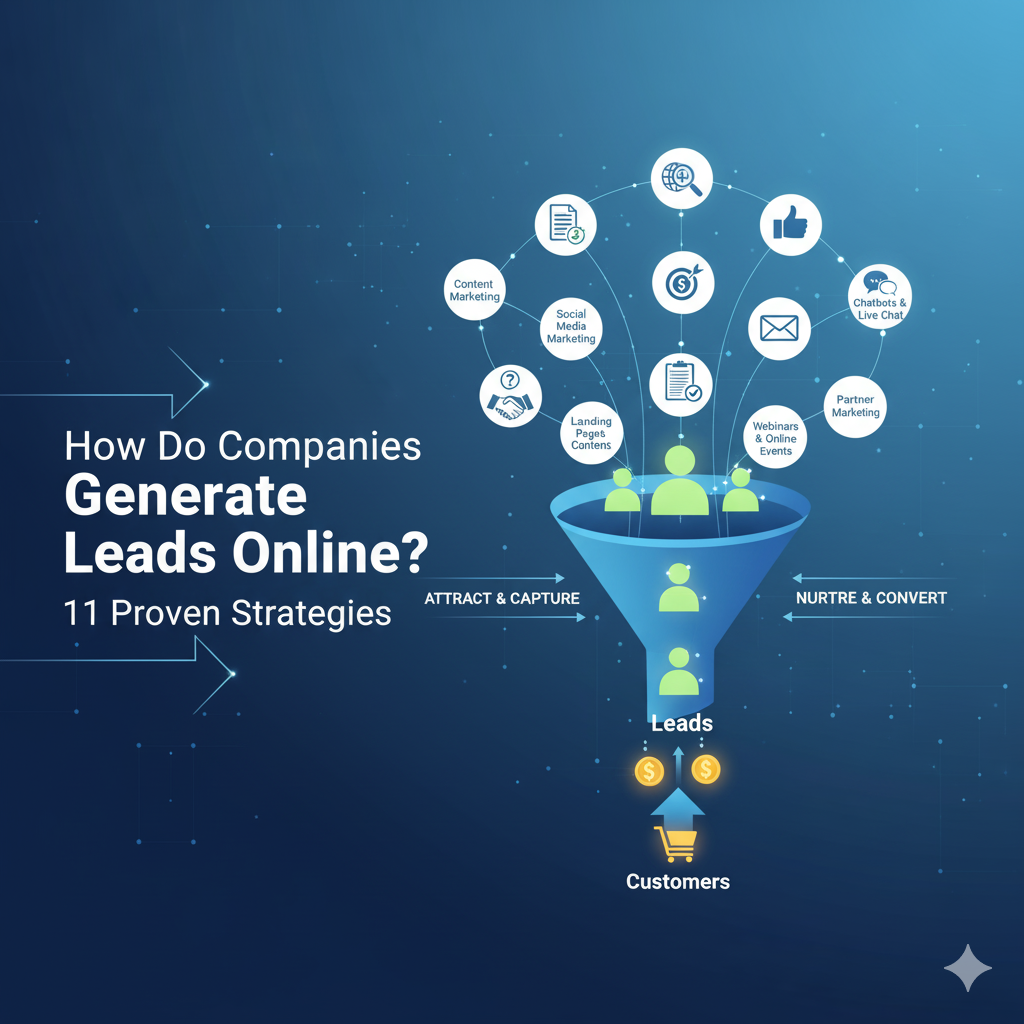
Online lead generation is essential for modern business growth. By combining strategies such as SEO, content marketing, PPC, social media, email marketing, and automation, companies can attract qualified prospects at scale. A successful approach focuses on audience understanding, value-driven engagement, and continuous optimization to convert leads into long-term customers.
The digital landscape has transformed how businesses find and attract potential customers. Gone are the days when companies relied solely on cold calling or print advertisements to fill their sales pipeline. Online lead generation has become the backbone of modern business growth, offering unprecedented opportunities to connect with prospects at scale.
But what exactly drives successful online lead generation? The answer lies in understanding your audience, choosing the right channels, and implementing strategies that consistently attract qualified prospects. Whether you’re a startup looking to establish your first customer base or an established company seeking to expand your reach, mastering online lead generation is essential for sustainable growth.
Search Engine Optimization (SEO)

Search engine optimization remains one of the most cost-effective ways to generate leads online. When potential customers search for solutions to their problems, you want your business to appear at the top of their results.
SEO focuses on improving your website’s visibility in organic search results. This involves optimizing your content for relevant keywords, improving site speed and user experience, and building authority through quality backlinks. The beauty of SEO lies in its long-term benefits—once you rank well for important keywords, you can attract a steady stream of qualified leads without ongoing advertising costs.
Companies that invest in SEO typically see compound returns over time. While it takes patience to see results, the leads generated through organic search often have higher conversion rates because they’re actively seeking solutions you provide. Learn more about 12 Free Lead Generation Tools to Grow Your Business.
Content Marketing
Content marketing serves as the foundation for many successful lead generation campaigns. By creating valuable, informative content that addresses your audience’s pain points, you attract potential customers and establish your expertise in the industry.
Effective content marketing takes many forms, including blog posts, whitepapers, case studies, videos, podcasts, and infographics. The key is understanding what type of content your target audience prefers and where they consume it. A B2B software company might focus on in-depth guides and case studies, while a consumer brand might prioritize video content and social media posts.
Content marketing works particularly well because it provides value before asking for anything in return. This approach builds trust and positions your company as a helpful resource, making prospects more likely to engage when they’re ready to make a purchase.
Pay-Per-Click (PPC) Advertising
PPC advertising offers immediate visibility and precise targeting options for lead generation. Platforms like Google Ads, Microsoft Advertising, and social media advertising networks allow you to reach potential customers exactly when they’re searching for your products or services.
The advantage of PPC lies in its speed and control. You can launch campaigns quickly, target specific demographics or search terms, and measure results in real-time. Google Ads, for example, lets you appear at the top of search results for relevant keywords, capturing leads who have high purchase intent.
Successful PPC campaigns require careful keyword research, compelling ad copy, and optimized landing pages. While you pay for each click, the immediate traffic and measurable results make PPC an attractive option for companies looking to scale their lead generation quickly.
Social Media Marketing
Social media platforms provide unique opportunities to generate leads through both organic content and paid advertising. Each platform attracts different demographics and supports various content types, allowing companies to tailor their approach based on where their target audience spends time.
LinkedIn excels for B2B lead generation, offering sophisticated targeting options and a professional user base. Instagram and Facebook work well for visual brands targeting consumers, while Twitter can be effective for thought leadership and real-time engagement. TikTok has emerged as a powerful platform for reaching younger demographics through creative, entertaining content.
Social media lead generation works best when companies focus on building relationships rather than pushing sales messages. Sharing valuable content, engaging with followers, and participating in relevant conversations helps establish trust and credibility that eventually converts into leads.
Email Marketing
Email marketing remains one of the highest ROI channels for lead generation. While it’s often viewed as a nurturing tool, email can also attract new leads through strategic campaigns and list-building tactics.
Newsletter subscriptions, exclusive content offers, and email courses can entice website visitors to share their contact information. Once you have their email address, you can nurture these leads with targeted content that moves them through your sales funnel.
The key to successful email lead generation lies in providing immediate value in exchange for contact information. This might be a useful resource, exclusive discount, or access to valuable content. Automated email sequences can then nurture these leads systematically, delivering the right message at the right time.
Webinars and Virtual Events

Webinars have become increasingly popular for lead generation, especially in B2B markets. They offer an excellent way to demonstrate expertise, provide valuable education, and interact with potential customers in real-time.
The registration process for webinars naturally captures lead information, while the content itself serves as a powerful demonstration of your knowledge and capabilities. Attendees who invest time in your webinar are often highly qualified prospects who may be ready to move forward in the buying process.
Successful webinars focus on education rather than sales pitches. By solving real problems and answering questions, you build trust and position your company as a valuable partner. Follow-up communications with attendees can then nurture these leads toward a purchase decision.
Lead Magnets and Gated Content
Lead magnets are valuable resources offered in exchange for contact information. These can include ebooks, guides, templates, checklists, free trials, or exclusive reports. The key is ensuring your lead magnet provides genuine value that’s relevant to your target audience.
Effective lead magnets address specific pain points or provide solutions to common problems your prospects face. A marketing agency might offer a social media template pack, while a financial advisor could provide a retirement planning checklist.
The success of lead magnets depends on clear value proposition and strategic placement. Landing pages should clearly communicate what prospects will receive and why it’s valuable to them. The easier you make it for visitors to understand and access your offer, the more leads you’ll generate.
Referral Programs
Referral programs leverage your existing customers to generate new leads. Since people trust recommendations from friends and colleagues more than traditional advertising, referrals often convert at higher rates than other lead sources.
Effective referral programs provide incentives for both the referrer and the new customer. This might include discounts, account credits, exclusive access, or other valuable benefits. The key is making the referral process simple and rewarding for all parties involved.
Technology platforms make it easier than ever to track referrals and automate rewards. However, the foundation of any successful referral program is delivering exceptional customer experiences that naturally motivate people to recommend your business.
Partnerships and Collaborations
Strategic partnerships can significantly expand your lead generation reach by tapping into complementary audiences. This might involve co-creating content, cross-promoting products, or participating in joint marketing campaigns.
Partnership opportunities exist across various formats, from guest posting and podcast appearances to co-hosted events and affiliate relationships. The key is finding partners whose audience aligns with your target market without directly competing with your business.
Successful partnerships require clear agreements about lead sharing, attribution, and responsibilities. When done well, partnerships can provide access to new audiences while sharing the costs and efforts of lead generation activities.
Marketing Automation
Marketing automation platforms help companies scale their lead generation efforts by streamlining repetitive tasks and delivering personalized experiences at scale. These tools can capture leads, nurture prospects, and identify sales-ready opportunities automatically.
Automation works particularly well for lead scoring, email nurturing, and behavioral-triggered communications. For example, when someone downloads a whitepaper, the system can automatically send follow-up emails, assign lead scores based on engagement, and notify sales teams when prospects reach predetermined thresholds.
The most effective automation strategies combine multiple touchpoints and channels to create seamless prospect experiences. Rather than replacing human interaction, automation handles routine tasks so your team can focus on building relationships with qualified leads.
Conversion Rate Optimization (CRO)
Conversion rate optimization focuses on improving the percentage of website visitors who become leads. Rather than driving more traffic, CRO maximizes the value of existing visitors through strategic improvements to user experience and conversion paths.
CRO involves testing different elements of your website, landing pages, and forms to identify what drives better conversion rates. This might include headline variations, button colors, form lengths, or page layouts. Small improvements can have significant impacts on overall lead generation results.
The most successful CRO programs combine data analysis with systematic testing. By understanding how visitors interact with your site and continuously optimizing based on results, you can steadily improve your lead generation performance over time.
Building Your Lead Generation Strategy

Successful online lead generation requires a strategic approach that combines multiple channels and tactics. The most effective companies don’t rely on a single method but instead create integrated campaigns that reinforce each other across different touchpoints.
Start by understanding your target audience deeply—their challenges, preferences, and online behavior. This knowledge will guide your channel selection and content creation efforts. Focus on providing genuine value at every interaction, building trust that eventually converts into business opportunities.
Remember that lead generation is just the beginning of the customer journey. The ultimate goal is converting leads into customers and building long-term relationships that drive sustainable business growth. By implementing these proven strategies consistently and measuring results carefully, you can build a lead generation system that fuels your company’s success.
FAQ: Online Lead Generation
What is online lead generation?
Online lead generation is the process of attracting and capturing potential customers through digital channels such as websites, search engines, social media, email, and paid advertising.
Which lead generation channel works best?
There is no single best channel. SEO, content marketing, PPC, social media, and email work best when combined based on your audience, goals, and budget.
How long does it take to see results from SEO?
SEO is a long-term strategy. Most businesses begin seeing meaningful results within 3–6 months, with performance improving over time.
Are paid ads better than organic strategies?
Paid ads deliver faster results, while organic strategies like SEO and content marketing provide long-term, cost-effective lead generation. A balanced approach is ideal.
How do I improve lead quality, not just quantity?
Focus on targeting the right audience, offering relevant lead magnets, optimizing landing pages, and using lead scoring and nurturing through automation.



Leave a Reply