


Lead qualification helps sales teams focus on high-value prospects by evaluating budget, authority, need, and timeline. Using frameworks like BANT, lead scoring, and technology-driven insights improves conversion rates and shortens sales cycles. A structured qualification process ensures better resource allocation, stronger alignment between sales and marketing, and more predictable revenue growth.
Converting prospects into paying customers starts with one crucial step: qualifying your leads effectively. Without proper lead qualification, sales teams waste countless hours chasing unqualified prospects while qualified buyers slip through the cracks.
Lead qualification is the process of evaluating potential customers to determine their likelihood of making a purchase. It involves assessing factors like budget, authority, need, and timeline to prioritize your sales efforts on the most promising opportunities.
Effective lead qualification can increase your sales team’s productivity by up to 50% while improving conversion rates significantly. This comprehensive guide will show you exactly how to implement a lead qualification system that identifies high-value prospects and accelerates your sales cycle.
Understanding Lead Qualification Fundamentals
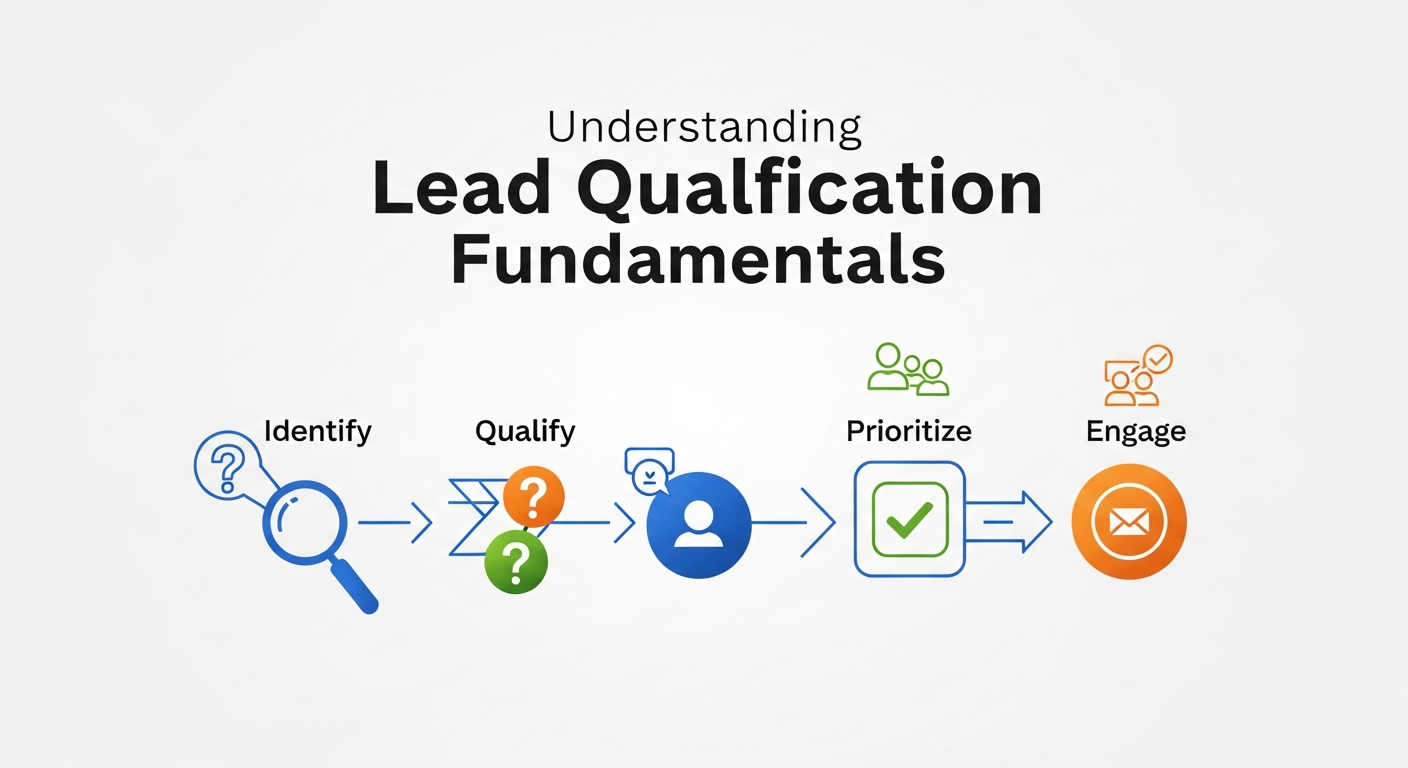
Lead qualification serves as the bridge between marketing and sales. It transforms raw leads into categorized prospects based on their potential value to your business. This process helps sales teams focus their energy on leads most likely to convert while nurturing those who aren’t quite ready to buy.
The qualification process typically occurs in two stages: marketing qualified leads (MQLs) and sales qualified leads (SQLs). MQLs have shown interest through marketing touchpoints like downloading content or attending webinars. SQLs have been further vetted by sales and meet specific criteria indicating purchase intent.
Successful lead qualification requires clear criteria, consistent processes, and regular refinement based on performance data. Companies with mature lead qualification processes see 9.3% higher sales quotas achieved compared to those without structured approaches.
The BANT Framework for Lead Qualification
BANT remains one of the most widely used lead qualification frameworks. This acronym stands for Budget, Authority, Need, and Timeline—four critical factors that determine a lead’s sales readiness.
Budget Assessment
Understanding a prospect’s budget prevents wasting time on leads who cannot afford your solution. However, budget discussions require finesse. Rather than asking directly about budget, explore the cost of their current problem or the value they place on solving it.
Ask questions like: “What’s the cost of not addressing this issue?” or “How much are you currently spending on similar solutions?” These approaches reveal budget capacity without putting prospects on the defensive.
Authority Identification
Identifying decision-makers and influencers early in the process streamlines the sales cycle. In B2B sales, purchasing decisions often involve multiple stakeholders with varying levels of influence.
Map the decision-making process by asking: “Who else would be involved in evaluating this type of solution?” or “What does your approval process typically look like for investments of this size?”
Need Evaluation
A genuine need forms the foundation of every successful sale. Surface pain points by asking open-ended questions that reveal the prospect’s current challenges and desired outcomes.
Effective need-assessment questions include: “What prompted you to look for a solution like this?” and “How are you currently handling this challenge?” These questions uncover not just what they need, but why they need it.
Beyond identifying the need, explore the impact of the problem on their business or personal goals. Ask questions such as: “How does this challenge affect your team’s productivity or revenue?” or “What happens if this issue isn’t resolved soon?” Understanding the consequences helps prioritize leads and tailor solutions that directly address the prospect’s most pressing pain points, increasing the likelihood of conversion.
Timeline Determination
Understanding when a prospect plans to make a decision helps prioritize follow-up activities. Some leads require immediate attention while others need long-term nurturing.
Gauge timeline by asking: “When would you ideally like to have a solution in place?” or “What factors might accelerate or delay this decision?”
Additionally, assess internal and external factors that could impact the decision-making process. For example, budget approval cycles, upcoming projects, or seasonal needs may influence timing. Identifying these elements allows your sales team to schedule follow-ups strategically, align resources, and offer solutions that match the prospect’s urgency. By understanding both explicit and implicit timelines, you can nurture leads more effectively, prevent lost opportunities, and optimize your sales pipeline for higher conversion rates.
Advanced Lead Scoring Techniques
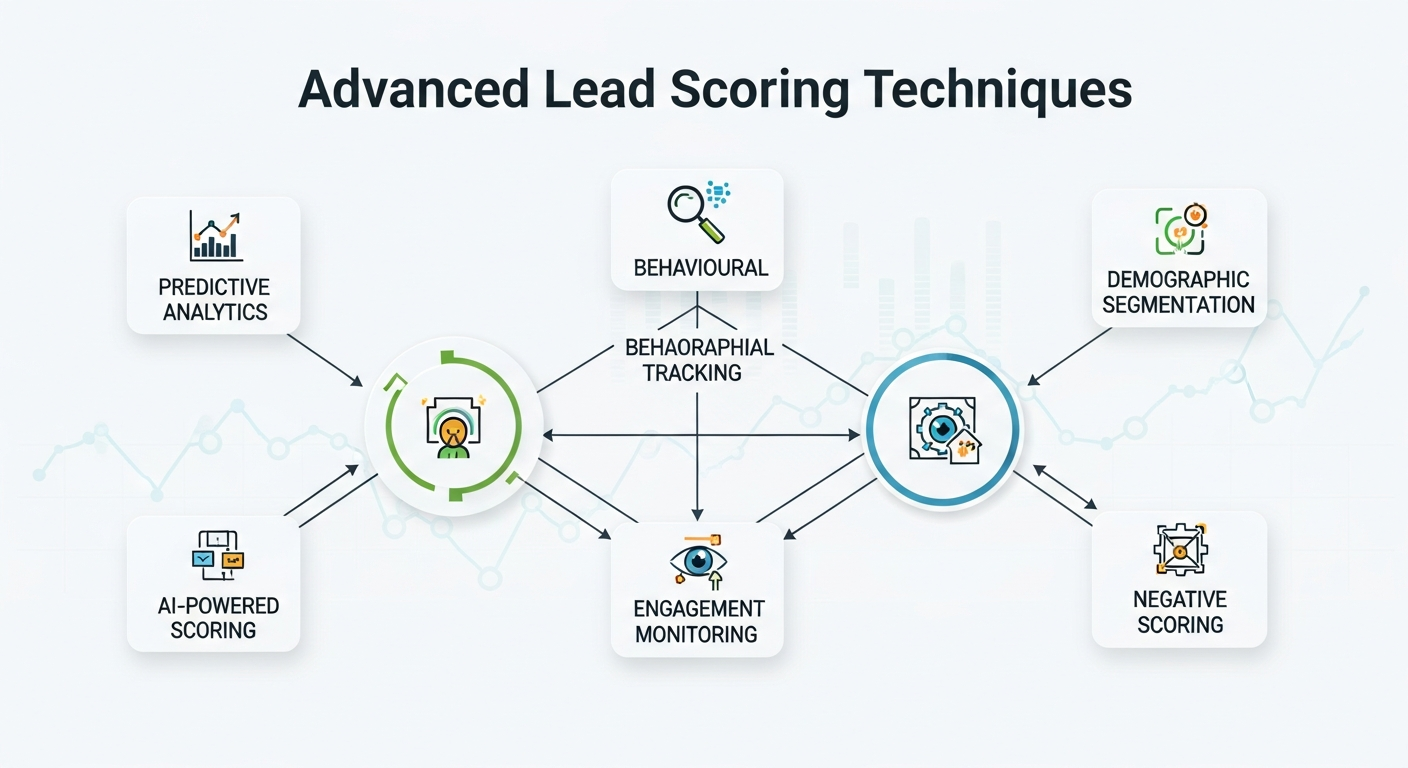
Lead scoring assigns numerical values to prospects based on specific criteria, enabling more sophisticated qualification. This data-driven approach reduces subjective bias and ensures consistent evaluation across your sales team.
Beyond basic scoring, lead scoring allows prioritization of prospects based on both demographic and behavioral factors, such as company size, job role, engagement with marketing content, or website interactions. High-scoring leads indicate strong purchase intent, enabling sales teams to focus on the most promising opportunities. Additionally, negative scoring can identify low-quality leads, preventing wasted effort. Over time, analyzing scoring patterns helps refine criteria, improve predictive accuracy, and optimize sales strategies, ensuring that resources are directed toward leads with the highest likelihood of conversion.
Demographic Scoring
Demographic factors like company size, industry, and job title provide valuable qualification insights. Assign higher scores to prospects whose profiles match your ideal customer persona.
For example, if enterprise clients convert at higher rates, give more points to leads from companies with 1,000+ employees. Similarly, C-level executives might receive higher scores than individual contributors.
Behavioral Scoring
Behavioral indicators reveal purchase intent more accurately than demographics alone. Track engagement levels across multiple touchpoints to identify highly interested prospects.
High-value behaviors might include requesting demos, downloading pricing information, or visiting your pricing page multiple times. Each action should receive appropriate point values based on historical conversion data.
Negative Scoring
Subtract points for characteristics that indicate poor fit or low likelihood to convert. This might include competitors, students, or prospects from industries where you’ve historically struggled.
Negative scoring prevents unqualified leads from receiving unwarranted attention while ensuring your team focuses on genuine opportunities.
Leveraging Technology for Lead Qualification

Modern lead qualification relies heavily on technology to scale processes and improve accuracy. Customer relationship management (CRM) systems, marketing automation platforms, and AI-powered tools enhance qualification effectiveness.
CRM Integration
Your CRM should serve as the central hub for lead qualification data. Configure custom fields to capture BANT information and other qualification criteria specific to your business.
Set up automated workflows that trigger qualification tasks based on lead behavior or characteristics. For example, high-scoring leads might automatically receive expedited follow-up while lower-scoring prospects enter nurturing sequences.
To maximize effectiveness, ensure your CRM is fully integrated with marketing automation tools, email platforms, and analytics systems. This integration allows real-time data syncing, giving sales teams complete visibility into prospect activity across all touchpoints.
Standardize data entry and qualification stages to maintain consistency across your team. Clear definitions for MQLs, SQLs, and disqualified leads help avoid confusion and improve collaboration between sales and marketing.
Regularly audit your CRM data to remove duplicates, update outdated information, and refine workflows. Clean, accurate data ensures better reporting, stronger forecasting, and more reliable lead qualification decisions over time.
Marketing Automation
Marketing automation platforms excel at behavioural tracking and lead scoring. They monitor prospect interactions across multiple channels, building comprehensive engagement profiles.
Use progressive profiling to collect qualification information without overwhelming prospects gradually. Each form interaction should gather additional data points that inform the qualification process.
Artificial Intelligence
AI-powered tools analyze vast amounts of data to predict lead quality with remarkable accuracy. These systems identify patterns human reviewers might miss, continuously improving qualification precision.
Consider implementing predictive lead scoring solutions that analyze historical conversion data to identify characteristics of high-value prospects automatically.
Developing Qualification Questions
Effective qualification depends on asking the right questions at the right time. Prepare a repertoire of open-ended questions that reveal critical information without feeling like an interrogation.
Discovery Questions
Discovery questions uncover current situations and challenges. They help prospects articulate their problems while providing valuable qualification insights.
Examples include: “Walk me through your current process for…” or “What’s working well with your current approach, and what could be improved?”
Problem-Focused Questions
Problem-focused questions dig deeper into specific pain points, revealing the urgency and impact of unresolved issues.
Try questions like: “How is this challenge affecting your team’s productivity?” or “What happens if this problem isn’t addressed in the next six months?”
Solution-Oriented Questions
Solution-oriented questions explore how prospects envision addressing their challenges. These reveal budget allocation, timeline expectations, and decision criteria.
Ask: “What would an ideal solution look like?” or “How would you measure the success of a new solution?”
Qualification Best Practices
Implementing lead qualification successfully requires adherence to proven best practices that maximize effectiveness while maintaining positive prospect relationships.
Qualify Early and Often
Begin qualification during initial interactions rather than waiting until later in the sales process. Early qualification prevents investing time in unqualified opportunities.
Continue qualifying throughout the sales cycle as circumstances change. Budget approvals, personnel changes, or shifting priorities can affect qualification status.
Listen More Than You Speak
Effective qualification requires active listening skills. Allow prospects to share their stories while you gather valuable intelligence about their situations.
Use the 80/20 rule: listen 80% of the time and speak 20%. This approach builds trust while maximizing information gathering opportunities.
Document Everything
Maintain detailed records of qualification conversations and discoveries. This information proves invaluable for follow-up interactions and team collaboration.
Use standardized forms or templates to ensure consistent documentation across your sales team. Include both factual information and subjective observations about prospect engagement levels.
Regular Review and Refinement
Lead qualification criteria should evolve based on performance data and market changes. Regularly review conversion rates by qualification score to identify improvement opportunities.
Conduct quarterly reviews with sales and marketing teams to assess qualification effectiveness and make necessary adjustments.
Common Lead Qualification Mistakes
Avoiding common qualification mistakes can significantly improve your results. Learn from these frequent errors to enhance your qualification process.
Some common pitfalls include over-qualifying leads, which can exclude prospects who might convert with proper nurturing, or applying inconsistent criteria across the sales team, leading to confusion and missed opportunities. Ignoring gut instincts is another error; while data is critical, experienced salespeople often recognize red flags that metrics may not capture. Additionally, failing to regularly review and refine qualification processes can cause outdated assumptions to persist, reducing effectiveness. By identifying and addressing these mistakes, sales teams can focus on high-value prospects, improve conversion rates, and build stronger relationships with qualified leads over time.
Over-Qualifying Prospects
Some sales teams set qualification bars too high, eliminating potentially viable opportunities. While qualification prevents wasted effort, overly strict criteria might exclude prospects who could convert with proper nurturing.
Ignoring Gut Instincts
Data and frameworks provide valuable guidance, but experienced salespeople develop intuition about prospect quality. Don’t ignore warning signs just because a lead scores well on paper.
Inconsistent Application
Qualification only works when applied consistently across all leads. Ensure your entire team understands and follows established qualification criteria.
Conclusion
Effective lead qualification is the foundation of a high-performing sales organization. By systematically identifying which prospects are most likely to convert, sales teams can reduce wasted effort and focus on meaningful opportunities. Combining proven frameworks, thoughtful questioning, data-driven scoring, and modern technology creates a scalable qualification process. When consistently applied and regularly refined, lead qualification accelerates sales cycles, improves close rates, and delivers long-term competitive advantage.
Frequently Asked Questions (FAQ)
1. Why is lead qualification important for sales teams?
Lead qualification helps sales teams prioritize prospects with real buying potential, reducing time spent on unqualified leads and improving overall conversion rates.
2. What is the most effective lead qualification framework?
BANT is one of the most widely used frameworks, but combining it with lead scoring and behavioral data often produces the best results.
3. Can lead qualification be automated?
Yes. CRM systems, marketing automation platforms, and AI tools can automate scoring, tracking, and segmentation, making qualification more accurate and scalable.
4. Should every lead be qualified?
Yes, but not all leads require the same depth of qualification. Early-stage leads may need light qualification, while high-intent prospects require deeper evaluation.
5. How do sales and marketing work together on lead qualification?
Marketing identifies and nurtures MQLs, while sales further qualifies them into SQLs through direct interaction, ensuring alignment and smoother handoffs.



Leave a Reply