


Every successful business starts with this one key ingredient: customers. Mastering the art of modern lead acquisition is the definitive bridge between a struggling startup and a market-leading enterprise.
This guide provides an exhaustive look at how to generate sales leads through advanced digital marketing, AI-driven automation, and strategic networking. From B2B lead generation processes to hyperlocal tactics, we explore the tools and metrics necessary to build a scalable, high-converting sales pipeline for long-term success.
The Foundation: Understanding the Lead Generation Lifecycle
To truly understand how to generate sales leads, it is essential to recognize that lead generation is the lifeblood of business growth. It is not a one-time tactic or isolated campaign, but a continuous, repeatable lifecycle. This lifecycle involves attracting the right audience, capturing their interest, qualifying their intent, and nurturing relationships until prospects are ready to engage with sales. Businesses that master this lifecycle create predictable revenue and long-term scalability.
Is Lead Generation Sales or Marketing?
This is a long-standing debate, but the most accurate answer is both. Lead generation exists at the intersection of marketing and sales.
Marketing’s role is to create demand—building awareness, credibility, and interest through content, advertising, and brand messaging. Lead generation translates that demand into measurable opportunities by capturing prospect information and assessing intent. Sales then takes over to convert qualified leads into paying customers.
When marketing and sales operate in silos, leads often go cold, response times slow, and conversion rates suffer. Strong alignment—shared definitions of lead quality, clear handoff processes, and unified metrics—ensures that no opportunity falls through the cracks.
Demand Generation vs. Lead Generation
Although closely related, demand generation and lead generation serve different strategic purposes.
Demand generation focuses on the top of the funnel. Its goal is to build brand awareness, educate the market, and establish trust with a broad audience over time. This includes content marketing, thought leadership, social media presence, and PR.
Lead generation, on the other hand, is the tactical execution of turning that interest into action. It involves capturing contact details through forms, demos, consultations, or subscriptions and moving prospects into a sales-ready pipeline.
A simple way to understand the difference:
- Demand generation is the hook that attracts and warms the audience
- Lead generation is the net that captures and qualifies interested prospects
Successful businesses don’t choose one over the other—they integrate both into a single, cohesive growth strategy.
Defining Your Ideal Customer Persona (ICP)
You cannot learn how to generate sales leads effectively if you don’t know who you are looking for.
- Researching Existing Data: Use tools to see who is already visiting your site.
- Talent Management & Nonprofit Lead Generation Strategies: Even in non-commercial sectors, identifying the “perfect donor” or “ideal candidate” is crucial for efficiency.
- Hyper-Personalized Lead Generation: In 2026, generic messaging fails. Use data to tailor your outreach to specific job titles, pain points, and geographic locations.
High-Impact Content Marketing Strategies

Content marketing lead generation is about providing value before asking for a sale. This “inbound” approach ensures that the leads you attract are already educated and interested.
What is a Lead Magnet?
A lead magnet in digital marketing is an incentive—like an eBook, checklist, or whitepaper—offered to prospects in exchange for their contact information.
The Power of Interactive Content
Static PDFs are becoming obsolete. Interactive lead generation is the new frontier.
- Harness the Power of Interactive Quizzes for Lead Generation: Quizzes have high completion rates and provide deep data on prospect needs.
- Interactive Quizzes for Lead Generation: A “What’s Your Marketing Score?” quiz can segment leads automatically based on their results.
- Video Marketing for Lead Generation: Use personalized video messages to break through the noise of crowded inboxes.
Search Engine Optimization (SEO) for Leads
What is SEO lead generation? It is the process of ranking your website for keywords that indicate a high “intent to buy.” Working with a SEO lead generation company or using tools like can help you identify these “money keywords.”
Turning Your Website into a Lead Generation Machine
- WordPress Lead Generation: Use conversion-focused themes and plugins like OptinMonster.
- Landing Page Optimization: Every ad should point to a dedicated landing page, not a generic homepage.
- What Is Organic Lead Generation? This refers to leads that find you naturally through search engines without you paying for the click.
Leveraging Social Media for Sales
Social platforms are no longer just for brand awareness; they are robust tools for direct acquisition.
- How to Generate Sales Leads on LinkedIn: Use Sales Navigator to find decision-makers and engage with them through thoughtful content rather than “pitch-slapping.”
- How to Generate Sales Leads on Instagram: Utilize “Link in Bio” tools and interactive Stories to capture interest.
- Facebook’s Powerful Lead Generation Tool: Facebook Lead Ads allow users to fill out forms without ever leaving the app, significantly reducing friction.
- How To Add Affiliate Links In Facebook Lead Generation: Integrate your affiliate partners directly into your lead forms to monetize your traffic immediately.
Real Estate and Niche Industry Tactics
Different industries require specialized “playbooks” for how to generate sales leads.
Real Estate Wholesale Lead Generation
For investors, real estate wholesale lead generation is about finding off-market deals.
- Undeniable Real Estate Wholesale Lead Generation Tactics: Use “driving for dollars,” skip tracing, and bandit signs for local marketing to find distressed properties.
- How to Replicate the Opcity Lead Generation Model: Focus on live-transfer leads where the prospect is vetted and immediately connected to an agent.
Specialized Sectors
- Mortgage Broker Lead Generation Strategies: Focus on mortgage calculators and educational content about interest rates.
- Manufacturing Lead Generation: Utilize LinkedIn and industry-specific trade portals to find procurement officers.
- How to Generate Solar Leads: Leverage hyperlocal lead generation and government incentive data to target homeowners.
The Role of AI and Automation in Lead Generation
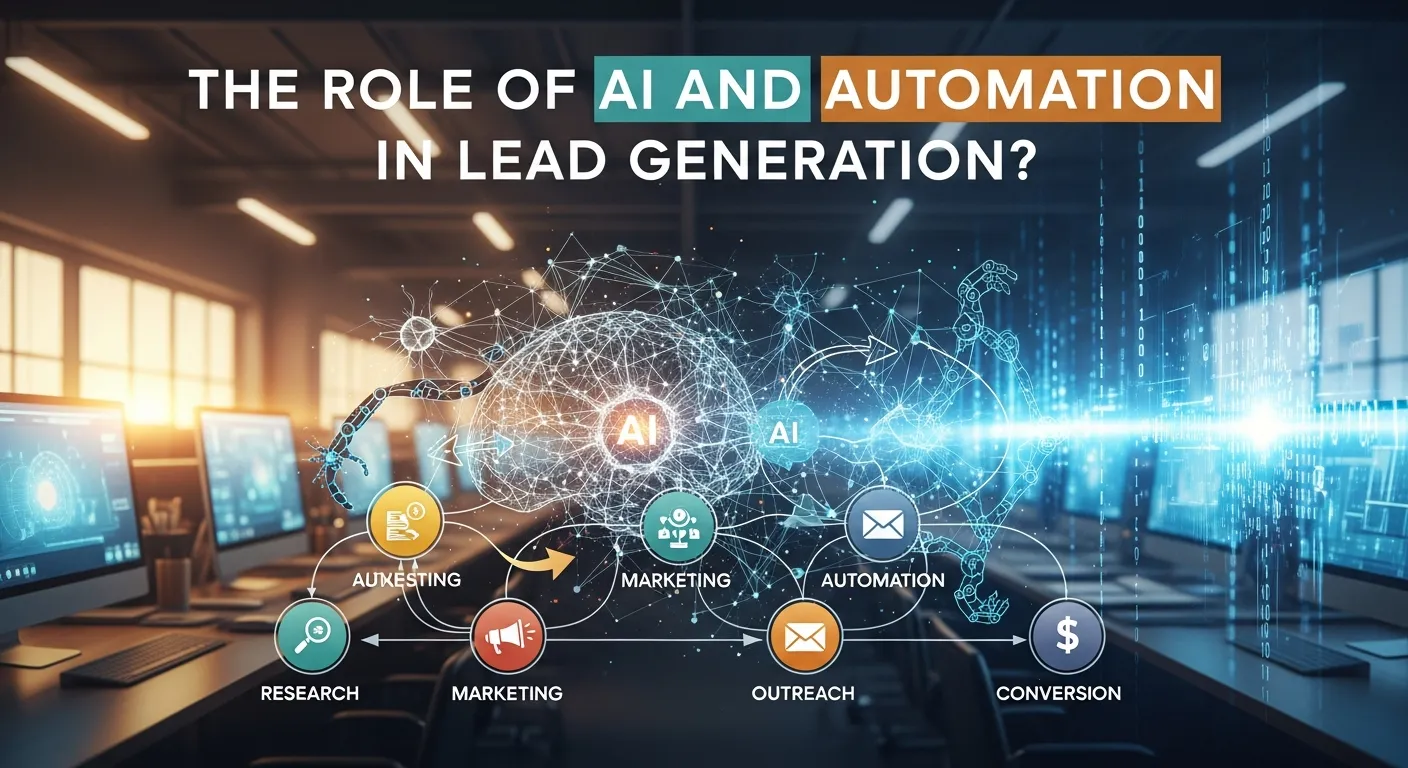
In today’s digital-first environment, manual lead entry and spreadsheet-based tracking are relics of the past. Businesses that want to understand how to generate sales leads at scale must embrace AI and automation. These technologies remove friction, increase speed, and ensure no opportunity is lost due to slow response times or human error.
Automation allows lead generation systems to operate continuously—capturing, qualifying, and routing leads in real time—while AI enhances decision-making by identifying patterns humans often miss.
Leveraging AI Chatbots for Lead Generation
An AI-powered lead generation chatbot acts as a 24/7 virtual sales assistant. It engages visitors the moment they land on your website, asks intelligent qualifying questions, and filters out low-intent “window shoppers.” High-quality prospects can be instantly booked into your sales calendar without human intervention.
For businesses learning how to generate sales leads efficiently, chatbots dramatically reduce response times, increase conversion rates, and free sales teams to focus on closing rather than chasing.
Predictive Lead Generation with AI
Predictive lead generation uses AI to analyze historical data, user behavior, and engagement signals to determine which prospects are most likely to convert. Instead of treating every lead equally, AI assigns priority based on buying intent, helping sales teams focus on leads that are statistically more likely to close.
This approach transforms lead generation from guesswork into a data-driven growth engine.
CRM for Lead Management
Even the best lead generation strategy fails without proper lead management. Customer Relationship Management (CRM) platforms such as HubSpot and Salesforce centralize all lead data, automate follow-ups, and track every interaction across the funnel.
CRMs ensure that no lead is forgotten, no follow-up is missed, and every prospect moves through a structured nurturing process—an essential component of mastering how to generate sales leads consistently.
Outbound Strategies: Cold Outreach and PPC
While inbound marketing builds long-term momentum, outbound strategies are often necessary to accelerate results—especially in competitive or high-ticket markets.
Cold Emailing for Lead Generation
Cold email remains highly effective when executed correctly. Success depends on personalization, relevance, and a strategic follow-up sequence. Modern cold outreach focuses on solving specific problems rather than pushing generic sales pitches, making it a powerful tool for B2B lead generation.
PPC Lead Generation
Pay-Per-Click advertising captures prospects with immediate intent. Platforms like Google Ads allow businesses to appear precisely when users are actively searching for solutions. This makes PPC one of the fastest ways to generate high-intent sales leads.
What Is CPA Lead Generation?
CPA (Cost-Per-Acquisition) lead generation allows advertisers to pay only when a specific action is completed—such as a form submission, phone call, or booking. This performance-based model minimizes risk and maximizes efficiency, making it a popular choice for both B2C and C2B campaigns.
For businesses serious about learning how to generate sales leads profitably, CPA models align cost directly with results, ensuring predictable and scalable growth.
Measuring Success: Lead Gen Metrics
You cannot improve what you do not track. Measuring the right lead generation metrics allows you to identify what’s working, what’s wasting budget, and where to optimize for growth. A high-performance dashboard should focus on quality, efficiency, and conversion impact, not vanity numbers.
Essential lead generation metrics to track include:
- Cost per Lead (CPL): Measures how efficiently your budget generates new leads.
- Lead Conversion Rate: Percentage of visitors who become leads.
- Lead-to-Customer Rate: Shows lead quality and sales alignment.
- Traffic-to-Lead Ratio: Evaluates landing page and funnel effectiveness.
- Lead Velocity Rate (LVR): Tracks month-over-month lead growth.
- Customer Acquisition Cost (CAC): Total cost to acquire a paying customer.
- Return on Investment (ROI): Revenue generated versus lead generation spend.
Tracking these metrics consistently enables data-driven decisions, predictable scaling, and sustainable revenue growth.
To Outsource or Build In-House?
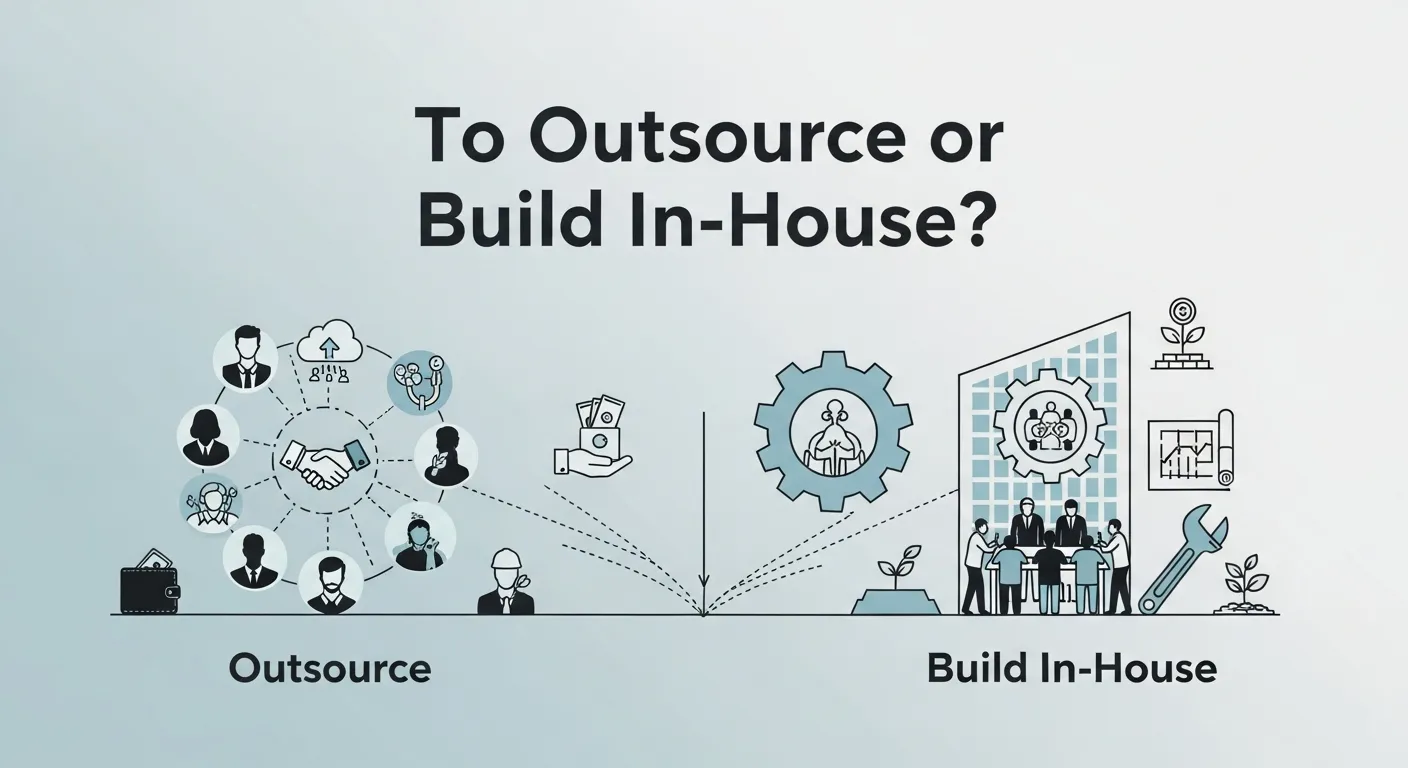
Many business owners ask: Should you outsource lead generation or build an in-house team? The right answer depends on your resources, timeline, and growth goals.
If you lack the technical infrastructure, internal expertise, or time to test and optimize campaigns, outsourcing can deliver faster results. Hiring a specialized lead generation agency or an experienced SEO lead generation company provides access to proven systems, advanced tools, and trained professionals—often at a lower cost than building from scratch.
On the other hand, in-house lead generation offers greater control and long-term cost efficiency once systems are mature. However, it requires upfront investment in hiring, training, software, and ongoing optimization.
In summary:
- Outsource for speed, expertise, and immediate ROI
- In-house for control, customization, and long-term scalability
The most effective businesses often adopt a hybrid model, outsourcing early-stage execution while gradually building internal capabilities for sustained growth.
Comparison: Lead Generation vs. Brokers
| Feature | Lead Generation | Brokers |
|---|---|---|
| Control | Full control over lead quality, messaging, and follow-up | Limited control once leads are handed over |
| Cost Structure | Predictable costs based on campaigns or CPA | Often higher commissions per deal |
| Lead Quality | Custom-qualified to match ideal customer profiles | Varies depending on broker incentives |
| Scalability | Highly scalable with automation and data | Difficult to scale without adding brokers |
| Speed to Market | Fast once systems are optimized | Slower due to manual negotiations |
| Data Ownership | Business owns and retains all lead data | A broker typically controls client data |
| Brand Building | Strengthens brand trust and authority | Brand visibility remains low |
| Long-Term ROI | Improves over time with optimization | Flat or declining ROI over time |
Conclusion
Mastering how to generate sales leads is an ongoing journey of testing and optimization. By leveraging AI chatbots, WordPress lead generation tools, and hyper-personalized outreach, you can build a system that delivers results 24/7. Remember, there is no “one-size-fits-all” answer; the best strategy is the one you track, refine, and scale consistently.
FAQs: Mastering Lead Generation
1. How do companies generate leads online?
Companies generate leads online by building a multi-channel acquisition system. This typically includes content marketing and SEO to attract organic traffic, paid advertising (PPC) to capture high-intent searches, and social media campaigns to engage and nurture audiences. Traffic is directed to optimized landing pages, lead forms, chatbots, or booking tools where visitor information is captured and qualified.
2. What does a lead generator do at Home Depot?
At Home Depot, lead generators work directly with in-store customers to identify interest in home improvement services such as flooring, HVAC, roofing, or kitchen remodeling. Their role is to qualify intent, collect accurate customer details, and schedule service consultations, which are then handled by approved contractors or internal teams.
3. Is there any legitimacy to lead-generating websites?
Yes, legitimate lead-generation websites exist, but quality varies widely. Trusted platforms like FatRank focus on data accuracy, niche targeting, and ethical sourcing. Lower-quality providers may resell the same lead to multiple competitors, reducing conversion rates. Always verify exclusivity, data freshness, and compliance before purchasing leads.
4. What is a “Ping Post” lead generation model?
The Ping Post model is a real-time bidding system used heavily in industries like insurance, finance, and home services. A lead’s partial information is first “pinged” to multiple buyers to assess interest and price. The full lead data is then “posted” and sold instantly to the highest bidder. This model prioritizes speed and monetization but requires strict quality control.
5. How to check your Facebook ad leads effectively?
You can review and manage Facebook ad leads through Meta Business Suite, where all form submissions are stored. For better follow-up and automation, most businesses integrate Facebook Lead Ads with a CRM system, allowing instant notifications, lead scoring, and faster contact, critical for maximizing conversion rates.
6. What is lead generation in recruitment?
Lead generation in recruitment involves sourcing and engaging potential candidates—especially passive talent who are not actively job hunting. Recruiters use LinkedIn outreach, employer branding content, talent databases, and referral programs to build long-term candidate pipelines that can be activated when roles open.
7. How to generate new customer leads in Orlando with Google Local Service Ads?
To generate leads using Google Local Service Ads, businesses must focus on hyperlocal optimization. This includes claiming and verifying your profile, passing the “Google Guaranteed” background check, maintaining strong reviews, and responding quickly to inquiries. High responsiveness increases visibility at the very top of local search results.
8. Can you use low-lead gasoline in generators safely?
Despite sounding like a marketing term, this is a mechanical issue. Most modern portable generators require unleaded gasoline with no more than 10% ethanol. Using leaded or incorrect fuel can damage the engine, reduce performance, and void warranties. Always consult the manufacturer’s manual before fueling.
9. Why is lead generation the lifeblood of business growth?
Lead generation keeps the sales pipeline full. Without a steady inflow of new prospects, sales activity slows, revenue stagnates, and growth becomes unpredictable. A consistent lead generation system ensures sales teams always have qualified opportunities, enabling scalable and sustainable business growth.
10. What makes Sophos a cybersecurity leader in next-generation protection?
Sophos is considered a leader due to its use of AI-driven threat detection and synchronized security across endpoints, networks, and cloud environments. By combining automation with real-time intelligence, Sophos delivers proactive protection, positioning itself as an industry leader through innovation and reliability.



Leave a Reply