


Manufacturing lead generation focuses on attracting highly qualified prospects through education, trust, and long-term relationship-building. By using SEO, content marketing, trade shows, CRM systems, and strategic partnerships, manufacturers can navigate long sales cycles effectively. A consistent, data-driven approach helps generate better leads, improve conversions, and drive sustainable business growth.
Manufacturing companies face unique challenges when it comes to attracting new customers. Unlike B2C businesses that can rely on flashy advertising and impulse purchases, manufacturers must navigate longer sales cycles, complex decision-making processes, and highly specialized target audiences.
The good news? With the right lead generation strategies, manufacturing companies can build a steady pipeline of qualified prospects who are genuinely interested in their products and services. This comprehensive guide will walk you through proven tactics specifically designed for the manufacturing sector, helping you turn prospects into profitable partnerships.
Whether you’re a small machine shop looking to expand your client base or an established manufacturer seeking to diversify into new markets, the strategies outlined below will help you generate more qualified leads and grow your business.
Understanding Manufacturing Lead Generation
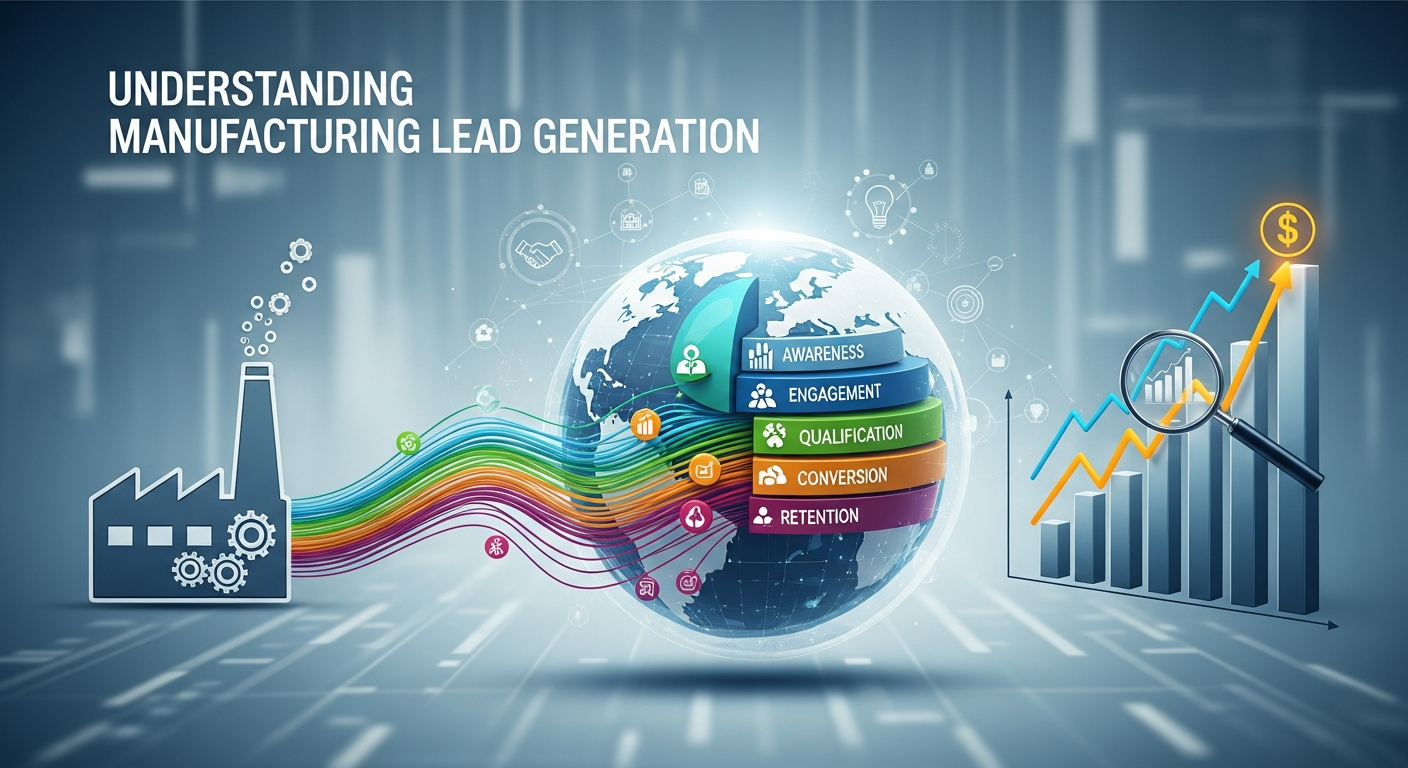
Manufacturing lead generation differs significantly from other industries. Your potential customers aren’t browsing social media looking for the next trendy product—they’re engineers, procurement managers, and business owners searching for reliable solutions to specific technical challenges.
This means your lead generation approach must be educational, relationship-focused, and built on trust. Manufacturing buyers typically spend months researching potential suppliers before making contact, so your marketing efforts need to provide value throughout their entire research journey.
The manufacturing sales cycle can extend anywhere from six months to several years, depending on the complexity and cost of your products. This extended timeline requires patience and a systematic approach to nurturing prospects over time.
Digital Marketing Strategies for Manufacturers
Search Engine Optimization (SEO)
Manufacturing companies often overlook SEO, but it’s one of the most effective ways to attract qualified leads. Your potential customers are actively searching for solutions online, typing queries like “custom metal fabrication services” or “precision machining for aerospace components.”
Start by identifying the specific terms your ideal customers use when searching for your services. Focus on long-tail keywords that reflect actual buyer intent rather than generic industry terms. For example, “CNC machining for medical device prototypes” is more valuable than simply “CNC machining.”
Create detailed service pages that explain your capabilities, certifications, and typical applications. Include case studies and technical specifications that demonstrate your expertise. This content serves dual purposes: it helps your website rank higher in search results while educating potential customers about your capabilities.
Content Marketing That Converts
Manufacturing buyers consume substantial amounts of content during their research process. They read white papers, watch technical videos, and download specification sheets before ever contacting a supplier.
Develop content that addresses common technical challenges in your industry. Write detailed guides explaining manufacturing processes, share case studies highlighting successful projects, and create comparison articles that help buyers understand different options.
Video content performs particularly well in manufacturing. Create virtual facility tours, process demonstrations, and customer testimonials. These videos help potential customers understand your capabilities and build trust in your expertise.
LinkedIn Marketing for B2B Manufacturing
LinkedIn remains the most effective social media platform for manufacturing lead generation. Decision-makers in manufacturing actively use LinkedIn to research suppliers and stay updated on industry trends.
Optimize your company page with detailed information about your capabilities, certifications, and recent projects. Share regular updates showcasing completed projects, new equipment, and industry insights.
Individual employee profiles can be equally powerful. Encourage your sales team and company leaders to maintain professional LinkedIn profiles and actively engage with prospects and industry content.
Traditional Marketing Methods That Still Work
Trade Shows and Industry Events
Despite the digital revolution, trade shows remain crucial for manufacturing lead generation. These events provide opportunities to demonstrate products, meet decision-makers face-to-face, and build relationships that lead to long-term partnerships.
Maximize trade show ROI by preparing thoroughly. Research attendee lists in advance and schedule meetings with key prospects. Create compelling booth displays that clearly communicate your value proposition. Train booth staff to qualify leads effectively rather than simply collecting business cards.
Follow up promptly after events. The companies that respond within 24-48 hours of a trade show typically see much higher conversion rates than those who wait weeks to reconnect.
Direct Mail and Email Campaigns
Targeted direct mail can be highly effective for manufacturing companies, especially when promoting new capabilities or services to existing customers and qualified prospects.
Create professional mailers that showcase recent projects, announce new certifications, or highlight expanded capabilities. Include clear calls-to-action that drive recipients to your website or encourage them to schedule consultations.
Email marketing works best when highly segmented and personalized. Develop separate campaigns for different customer segments, such as aerospace manufacturers, medical device companies, or automotive suppliers.
Building Strategic Partnerships
Partnership marketing often generates the highest-quality leads for manufacturing companies. These relationships provide access to pre-qualified prospects who already trust your partner’s recommendations.
Identify companies that serve your target market but don’t compete directly with your services. For example, a machine shop might partner with product design firms, while a contract manufacturer could build relationships with equipment suppliers.
Develop formal referral programs that incentivize partners to recommend your services. Provide partners with marketing materials, technical specifications, and case studies they can share with their customers.
Measuring and Optimizing Your Results
Effective lead generation requires consistent measurement and optimization. Track key metrics including lead volume, lead quality, conversion rates, and customer acquisition costs.
Manufacturing companies should pay particular attention to lead quality metrics. A smaller number of highly qualified leads typically produces better results than large volumes of unqualified prospects.
Use customer relationship management (CRM) software to track leads throughout your sales process. This data helps identify which marketing channels generate the best leads and which nurturing tactics convert prospects most effectively.
Regularly review and analyze your results. Manufacturing markets evolve continuously, and successful lead generation strategies must adapt accordingly.
Importance of Lead Quality in Manufacturing
In manufacturing, lead quality matters far more than lead quantity. A single qualified lead can represent a high-value, long-term contract, while dozens of unqualified inquiries may never convert. Manufacturing buyers have specific technical requirements, budgets, and approval processes. Targeting the right decision-makers—such as engineers, operations managers, or procurement heads—ensures your sales team spends time on opportunities with real potential. High-quality leads shorten sales cycles, improve close rates, and reduce wasted resources. By focusing on ideal customer profiles, manufacturers can build pipelines that support sustainable growth instead of chasing low-intent prospects.
Creating Technical Content That Educates Buyers
Manufacturing buyers expect depth, accuracy, and technical clarity. Educational content positions your company as a knowledgeable partner rather than a vendor. Detailed process explanations, material comparisons, tolerances, and compliance standards help prospects evaluate your capabilities. Technical blogs, CAD examples, specification sheets, and engineering FAQs build trust during long research cycles. This type of content also improves SEO for highly specific search terms. When buyers understand your expertise before contacting you, sales conversations become more productive. Educational content reduces uncertainty and establishes credibility long before the first sales call.
Using Case Studies to Build Credibility
Case studies are one of the most powerful lead generation tools for manufacturers. They demonstrate real-world problem-solving and proven results. A strong case study explains the customer challenge, your technical solution, and measurable outcomes such as cost savings, efficiency gains, or improved quality. Prospects use case studies to assess risk and validate supplier reliability. Industry-specific case studies perform best because they show relevant experience. By showcasing successful projects, manufacturers reduce buyer hesitation and accelerate trust-building, making it easier for prospects to move forward.
Website Optimization for Manufacturing Leads

Your website is often the first interaction a prospect has with your company. A manufacturing website should clearly communicate capabilities, industries served, certifications, and equipment. Technical buyers want fast access to specifications and proof of expertise. Clear calls-to-action such as “Request a Quote” or “Talk to an Engineer” guide visitors toward conversion. Optimized load speed, mobile usability, and structured navigation improve user experience. A well-optimized website turns passive visitors into active leads and supports both digital and traditional sales efforts.
Role of CRM Systems in Lead Management
Customer Relationship Management (CRM) systems are essential for managing long manufacturing sales cycles. A CRM helps track lead sources, communication history, and sales stages. This visibility ensures no opportunity is lost due to delayed follow-ups or miscommunication. CRM data also reveals which marketing channels produce the highest-quality leads. Sales and marketing alignment improves when both teams use the same system. Over time, CRM insights help manufacturers refine targeting, improve forecasting, and increase close rates. Effective CRM usage transforms lead generation into a predictable process.
Email Nurturing for Long Sales Cycles
Manufacturing sales cycles require consistent lead nurturing. Email marketing keeps your company top-of-mind during extended decision-making periods. Educational newsletters, project updates, and technical insights provide ongoing value without being pushy. Segmenting email lists by industry or application improves relevance. Automated email sequences can deliver the right information at the right time. Effective nurturing builds familiarity and trust, increasing the likelihood that prospects contact you when they are ready to buy.
Leveraging Industry Certifications and Compliance
Certifications play a critical role in manufacturing lead generation. Buyers often require suppliers to meet strict quality and compliance standards. Prominently displaying certifications such as ISO, AS9100, or FDA compliance builds immediate credibility. Content explaining how these certifications benefit customers further strengthens trust. Certifications reduce perceived risk and help buyers shortlist qualified suppliers quickly. Highlighting compliance in marketing materials ensures your company stands out in competitive procurement processes.
Using Paid Advertising Strategically
Paid advertising can support manufacturing lead generation when used strategically. Search ads targeting high-intent keywords such as “custom fabrication supplier” attract buyers actively seeking solutions. LinkedIn ads can reach specific job titles and industries. Paid campaigns work best when combined with strong landing pages and clear value propositions. While paid advertising should not replace organic strategies, it can accelerate visibility and generate immediate opportunities when budgets are carefully managed.
Account-Based Marketing (ABM) for Manufacturers
Account-based marketing focuses on targeting specific high-value companies rather than broad audiences. ABM is ideal for manufacturers serving enterprise or specialized markets. Customized messaging, personalized outreach, and tailored content address the unique needs of each account. This approach aligns sales and marketing efforts closely. ABM improves efficiency by concentrating resources on accounts with the highest revenue potential. For complex manufacturing solutions, ABM often delivers higher ROI than traditional lead generation methods.
Importance of Sales and Marketing Alignment
Manufacturing lead generation succeeds when sales and marketing teams work together. Marketing attracts and educates prospects, while sales builds relationships and closes deals. Misalignment leads to poor lead handoffs and lost opportunities. Shared definitions of qualified leads, regular feedback, and joint planning improve outcomes. Alignment ensures marketing efforts support sales goals and sales insights inform marketing strategy. Unified teams generate better-quality leads and improve conversion rates.
Taking Your Manufacturing Lead Generation to the Next Level

Successful manufacturing lead generation requires a comprehensive approach that combines digital marketing tactics with traditional relationship-building strategies. The companies that generate the most qualified leads consistently invest in multiple channels while maintaining a clear focus on their ideal customer profiles.
Start by implementing one or two of the strategies outlined above, then gradually expand your efforts as you see results. Remember that manufacturing lead generation is a long-term investment that requires patience and persistence.
Focus on building genuine relationships with prospects rather than pushing for quick sales. The manufacturing companies that take this approach consistently outperform competitors who rely solely on price-based selling.
Consider partnering with marketing professionals who understand the unique challenges of manufacturing lead generation. The right expertise can accelerate your results while helping you avoid common pitfalls that waste time and resources.
Conclusion
Manufacturing lead generation requires patience, precision, and a strong focus on trust-building. By combining digital strategies, traditional methods, and relationship-driven marketing, manufacturers can attract highly qualified prospects. Consistent measurement, optimization, and alignment between sales and marketing ensure long-term success. Companies that invest in strategic lead generation build resilient pipelines and sustainable growth.
Frequently Asked Questions (FAQ)
1. What is manufacturing lead generation?
It is the process of attracting and qualifying potential manufacturing customers.
2. Why are manufacturing sales cycles long?
Due to high costs, technical complexity, and multiple decision-makers.
3. Which marketing channel works best for manufacturers?
SEO and LinkedIn are highly effective.
4. Are trade shows still valuable?
Yes, especially for relationship-building.
5. How important is lead quality?
Extremely important—quality outweighs quantity.
6. Does content marketing work for manufacturing?
Yes, technical and educational content performs very well.
7. What role does CRM play?
It helps track leads and manage long sales cycles.
8. Is email marketing effective for manufacturers?
Yes, when personalized and educational.
9. Can small manufacturers generate leads online?
Absolutely, with targeted strategies.
10. What is ABM in manufacturing?
A strategy targeting specific high-value accounts.
11. How do you measure lead success?
By conversion rate and deal value.
12. Should manufacturers invest in paid ads?
Yes, when used strategically.



Leave a Reply