

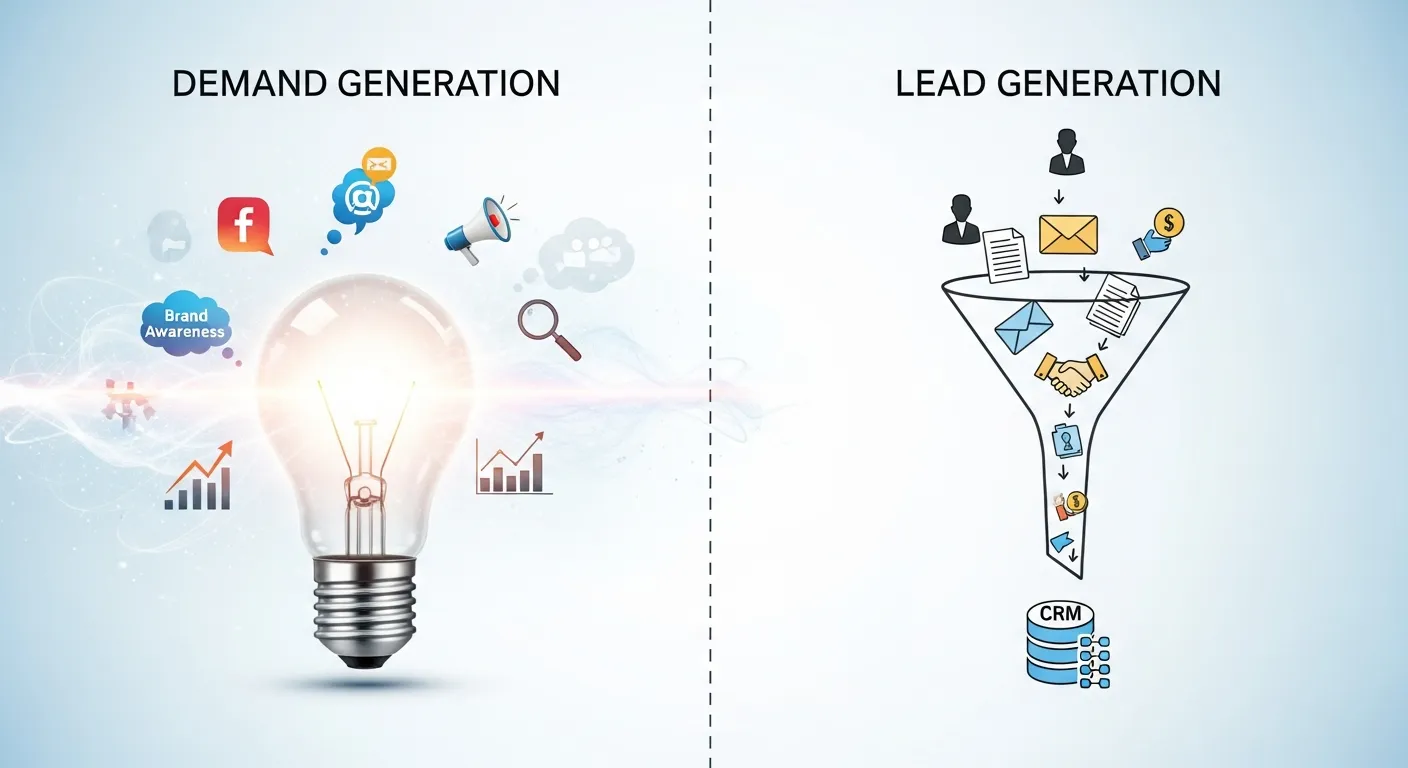
Demand generation builds awareness and trust, while lead generation converts interest into action. Together, they form a powerful marketing strategy that drives sustainable growth, higher conversions, and long-term customer relationships across traditional and NFT markets.
When it comes to growing a business, achieving consistent and sustainable growth often hinges on an effective marketing strategy. Two key terms that frequently come up in this context are Demand Generation vs Lead Generation and lead generation. While both are vital components of your marketing efforts, they are often misunderstood or used interchangeably.
If your goal is to enhance your marketing strategy, it’s important to understand how these concepts differ and how they work together. This blog post will break down the differences between demand generation and lead generation, their unique roles in the customer acquisition funnel, and how to best use them to drive business success.
What is Demand Generation?
Demand generation refers to strategies aimed at building awareness and interest in your products or services. It’s focused on expanding your audience, educating potential customers about your offerings, and sparking interest that can eventually lead others into your sales funnel.
Demand generation campaigns are not about short-term sales conversions. Instead, they focus on creating long-term goodwill and establishing your brand’s presence in your industry. Learn more about Lead Generation Services
Key Components of Demand Generation:
Brand Awareness Campaigns
Efforts like social media promotions, video marketing, and strategic partnerships help position your brand as an industry leader. For example, a company like HubSpot often relies on thought-leadership blogs and free tools aimed at capturing user attention without pushing for an immediate sale.
Educational Content
Educational efforts like webinars, eBooks, and how-to guides help your target audience understand their challenges and discover that your brand might be part of the solution.
Nurtured Trust
With demand generation, you’re not asking consumers to take immediate action. Instead, you’re introducing them to your brand in a way that builds trust over time.
Example of Demand Generation in Action:
Imagine a company that sells ergonomically friendly office chairs. Through a demand generation campaign, they may publish blog posts about the health benefits of ergonomic seating, run social media videos on proper posture, or sponsor a podcast episode discussing workplace wellness. These actions aim to generate overall interest in how an ergonomic setup can boost efficiency while subtly tying in their brand.
What is Lead Generation?
Lead generation, on the other hand, is the next step after demand generation. It focuses on converting that initial interest into actionable leads by capturing specific information about potential customers, like their name, email address, or job title.
Lead generation is designed to identify potential buyers and move them closer to a direct interaction with your sales team. It’s outcome-focused and typically involves measurable KPIs like email sign-ups, webinar registrations, or booked meetings.
Key Components of Lead Generation:
Forms and Gated Content
Businesses offer high-value resources (e.g., eBooks, case studies, whitepapers) that users can access by entering their contact information. For instance, LinkedIn Learning might provide a free guide to “Building a Career in IT” in exchange for an email.
Email Marketing Campaigns
Once leads are collected, targeted email campaigns nurture these prospects by offering more tailored offers, like exclusive discounts or personalized product recommendations.
Product Demos and Free Trials
A feature-based action like signing up for a free trial or booking a product demo is core to what B2B lead generation campaigns aim to achieve.
Example of Lead Generation in Action:
Returning to the ergonomic chair company example, after generating demand for their products through blogs and videos, they might offer a specific whitepaper titled “Top 10 Ergonomic Office Upgrades Most Medical Experts Recommend in 2024” gated behind a form. Users who are curious and download the resource can now be engaged further through sales-oriented campaigns over email.
Key Differences Between Demand Generation and Lead Generation
While demand generation and lead generation complement one another, they serve distinctly different purposes. Here’s a quick breakdown of their primary differences:
|
Aspect |
Demand Generation |
Lead Generation |
|---|---|---|
|
Objective |
Raise awareness and build interest |
Capture information and drive conversions |
|
Focus |
Top of the funnel (awareness) |
Middle to bottom of the funnel (consideration and action) |
|
Timeframe |
Long-term focus |
Short-term, action-oriented focus |
|
Tactics |
Content marketing, brand partnerships, SEO |
Gated content, email campaigns, free trials |
|
Measurement |
Metrics like website traffic, video views, and social shares |
Metrics like form submissions, MQLs, and SQLs |
|
CTA (Call-to-Action) |
“Learn More” |
“Sign Up”, “Download Now” |
How Demand Generation and Lead Generation Work Together
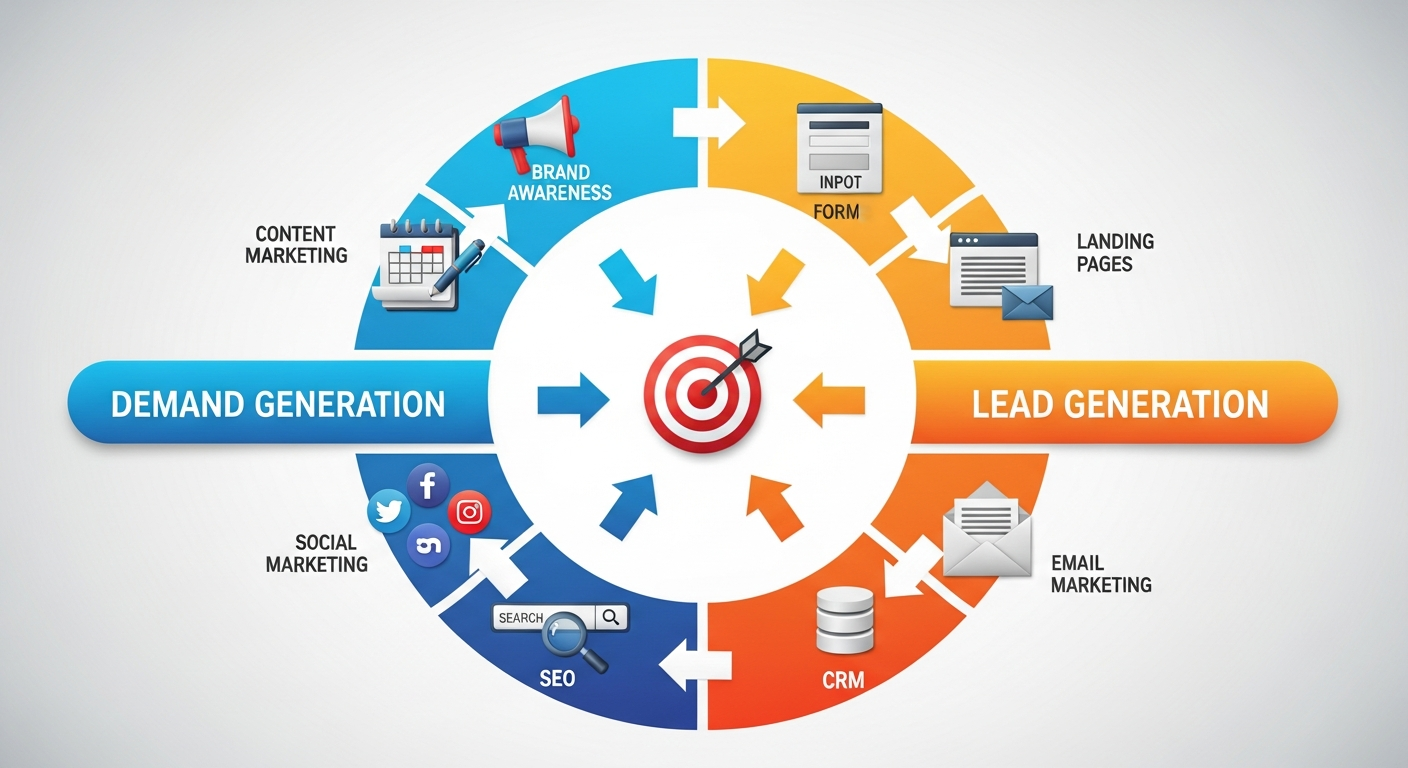
The key to a strong, successful marketing strategy is integrating demand generation and lead generation effectively. Rather than thinking of them as separate efforts, consider them two parts of a seamless continuum.
Demand Generation Fuels Lead Generation
Without the initial interest created by demand generation, there would be little traffic to drive leads into your sales funnel. Think of demand generation as warming up your audience and priming them to take action later.
Tailoring Messaging for Leads
While demand generation often has a softer call-to-action, such as “Learn More” or “Read Our Blog,” lead generation is meant to push the interest further with specific offers like a free demo or an eBook download.
Measuring and Adjusting
Regularly measuring the success of both strategies will help you see where you’re excelling and where adjustments are needed. For example, if your demand generation efforts successfully drive substantial website traffic but your lead generation rate is low, it might be time to optimize your CTAs or lead magnets.
Benefits of Combining Demand and Lead Generation
Efficient Use of Resources
With an integrated strategy in place, your team can avoid wasting resources on campaigns that don’t align with their goals.
Stronger Customer Relationships
A balance between awareness and action builds trust with your audience while positioning your brand as both credible and approachable.
Higher Conversion Rates
By actively nurturing interest (demand generation) and strategically directing that interest (lead generation), your conversion rates are likely to increase.
Final Thoughts on Demand Generation vs Lead Generation

Demand generation and lead generation are two sides of the same coin. By combining the strengths of both approaches, businesses can create a cohesive strategy for growing their customer base, improving brand awareness, and driving sales activity.
When done right, these strategies eliminate the guessing game from marketing, allowing you to guide prospects thoughtfully from their first point of contact to a decision stage.
Need help launching your marketing efforts? Stay ahead of the game by understanding your funnel dynamics and staying focused on integrating demand and lead generation in every campaign.
Demand Generation vs Lead Generation: Which One Drives Better ROI?
When comparing demand generation vs lead generation, return on investment (ROI) depends heavily on your business goals and timeline. Demand generation often delivers long-term ROI by building brand equity, trust, and organic traffic that compounds over time. While it may take longer to see direct revenue attribution, its impact is sustainable and scalable.
Lead generation, on the other hand, provides faster, more measurable ROI through conversions like sign-ups, demos, and purchases. However, without strong demand generation supporting it, lead generation campaigns can become expensive and yield lower-quality leads.
The most profitable strategy is not choosing one over the other—but aligning both to maximize short-term revenue and long-term growth.
Demand Generation vs Lead Generation for B2B, B2C, and SaaS Businesses
The demand generation vs lead generation balance shifts depending on the business model.
-
B2B and SaaS companies rely heavily on demand generation to educate buyers, shorten sales cycles, and establish authority before pushing for demos or trials.
-
B2C brands often lean more on lead generation for promotions, discounts, and limited-time offers, but still depend on demand generation to maintain brand loyalty.
-
High-ticket or complex products benefit more from demand generation, as buyers need time, education, and trust before converting.
Understanding your market helps determine how aggressively each strategy should be applied.
Demand Generation vs Lead Generation in Long Sales Cycles
In industries with long or complex sales cycles, the difference between demand generation vs lead generation becomes even more critical. Demand generation nurtures prospects over weeks or months by addressing pain points, objections, and industry challenges through content and education.
Lead generation enters once prospects demonstrate buying intent—such as requesting a demo, downloading a case study, or attending a webinar. Without demand generation, lead generation in long sales cycles often results in stalled deals or disengaged prospects.
For enterprise, SaaS, and Web3 projects, demand generation is essential for keeping the pipeline healthy.
Common Mistakes Brands Make with Demand Generation vs Lead Generation
Many brands misunderstand demand generation vs lead generation, leading to ineffective campaigns. Common mistakes include:
-
Forcing lead capture too early before trust is established
-
Measuring demand generation with lead-based KPIs
-
Overusing gated content and harming user experience
-
Running paid lead campaigns without educational support
Successful brands align expectations correctly: demand generation builds momentum, while lead generation captures intent at the right moment.
Avoiding these mistakes ensures both strategies reinforce each other rather than compete.
Demand Generation vs Lead Generation in NFT and Web3 Marketing
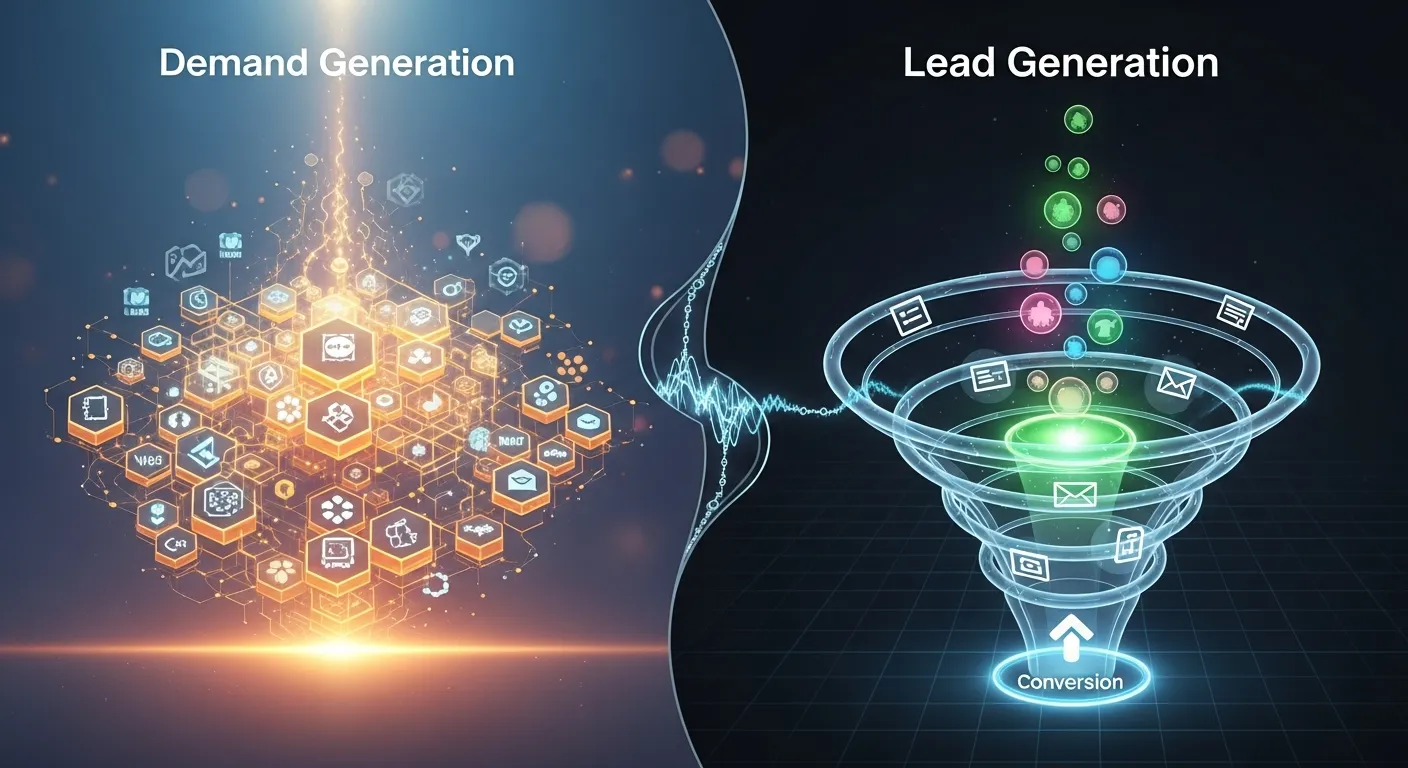
In NFT and Web3 ecosystems, demand generation vs lead generation plays a unique role. Demand generation focuses on storytelling—explaining utility, roadmap, governance, and long-term value through content, social engagement, and community building.
Lead generation then captures interest through Discord joins, whitelist sign-ups, email subscriptions, and early-access mints. Projects that skip demand generation often struggle with trust, low mint rates, or short-lived hype.
A balanced approach ensures sustained community growth rather than one-time speculation.
Conclusion
Demand generation and lead generation are not competing strategies—they are complementary forces within a successful marketing funnel. Demand generation builds awareness, credibility, and long-term trust, while lead generation transforms that interest into measurable opportunities and revenue. Businesses that rely on only one approach often struggle with either low-quality leads or weak brand recognition. By integrating both strategies thoughtfully, brands—including NFT and Web3 projects—can guide prospects smoothly from discovery to decision, creating sustainable growth and stronger customer relationships.
Frequently Asked Questions (FAQs)
1. What is the main difference between demand generation and lead generation?
Demand generation focuses on creating awareness, interest, and trust around a brand or solution before a buying decision is made. Lead generation takes that interest and converts it into measurable actions by collecting contact details or triggering specific engagements that move prospects closer to sales.
2. Which strategy comes first in the marketing funnel?
Demand generation typically comes first in the funnel because it introduces your brand and educates potential customers. Once awareness and interest are established, lead generation follows to capture and nurture prospects who are ready to take action.
3. Is demand generation more important than lead generation?
Neither strategy is more important than the other. Demand generation builds the foundation by attracting and educating audiences, while lead generation converts that interest into tangible opportunities. Both are essential for a balanced and sustainable marketing strategy.
4. Can lead generation work without demand generation?
Lead generation can work in the short term, especially through paid campaigns. However, without demand generation, leads are often lower in quality because audiences may lack trust, context, or understanding of the brand’s value.
5. What channels are best for demand generation?
Content marketing, SEO, social media, video marketing, podcasts, PR, and influencer collaborations are highly effective for demand generation. These channels help educate audiences, increase visibility, and position brands as trusted industry authorities.
6. What channels are best for lead generation?
Lead generation works best through landing pages, gated content, email campaigns, product demos, free trials, and webinar registrations. These channels are designed to capture intent and collect user information for further nurturing.
7. How do demand and lead generation work together?
Demand generation warms up audiences by building awareness and trust, while lead generation captures that interest and nurtures it through targeted offers and follow-ups. Together, they form a seamless journey from discovery to conversion.
8. How do you measure demand generation success?
Demand generation success is measured through metrics such as website traffic, content engagement, social reach, brand mentions, audience growth, and time spent on site. These indicators show how effectively awareness and interest are being built.
9. How do you measure lead generation success?
Lead generation performance is evaluated using lead volume, conversion rates, marketing-qualified leads (MQLs), sales-qualified leads (SQLs), cost per lead, and overall pipeline contribution.
10. Should small businesses invest in demand generation?
Yes. Demand generation helps small businesses build credibility and visibility without relying entirely on paid advertising. It creates long-term value by attracting organic interest and improving lead quality over time.
11. How does this apply to NFT marketing?
NFT projects use demand generation to educate audiences about utility, roadmap, and community value. Lead generation then captures interest through Discord sign-ups, whitelist registrations, email lists, and early-access opportunities.
12. Can inbound marketing support both strategies?
Yes. Inbound marketing naturally integrates demand and lead generation through content creation, marketing automation, lead nurturing workflows, and performance analytics, making it ideal for long-term growth.



Leave a Reply