

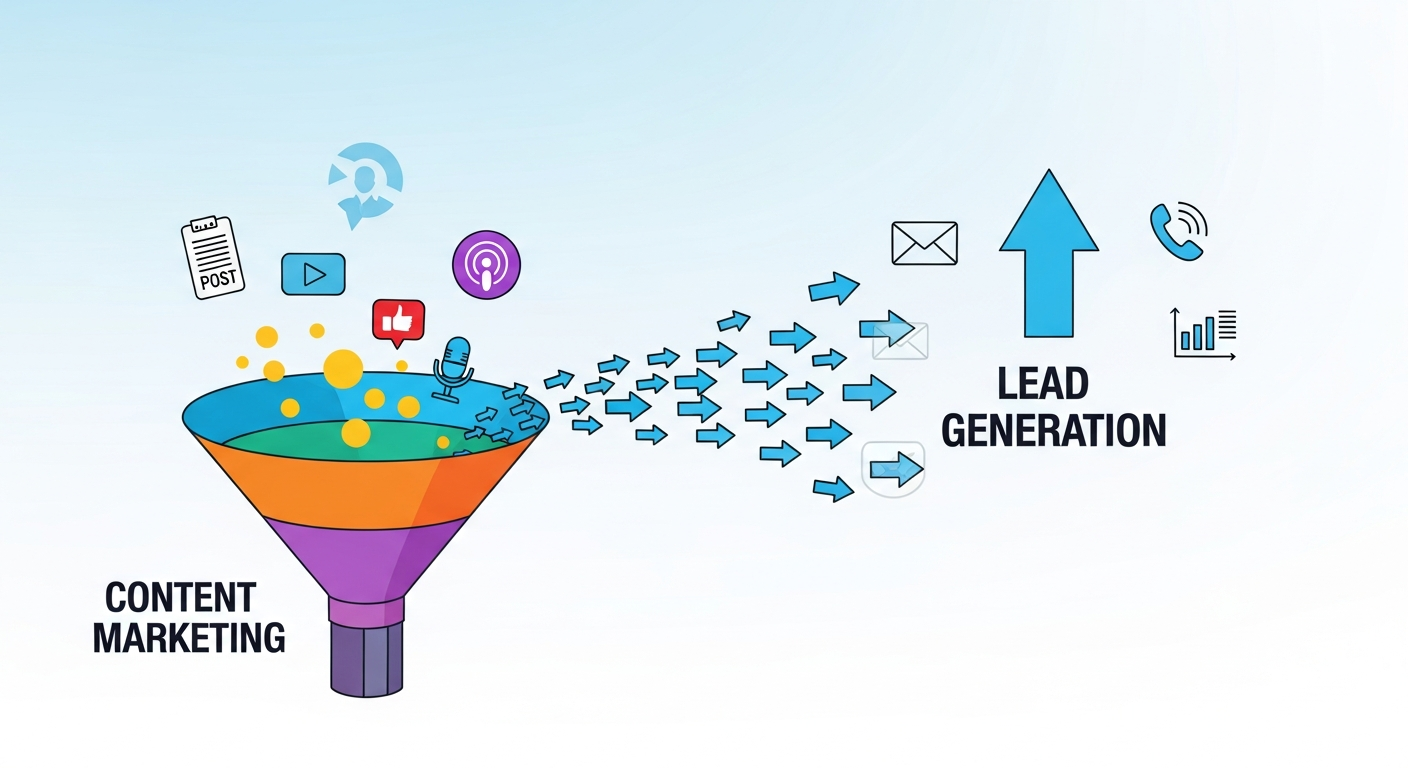
Content marketing lead generation focuses on creating valuable, intent-driven content that attracts, captures, and nurtures prospects. By aligning content with the buyer journey, optimizing for SEO and conversions, and using automation, businesses can build a scalable system for generating high-quality leads and long-term growth.
Content marketing has evolved far beyond simple brand awareness. Smart marketers now understand that every piece of content should serve a dual purpose: providing genuine value to readers while strategically moving prospects through the sales funnel. This comprehensive guide reveals how to transform your content strategy into a powerful lead generation engine that attracts, nurtures, and converts your ideal customers.
Understanding Content Marketing Lead Generation

Content marketing lead generation is the practice of creating and distributing valuable content to attract potential customers, capture their contact information, and nurture them toward a purchasing decision. Unlike traditional advertising, this approach focuses on building trust and demonstrating expertise before asking for anything in return.
The process typically follows a predictable pattern. Prospects discover your content through search engines, social media, or referrals. They consume your valuable information and, impressed by your expertise, willingly exchange their contact details for additional resources. You then nurture these leads with targeted content until they’re ready to buy.
This strategy works because it aligns with modern buyer behavior. Research shows that 70% of the buying process is complete before prospects ever speak with a sales representative. They’re researching problems, comparing solutions, and evaluating vendors entirely on their own. Content marketing positions your brand as a trusted advisor throughout this journey.
Creating Lead-Generating Content
The foundation of successful content marketing lead generation lies in understanding your audience’s pain points and creating content that addresses these challenges better than anyone else. Start by developing detailed buyer personas that go beyond basic demographics to include specific problems, goals, and content preferences.
Your content should follow the problem-agitate-solution framework. First, identify a genuine problem your prospects face. Next, help them understand the true cost of inaction. Finally, present your solution as the logical next step. This approach creates emotional investment while positioning your brand as the answer.
Focus on creating pillar content that demonstrates deep expertise in your field. Comprehensive guides, research reports, and case studies tend to generate more leads than surface-level blog posts. These substantial pieces of content justify asking for contact information and provide ongoing value that keeps your brand top-of-mind. Learn more about B2B Lead Generation
Lead Magnets That Convert
Effective lead magnets solve immediate problems for your prospects while showcasing your expertise. The best lead magnets are highly specific, immediately actionable, and directly related to your core offering. Generic resources like “10 Tips for Better Marketing” rarely generate qualified leads.
Ebooks and whitepapers remain popular choices, but consider alternatives that provide more immediate value. Checklists, templates, calculators, and assessment tools often see higher conversion rates because they deliver instant gratification. Video content, webinars, and mini-courses can also be highly effective for complex topics.
The key is matching your lead magnet format to your audience’s preferences and consumption habits. B2B professionals might prefer detailed reports they can reference later, while busy executives might gravitate toward quick assessment tools or video summaries.
Optimizing Content for Lead Capture
Strategic placement of lead capture opportunities throughout your content significantly impacts conversion rates. The most effective approach involves multiple touchpoints rather than a single, aggressive call-to-action.
Begin with subtle opt-ins early in your content, such as offering a related resource or inviting readers to subscribe for similar content. Place your primary lead magnet offer at the natural conclusion of your content, when readers have received value and are primed to take the next step.
Content upgrades—bonus materials directly related to the specific piece of content being consumed—typically convert 10-15% higher than generic lead magnets. For example, if you’ve written a blog post about email marketing, offer a template pack or checklist specifically for email marketing rather than a general marketing guide.
Nurturing Leads Through Content
Lead generation is only the beginning. The real value lies in systematically nurturing these prospects until they’re ready to purchase. Email marketing remains the most effective channel for lead nurturing, with properly segmented campaigns generating significantly higher conversion rates than generic broadcasts.
Develop content sequences that gradually build trust while educating prospects about your solution. Start with additional resources related to their initial interest, then progressively introduce more advanced concepts and case studies. This educational approach positions your brand as a trusted advisor rather than a pushy vendor.
Segmentation is crucial for effective nurturing. Group leads based on their interests, company size, industry, or position in the buying cycle, then tailor your content accordingly. A startup founder and an enterprise executive might be interested in the same general topic but need completely different approaches and information depth.
Measuring Success and ROI
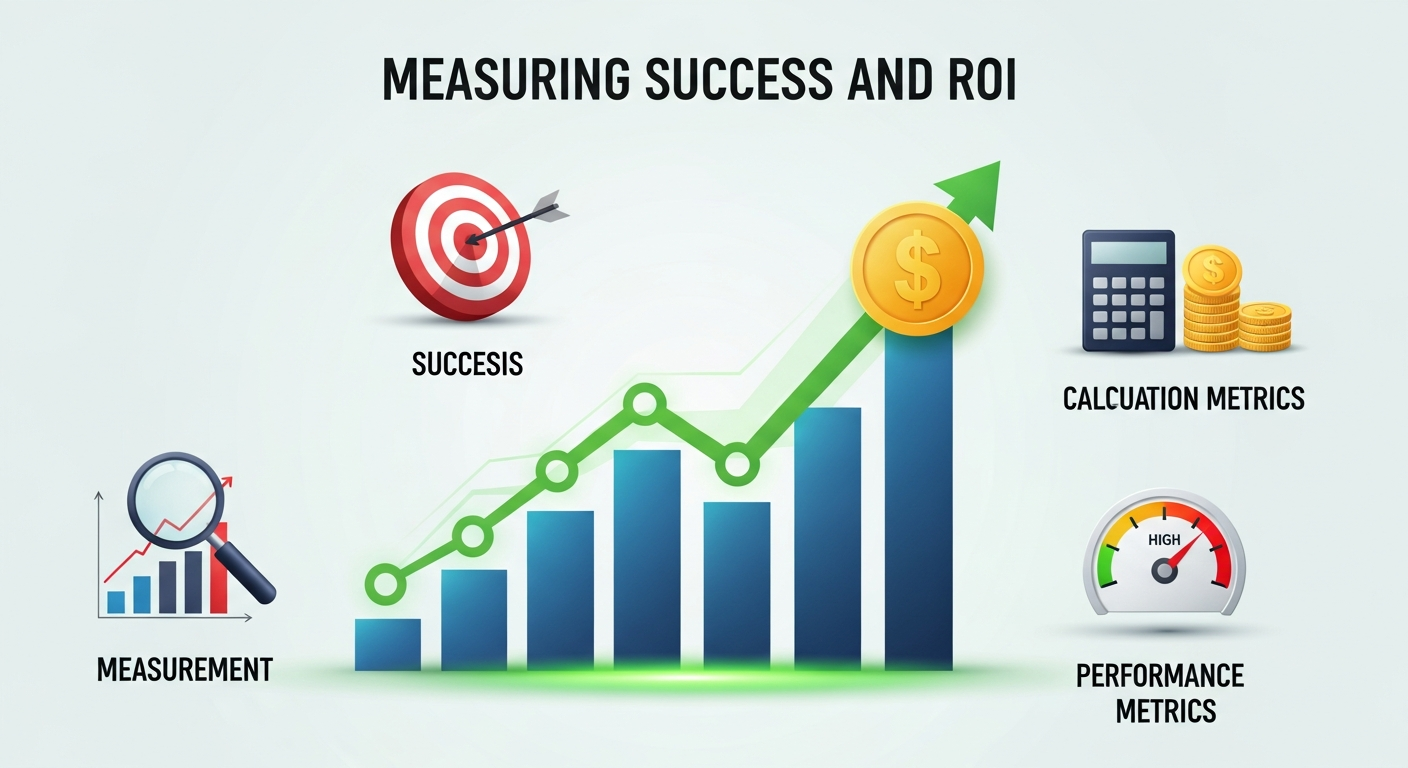
Tracking the right metrics ensures your content marketing efforts generate measurable business results. While vanity metrics like page views and social shares might look impressive, focus on numbers that directly impact your bottom line.
Lead quality metrics are particularly important. Track not just the number of leads generated, but how they progress through your sales funnel. Calculate the lead-to-customer conversion rate for different content types and channels to identify your most effective tactics.
Marketing qualified leads (MQLs) and sales qualified leads (SQLs) provide better indicators of success than raw lead volume. A piece of content that generates 100 unqualified leads is less valuable than one that produces 20 prospects who match your ideal customer profile and show genuine buying intent.
Revenue attribution remains the ultimate measure of content marketing success. Use marketing automation tools to track how leads interact with your content over time and connect specific pieces to closed deals. This data helps you double down on what works and eliminate ineffective tactics.
Advanced Strategies for Scale
As your content marketing lead generation efforts mature, consider advanced tactics that can significantly multiply your results. Account-based marketing (ABM) allows you to create highly personalized content for specific high-value prospects, dramatically improving conversion rates for enterprise sales.
Interactive content such as assessments, calculators, and configurators not only generate leads but provide valuable data about prospect needs and preferences. This information enables more targeted follow-up and higher conversion rates throughout the nurturing process.
Partnerships and collaborations can exponentially expand your reach without proportionally increasing your content creation costs. Guest posting, co-created content, and joint webinars expose your expertise to new audiences while sharing the production burden.
Aligning Content with the Buyer’s Journey
Effective lead generation content must align with each stage of the buyer’s journey—awareness, consideration, and decision. At the awareness stage, content should educate and address problems without selling. Consider blogs, explainer videos, and beginner guides. In the consideration stage, prospects compare solutions, making case studies, webinars, and comparison guides more effective. Decision-stage content focuses on conversion and includes demos, testimonials, pricing guides, and free trials. Mapping content to intent ensures prospects receive the right message at the right time, increasing trust and reducing friction. Brands that structure content by journey stage consistently generate higher-quality leads and shorter sales cycles.
EO-Driven Content for Organic Lead Growth
Search engine optimization plays a critical role in content-led lead generation. SEO-focused content attracts high-intent users actively searching for solutions. Keyword research should prioritize commercial and informational intent keywords aligned with buyer needs. Optimizing headlines, meta descriptions, internal links, and structured content improves discoverability. Long-form, in-depth content often ranks higher and captures more leads when paired with relevant CTAs. Consistent SEO content builds compounding traffic growth, allowing brands to generate leads without ongoing ad spend. When SEO and lead magnets work together, organic traffic becomes a reliable and scalable acquisition channel.
Using Blog Content as a Lead Funnel
Blogs are often the first touchpoint between brands and potential customers. High-performing blogs do more than educate—they guide readers toward conversion. Strategic CTAs, inline forms, content upgrades, and exit-intent popups turn blog traffic into leads. Educational blog content establishes authority while nurturing curiosity. Over time, blogs act as evergreen lead funnels, continuously attracting and converting visitors. Brands that optimize blog content for lead capture consistently outperform those that treat blogging as a branding-only activity.
Building Your Lead Generation System

Success with content marketing lead generation requires a systematic approach rather than random content creation. Start by auditing your existing content to identify pieces that could be enhanced with lead capture opportunities or transformed into lead magnets.
Develop a content calendar that balances educational content with promotional opportunities. The 80/20 rule works well here: 80% of your content should focus on providing value, while 20% can directly promote your products or services.
Invest in the right tools to support your efforts. Marketing automation platforms, lead scoring systems, and analytics tools become essential as your program scales. These technologies enable personalization and optimization that would be impossible to manage manually.
Content marketing lead generation represents one of the most effective strategies for sustainable business growth. By consistently providing value to your target audience and strategically capturing their interest, you build a predictable system for generating qualified prospects. The key lies in understanding your audience deeply, creating genuinely helpful content, and nurturing relationships over time rather than pushing for immediate sales.
Start by implementing one or two of the strategies outlined in this guide, measure your results carefully, and gradually expand your efforts based on what works best for your specific audience and business model. With patience and persistence, content marketing can become your most reliable source of high-quality leads.
Conclusion
Content marketing lead generation is not about volume—it’s about value, relevance, and consistency. By aligning content with buyer intent, optimizing for conversion, and nurturing leads strategically, businesses can build a sustainable growth engine. When executed correctly, content becomes a long-term asset that attracts qualified leads, builds trust, and drives measurable revenue.
Frequently Asked Questions (FAQs)
What is content marketing lead generation?
Content marketing lead generation is the process of attracting potential customers by offering valuable, relevant, and educational content. This content encourages users to share their contact information, allowing businesses to nurture relationships and guide prospects toward a purchase decision naturally.
How long does content marketing take to generate leads?
Content marketing is a long-term strategy. Most businesses begin seeing consistent lead generation results within 3 to 6 months, depending on content quality, SEO strength, competition, and publishing consistency.
Is content marketing suitable for B2B?
Yes, content marketing is one of the most effective B2B lead generation strategies. Decision-makers rely heavily on research, making blogs, whitepapers, webinars, and case studies essential for influencing purchasing decisions.
What content types generate the most leads?
High-performing content types include in-depth guides, webinars, case studies, templates, checklists, and research reports. These formats provide high perceived value and are ideal for gated content and lead capture.
Do I need gated content?
Yes, gated content is highly effective for capturing high-intent leads. By offering premium resources in exchange for contact details, businesses can filter serious prospects from casual readers and improve lead quality.
How do I measure content ROI?
Content ROI is measured through conversions, lead quality, marketing-qualified leads (MQLs), sales-qualified leads (SQLs), pipeline contribution, and revenue attribution tied to specific content assets.
Is SEO important for lead generation?
Absolutely. SEO ensures your content reaches users actively searching for solutions. Optimized content generates long-term organic traffic, making SEO one of the most sustainable lead generation channels.
Can small businesses use content marketing?
Yes, content marketing is highly cost-effective and scalable for small businesses. With the right strategy, even limited budgets can generate consistent leads without heavy ad spending.
What tools support content lead generation?
Key tools include CRM systems, marketing automation platforms, email marketing tools, analytics software, and SEO tools. These help manage leads, track performance, and optimize content effectiveness.
How often should content be published?
Consistency is more important than frequency. Publishing high-quality content regularly—whether weekly or biweekly—builds trust, improves SEO, and maintains audience engagement.
Does content replace sales?
No. Content marketing supports sales by educating prospects, building trust, and warming leads. It shortens sales cycles and improves close rates but does not replace direct sales efforts.
Is content marketing sustainable long-term?
Yes. Content marketing compounds over time. High-quality content continues to attract, engage, and convert leads long after publication, making it one of the most sustainable growth strategies.



Leave a Reply