


Content marketing attracts and converts leads by delivering value-driven, trust-building content. Through blogs, lead magnets, SEO, and distribution, businesses guide prospects through the buyer’s journey. Consistency, personalization, and optimization ensure long-term, scalable lead generation success.
Content marketing has become the backbone of successful lead generation strategies. While traditional advertising interrupts audiences, content marketing attracts potential customers by providing genuine value. The approach builds trust, establishes expertise, and nurtures prospects through their buyer’s journey.
Businesses that prioritize content marketing generate 67% more leads per month than those that don’t. Yet many companies struggle to create content that actually converts visitors into qualified leads. The challenge isn’t just producing content—it’s crafting materials that resonate with your target audience and guide them toward taking action.
Understanding Content Marketing for Lead Generation
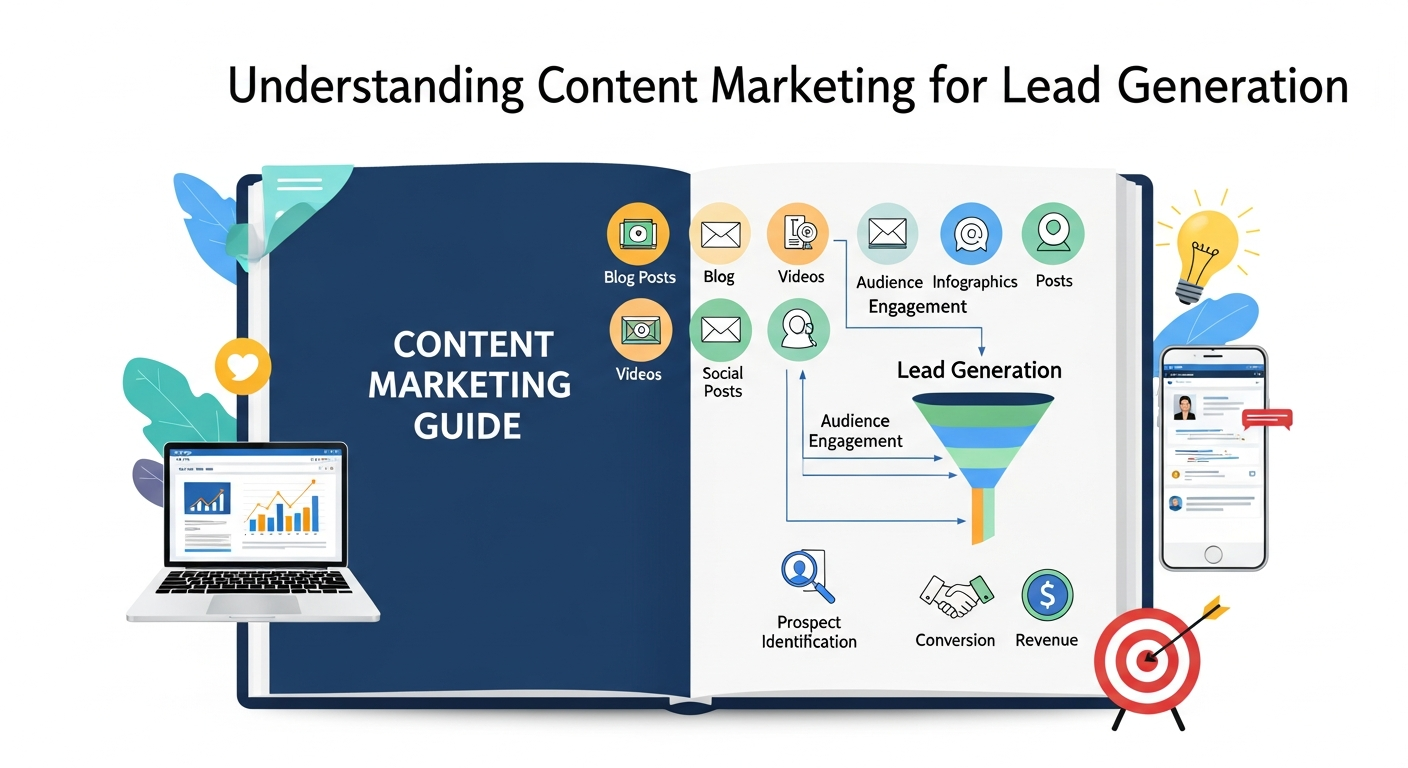
Content marketing for lead generation involves creating and sharing valuable content to attract, engage, and convert your target audience into leads. Unlike product-focused advertising, this approach centers on solving problems and answering questions your prospects face.
The strategy works because it builds relationships before asking for anything in return. When potential customers encounter your helpful blog posts, guides, or videos, they begin to trust your brand. This trust forms the foundation for future business relationships.
Effective lead generation content serves multiple purposes. It educates your audience, demonstrates your expertise, and positions your company as a trusted resource. The content also helps qualify leads by attracting people who are genuinely interested in your solutions.
Essential Types of Content for Lead Generation
Blog Posts and Articles
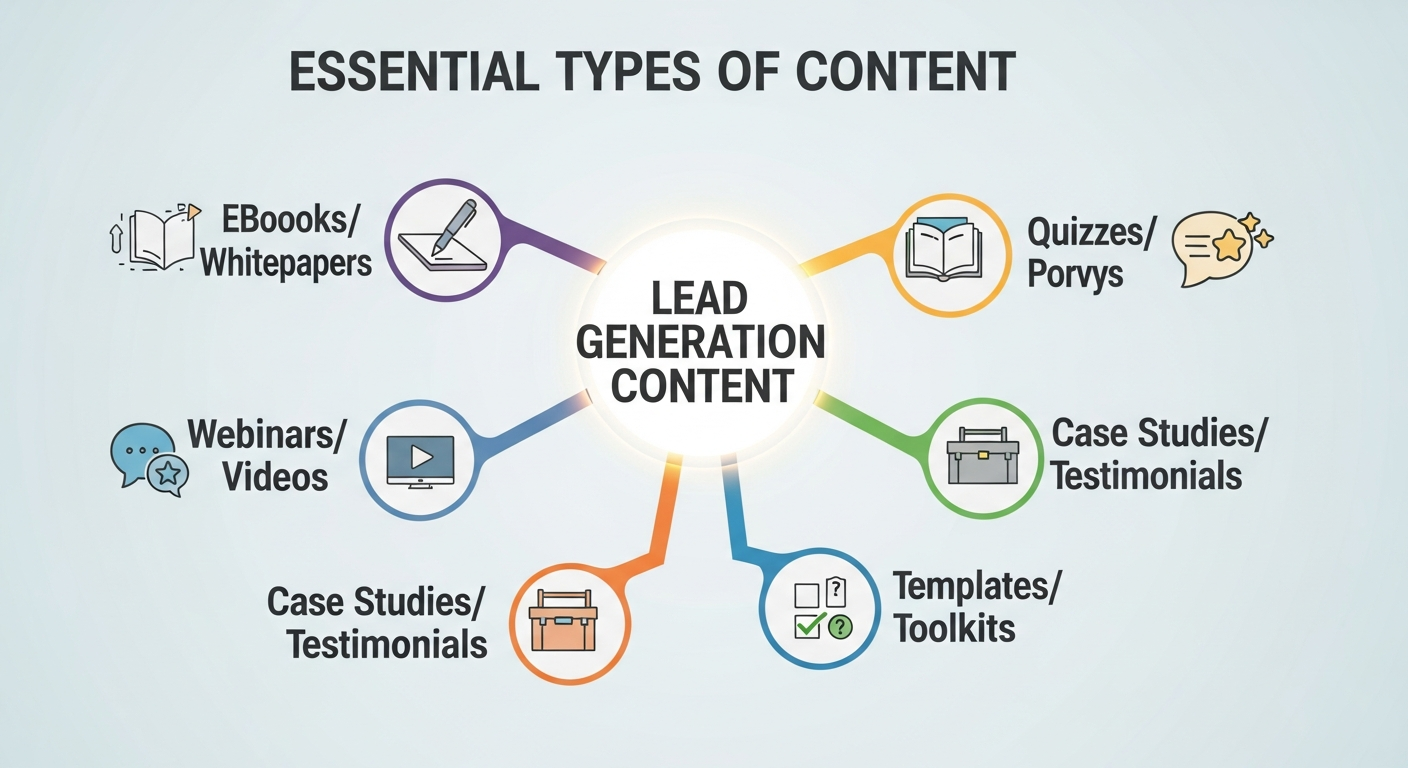
Blog posts remain one of the most effective content types for generating leads. They help you capture organic search traffic, showcase your knowledge, and provide opportunities to include calls-to-action throughout your content.
Focus on creating posts that address specific pain points your target audience experiences. How-to guides, industry insights, and problem-solving articles tend to perform well. Each post should offer actionable advice that readers can implement immediately.
Downloadable Resources
Gated content like ebooks, whitepapers, and industry reports excel at capturing lead information. These comprehensive resources provide in-depth value that justifies asking for contact details.
Create resources that dive deeper into topics you’ve covered in blog posts. If you write about email marketing basics, develop a detailed email marketing template library as a downloadable offer. This approach gives readers a natural next step.
Video Content
Video content generates 50 times more organic traffic than plain text. Educational videos, product demonstrations, and behind-the-scenes content help build connections with your audience.
Consider creating video series that address common customer questions. Each video can end with a call-to-action directing viewers to related resources or contact forms.
Webinars and Online Events
Live webinars create urgency and provide opportunities for real-time engagement. They position your team as experts while allowing direct interaction with potential leads.
Choose webinar topics that align with your sales goals. If you’re launching a new service, host a webinar about industry challenges that service solves. Include time for Q&A sessions to address specific prospect concerns.
Creating High-Converting Lead Magnets
Lead magnets are valuable resources you offer in exchange for contact information. The most effective lead magnets solve immediate problems for your target audience.
Start by identifying the biggest challenges your prospects face. Survey existing customers, analyze support tickets, and review frequently asked questions. Use these insights to create resources that provide quick wins.
Your lead magnet should be highly specific rather than broadly general. A “Complete Guide to Social Media Marketing” might seem comprehensive, but “7 Instagram Post Templates That Double Engagement” offers more immediate value.
Format matters for lead magnets. Checklists, templates, and step-by-step guides often outperform lengthy reports because they’re easier to consume and implement.
Optimizing Content for Search Engines
Search engine optimization ensures your content reaches people actively looking for solutions you provide. Start with keyword research to understand what terms your target audience uses when searching for information.
Focus on long-tail keywords that indicate buying intent. Someone searching for “best CRM software” is likely further along the buying journey than someone searching for “what is CRM.”
Create topic clusters around main keywords. If “email marketing” is a primary keyword, develop supporting content around “email marketing automation,” “email marketing metrics,” and “email marketing templates.” This approach demonstrates topical authority to search engines.
Optimize individual pieces of content by including target keywords in titles, headers, and throughout the body text. However, prioritize readability over keyword density. Search engines favor content that provides genuine value to readers.
Leveraging Social Media for Content Distribution
Creating great content is only half the battle. You need distribution strategies to ensure your content reaches potential leads. Social media platforms offer powerful ways to amplify your content marketing efforts.
Choose platforms where your target audience spends time. B2B companies often find success on LinkedIn, while B2C brands might prioritize Instagram or TikTok. Focus your efforts on two to three platforms rather than spreading resources too thin.
Share content multiple times using different angles and formats. Turn a blog post into an infographic, create quote cards from key insights, and develop short video summaries. This approach maximizes the value of each piece of content.
Engage with comments and shares to build relationships with potential leads. Social media conversations often lead to direct messages and eventually business opportunities.
Email Marketing Integration
Email marketing and content marketing work together to nurture leads through the sales funnel. Use email newsletters to share your latest content while providing exclusive insights for subscribers.
Segment your email list based on content consumption and engagement levels. Send more advanced content to highly engaged subscribers while providing foundational resources to newer contacts.
Create email sequences that deliver valuable content over time. A seven-part email series teaching specific skills keeps your brand top-of-mind while demonstrating ongoing value.
Measuring Content Marketing ROI
Track metrics that directly relate to lead generation goals. While vanity metrics like page views and social media likes provide some insights, focus on conversion-oriented measurements.
Monitor lead quality, not just quantity. Track how content-generated leads progress through your sales funnel compared to leads from other sources. This data helps you identify which content types attract the most valuable prospects.
Use tools like Google Analytics to set up conversion tracking for key actions. Track downloads, email signups, and contact form submissions to understand which content pieces drive the most leads.
Calculate customer acquisition cost for content marketing channels. Compare the cost of creating content to the value of customers acquired through that content. This analysis helps justify continued investment in content marketing.
Getting Started with Your Content Marketing Strategy
Begin by auditing your existing content to identify gaps and opportunities. Review your most popular content to understand what resonates with your audience. Look for patterns in topics, formats, and distribution channels that generate the most engagement.
Develop a content calendar that aligns with your sales goals and marketing campaigns. Plan content around industry events, product launches, and seasonal trends that affect your target market.
Start small and focus on consistency over volume. Publishing one high-quality piece of content weekly is better than sporadic bursts of multiple posts. Build momentum gradually while learning what works for your specific audience.
Content marketing lead generation requires patience and persistence. The most successful companies view content marketing as a long-term investment that compounds over time. Focus on providing genuine value, and the leads will follow naturally.
Conclusion
Content marketing is one of the most effective and sustainable ways to generate high-quality leads. By delivering consistent value, aligning content with the buyer’s journey, and optimizing distribution, businesses build trust and drive conversions. Success comes from strategy, consistency, and continuous improvement—not volume alone.
Frequently Asked Questions (FAQ)
1. What is content marketing for lead generation?
Content marketing for lead generation is the process of creating and sharing valuable, relevant, and educational content to attract potential customers and encourage them to share their contact information. Instead of direct selling, it focuses on solving problems, answering questions, and guiding prospects naturally toward becoming leads.
2. Does content marketing really generate leads?
Yes, when content marketing is aligned with a clear strategy, it consistently produces qualified leads. By targeting the right audience with the right message, businesses attract people who are already interested in their solutions, resulting in higher-quality leads over time.
3. How long does content marketing take to show results?
Content marketing typically shows early traction within 3–6 months, with consistent and measurable lead growth developing over time. Long-term success depends on regular publishing, SEO optimization, and ongoing content promotion.
4. Which content type converts best?
Lead magnets, blogs, and webinars perform strongly for lead generation. Blogs attract organic traffic, lead magnets capture contact information, and webinars build authority while encouraging high-intent engagement from prospects.
5. Is SEO important for content marketing?
Yes, SEO is essential because it drives high-intent organic traffic to your content. Optimized content helps you reach users actively searching for solutions, making them more likely to convert into leads.
6. How often should I publish content?
Consistency matters more than volume when it comes to content marketing. Publishing on a regular, manageable schedule builds audience trust, improves search visibility, and ensures steady lead generation without sacrificing quality.
7. Can small businesses succeed with content marketing?
Yes, focused strategies work very well for small teams. By targeting niche audiences and addressing specific problems, small businesses can compete effectively and generate leads without large advertising budgets.
8. What metrics should I track?
Key metrics include leads generated, conversion rates, engagement levels, and ROI. These metrics help determine how effectively content contributes to business goals and where improvements are needed.
9. Is video content necessary?
Video content is not mandatory, but it significantly boosts engagement. Videos often improve time-on-page, social sharing, and message retention, supporting stronger lead generation when used strategically.
10. Should content be gated or free?
Both formats are important. Free content builds trust and attracts traffic, while gated content captures lead information. A balanced approach ensures audience growth while supporting lead generation goals.
11. How do CTAs impact lead generation?
Strong calls-to-action significantly increase conversions by guiding users toward the next step. Clear, benefit-driven CTAs help turn content consumers into active leads.
12. Can content replace paid advertising?
Content marketing complements paid advertising and works best as a long-term strategy. While paid ads deliver immediate visibility, content builds lasting assets that generate leads continuously over time.



Leave a Reply