

Lead generator software automates capturing and nurturing prospects, improving conversion rates and reducing costs. With landing pages, email automation, CRM integration, analytics, and multi-channel capabilities, businesses build a scalable pipeline of qualified leads. Choosing the right platform and optimizing campaigns ensures measurable ROI, higher engagement, and sustained growth, transforming lead generation from a manual task into a strategic advantage.
Every business faces the same fundamental challenge: finding and converting potential customers before competitors do. Lead generator software has emerged as the solution that transforms this challenge from a time-consuming manual process into an automated system that works around the clock.
Lead generator software encompasses tools and platforms designed to identify, attract, and capture potential customers for your business. These sophisticated systems combine various tactics—from landing page creation and email capture forms to social media integration and behavioral tracking—to build a steady pipeline of qualified prospects.
The stakes couldn’t be higher. Companies using automated lead generation see conversion rates increase by up to 10% compared to those relying solely on traditional methods. More importantly, businesses that excel at lead nurturing generate 50% more sales-ready leads at a 33% lower cost per lead.
What Is Lead Generator Software?
Lead generator software is a digital tool that automates the process of identifying and capturing potential customers. Unlike traditional marketing approaches that cast a wide net and hope for results, these platforms use data-driven strategies to target specific audience segments and guide them through a structured conversion process.
The software typically works by creating multiple touchpoints where prospects can engage with your brand. This might include landing pages optimized for specific campaigns, pop-up forms triggered by user behavior, or integrated social media campaigns that drive traffic to conversion-focused content.
Modern lead generator software goes beyond simple contact collection. Advanced platforms analyze user behavior, score leads based on engagement levels, and automatically segment prospects based on their interests and actions. This intelligence allows sales teams to prioritize their efforts on the most promising opportunities. Want to dive deeper into generating high-quality leads? Check out our comprehensive guide: How to Generate Qualified Leads: A Comprehensive Guide for Modern Marketers.
Essential Features of Effective Lead Generator Software
Landing Page Builder
A robust landing page builder serves as the foundation of most lead generation campaigns. The best software provides drag-and-drop functionality, mobile-responsive templates, and A/B testing capabilities. Look for platforms that offer industry-specific templates and allow complete customization of design elements, forms, and call-to-action buttons.
Lead Capture Forms
Effective lead capture goes beyond basic contact forms. Advanced lead generator software offers multiple form types, including pop-ups, slide-ins, inline forms, and exit-intent overlays. Smart forms adapt based on what information you already have about a visitor, preventing form fatigue while maximizing conversion rates.
CRM Integration
Seamless integration with customer relationship management systems ensures that captured leads flow directly into your sales pipeline. The best lead generator software connects with popular CRMs like Salesforce, HubSpot, and Pipedrive, automatically creating contact records and triggering follow-up sequences.
Email Marketing Automation
Built-in email marketing capabilities allow you to nurture leads immediately after capture. Look for software that offers customizable autoresponder sequences, behavioral triggers, and personalization options based on lead source and interests.
Analytics and Reporting
Comprehensive analytics help you understand which lead generation tactics drive the best results. Effective software provides conversion tracking, source attribution, lead scoring, and ROI calculations across all your campaigns.
Multi-Channel Capabilities
The most effective lead generator software operates across multiple channels simultaneously. This includes website integration, social media lead ads, email campaigns, and even offline event integration for a truly omnichannel approach.
Top Lead Generator Software Platforms
HubSpot
HubSpot offers one of the most comprehensive lead-generating software suites available. Their free tier includes basic landing pages, forms, and email marketing, making it accessible for small businesses. Paid tiers add advanced features like lead scoring, progressive forms, and detailed analytics.
The platform excels at providing an all-in-one solution where lead generation, nurturing, and sales management happen within a single ecosystem. HubSpot’s smart content features allow for personalization based on lead behavior and demographics.
OptinMonster
OptinMonster specializes in conversion optimization with powerful targeting and trigger options. Their exit-intent technology and behavioral automation help capture leads who might otherwise leave your site without converting.
The platform offers extensive A/B testing capabilities and integrates with virtually every major email marketing service and CRM. OptinMonster particularly shines for e-commerce businesses and content-driven sites.
Leadpages
Leadpages focuses on creating high-converting landing pages with minimal technical expertise required. Their template library includes proven designs across various industries, and their drag-and-drop builder makes customization straightforward.
The platform includes lead magnet delivery systems, pop-up forms, and basic analytics. Leadpages works particularly well for businesses running paid advertising campaigns that need dedicated landing pages for different audiences.
Unbounce
Unbounce combines powerful landing page creation with advanced conversion optimization features. Their Smart Traffic feature uses machine learning to automatically send visitors to the landing page variant most likely to convert them.
The platform offers dynamic text replacement, allowing you to customize landing page content based on the keywords or ads that brought visitors to your site. This level of personalization often leads to significantly higher conversion rates.
ConvertFlow
ConvertFlow provides a comprehensive toolkit for creating personalized marketing campaigns. Their visual campaign builder allows you to create complex, multi-step lead generation funnels without coding knowledge.
The platform’s strength lies in its behavioral targeting capabilities. You can trigger different lead capture experiences based on how visitors interact with your content, their traffic source, and their previous engagement history.
How to Choose the Right Lead Generator Software
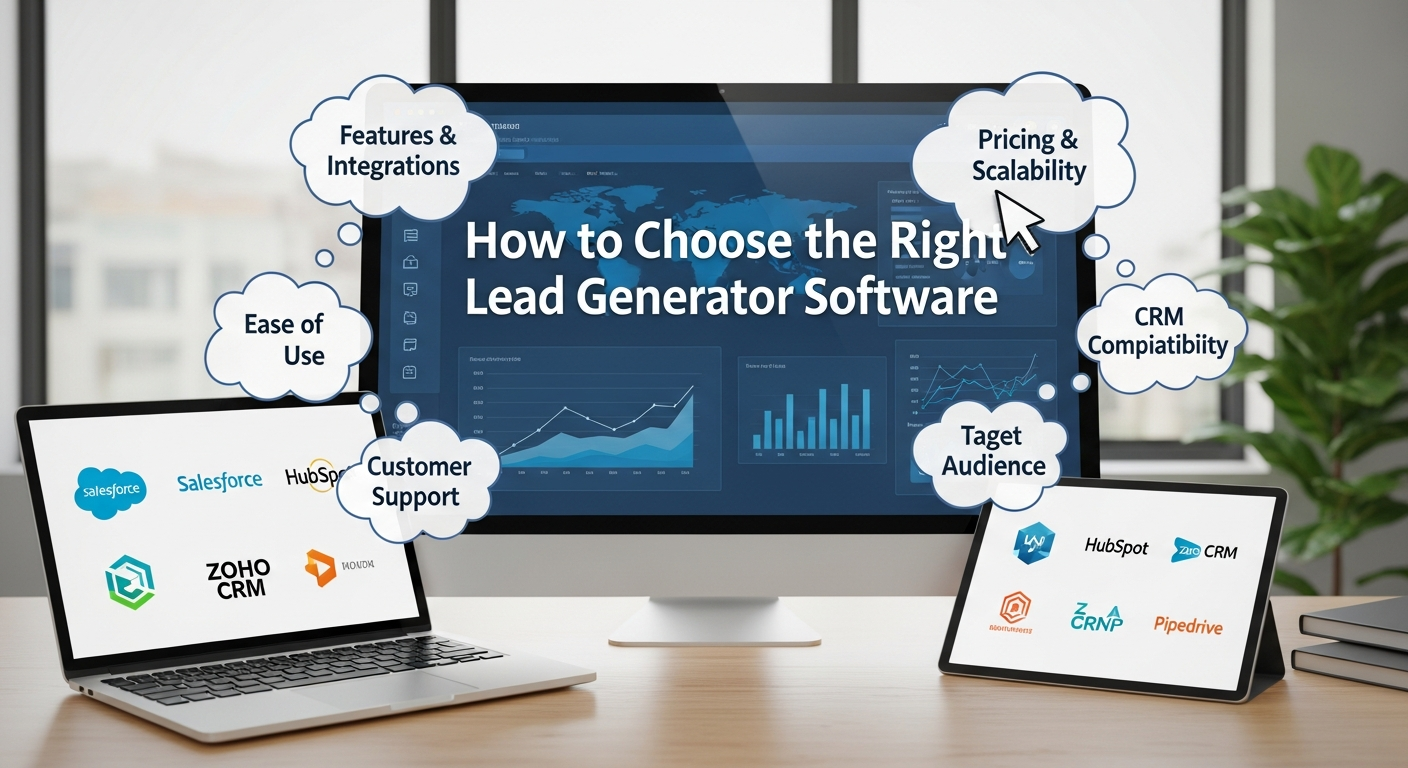
Assess Your Current Lead Generation Process
Start by analyzing your existing lead generation efforts. Identify which channels currently drive the most qualified leads and where you’re experiencing bottlenecks. Understanding your baseline performance helps you set realistic expectations for improvement.
Consider your team’s technical capabilities. Some lead generator software requires minimal setup and maintenance, while others offer more advanced features that may require dedicated technical resources to implement effectively.
Define Your Lead Generation Goals
Clear goals help you evaluate which software features matter most for your situation. Are you primarily focused on increasing lead volume, improving lead quality, or reducing the cost per lead? Different platforms excel at different objectives.
Consider your sales cycle length and complexity. B2B companies with longer sales cycles might benefit from advanced lead scoring and nurturing capabilities, while B2C businesses might prioritize simple, high-volume capture methods.
Evaluate Integration Requirements
Your lead generator software should work seamlessly with your existing marketing and sales tools. Create a list of your current software stack and confirm compatibility before making a decision.
Pay particular attention to CRM integration quality. The best solutions offer two-way data synchronization, ensuring that lead information stays current across all your systems.
Consider Scalability Needs
Choose software that can grow with your business. Evaluate pricing tiers and feature limitations to ensure your chosen platform won’t become a constraint as your lead generation efforts expand.
Look for platforms that offer API access and custom integration options. Even if you don’t need these features immediately, having them available provides flexibility for future growth.
Best Practices for Lead Generator Software Implementation
Start with Clear Lead Magnets
Successful lead generation requires valuable offers that motivate people to share their contact information. Develop lead magnets that address specific pain points your target audience faces.
Effective lead magnets include educational content like ebooks and whitepapers, practical tools such as calculators and templates, or exclusive access to webinars and industry reports. The key is ensuring your offer provides immediate value while positioning your company as a trusted expert.
Optimize for Mobile Users
Mobile traffic accounts for more than half of all web activity, making mobile optimization crucial for lead generation success. Choose software that creates mobile-responsive forms and landing pages automatically.
Test your lead generation forms on various devices to ensure they’re easy to complete on smaller screens. Consider using shorter forms for mobile users and implementing smart field suggestions to reduce typing requirements.
Implement Progressive Profiling
Progressive profiling allows you to gather more information about leads over time without overwhelming them with long initial forms. Start with basic contact information and gradually request additional details through subsequent interactions.
This approach improves initial conversion rates while still building comprehensive lead profiles that help your sales team have more effective conversations.
Use Behavioral Triggers Wisely
Behavioral triggers can significantly increase lead capture rates when implemented thoughtfully. Exit-intent pop-ups, time-based triggers, and scroll-percentage triggers all have their place in an effective strategy.
However, avoid overwhelming visitors with too many pop-ups or intrusive experiences. The goal is to provide value at the right moment, not to interrupt the user experience.
Test and Optimize Continuously
A/B testing should be an ongoing component of your lead generation strategy. Test different headlines, offer types, form lengths, and design elements to identify what resonates best with your audience.
Focus on testing one element at a time to get clear insights about what drives improvements. Small changes in form design or offer positioning can often lead to significant conversion rate improvements.
Measuring Lead Generator Software Success
Key Performance Indicators
Track conversion rates across different traffic sources and campaigns to understand which efforts drive the best results. Monitor not just overall conversion rates but also the quality of leads generated from each source.
Cost per lead provides insight into the efficiency of your lead generation efforts. Calculate this metric for each campaign and traffic source to identify the most cost-effective approaches.
Lead-to-customer conversion rates help you understand which lead sources ultimately drive revenue. This metric is crucial for evaluating the true ROI of your lead generation investments.
Advanced Analytics
Lead scoring helps prioritize follow-up efforts by identifying the most engaged and sales-ready prospects. Most lead generator software includes basic scoring capabilities, but advanced platforms offer detailed behavioral tracking and custom scoring models.
Attribution reporting shows how different touchpoints contribute to lead generation and conversion. Understanding the customer journey helps optimize your marketing mix and budget allocation.
Pipeline velocity metrics track how quickly leads move through your sales process. This information helps identify bottlenecks and opportunities for improvement in both lead generation and sales processes.
Transform Your Business with the Right Lead Generator Software

Lead generator software represents more than just a marketing tool—it’s a strategic investment in your business’s growth potential. The platforms and strategies outlined in this guide provide the foundation for building a predictable, scalable lead generation system.
Success with lead generator software requires more than just choosing the right platform. It demands a commitment to testing, optimization, and continuous improvement. Start by implementing one or two key features well, then gradually expand your capabilities as you gain experience and see results.
The businesses that thrive are those that view lead generation as an ongoing process rather than a one-time setup. Choose software that aligns with your current needs while providing room for growth, and commit to the ongoing optimization that turns good lead generation into exceptional results.
Ready to transform your lead generation efforts? Start by auditing your current process, defining clear goals, and testing one of the recommended platforms. The investment you make in lead generator software today will compound over time, creating a sustainable competitive advantage for your business.
Conclusion
Lead generator software transforms customer acquisition into a scalable, automated process. By combining landing pages, forms, CRM integration, email automation, and analytics, businesses can capture high-quality leads efficiently. Choosing the right platform and following best practices ensures consistent results, higher conversions, and a measurable return on investment. Continuous optimization turns lead generation into a growth engine.
Frequently Asked Questions (FAQ)
1. What is lead generator software?
Software that automates identifying and capturing potential customers to improve conversions. It helps businesses save time, reduce manual effort, and create a structured process for nurturing leads, ensuring that prospects are consistently guided toward becoming paying customers.
2. How does it increase sales?
By prioritizing high-quality leads and nurturing them through automated campaigns. This approach ensures that sales teams focus on the most promising prospects, resulting in higher conversion rates, shorter sales cycles, and more efficient use of resources.
3. Are all platforms the same?
No, features vary—some focus on landing pages, others on automation, analytics, or multi-channel integration. Choosing a platform depends on your business goals, technical capabilities, and whether you need advanced tracking, personalization, or omnichannel support.
4. Is it suitable for small businesses?
Yes, many platforms have free tiers or scalable pricing for small teams. Small businesses can start with basic features and gradually expand functionality as their lead generation needs grow, making it a cost-effective solution for all sizes of business.
5. How long does it take to see results?
Typically a few weeks for leads to accumulate, but nurturing may take 3–6 months. Results depend on the quality of campaigns, the value of lead magnets, and the consistency of follow-ups and engagement strategies.
6. Do I need technical skills?
Some platforms are beginner-friendly; advanced features may require technical knowledge. Most software provides templates, drag-and-drop editors, and integrations, but complex automation or custom integrations may need experience with marketing tools or development.
7. Can it integrate with CRMs?
Yes, most platforms integrate with Salesforce, HubSpot, Pipedrive, and more. This integration ensures leads flow directly into your sales pipeline, automates follow-ups, and allows for tracking of engagement and conversion metrics across systems.
8. How do I optimize lead forms?
Use mobile-friendly designs, progressive profiling, and behavioral triggers for higher conversions. Forms should be easy to complete, visually appealing, and tailored to the visitor’s stage in the buyer journey to maximize the number and quality of captured leads.
9. What metrics should I track?
Conversion rates, cost per lead, lead-to-customer rate, pipeline velocity, and ROI. Monitoring these metrics helps businesses understand campaign performance, identify bottlenecks, and make data-driven adjustments to improve lead quality and sales efficiency.
10. Can it work across multiple channels?
Yes, top platforms support website, email, social media, and offline events. Multichannel lead generation ensures consistent messaging and increased opportunities for engagement, allowing prospects to interact with your brand wherever they spend time.
11. Is email automation necessary?
Yes, it nurtures leads immediately and increases engagement and conversion. Automated email sequences provide timely, personalized communication that builds trust, keeps prospects engaged, and moves them smoothly through the sales funnel.
12. How do I choose the right software?
Assess goals, team capabilities, integrations, scalability, and key features needed. Selecting the right platform ensures that it aligns with your current marketing processes, supports future growth, and provides the tools necessary for tracking, automation, and lead nurturing.



Leave a Reply