


Video marketing drives high-quality lead generation by combining storytelling, demonstrations, and social proof. Using targeted funnels, gated content, and analytics, businesses can attract, engage, and convert prospects efficiently, building trust, boosting conversions, and nurturing long-term customer relationships.
In today’s competitive digital landscape, video marketing has emerged as one of the most effective ways to capture attention and generate highquality leads. Videos combine visual storytelling, demonstration, and emotional appeal in a single format that resonates with modern audiences. Whether you are a startup founder, a marketer at a midmarket company, or an agency professional, incorporating video into your lead generation mix can dramatically boost engagement and conversion rates.
The Power of Video in Modern Lead Generation
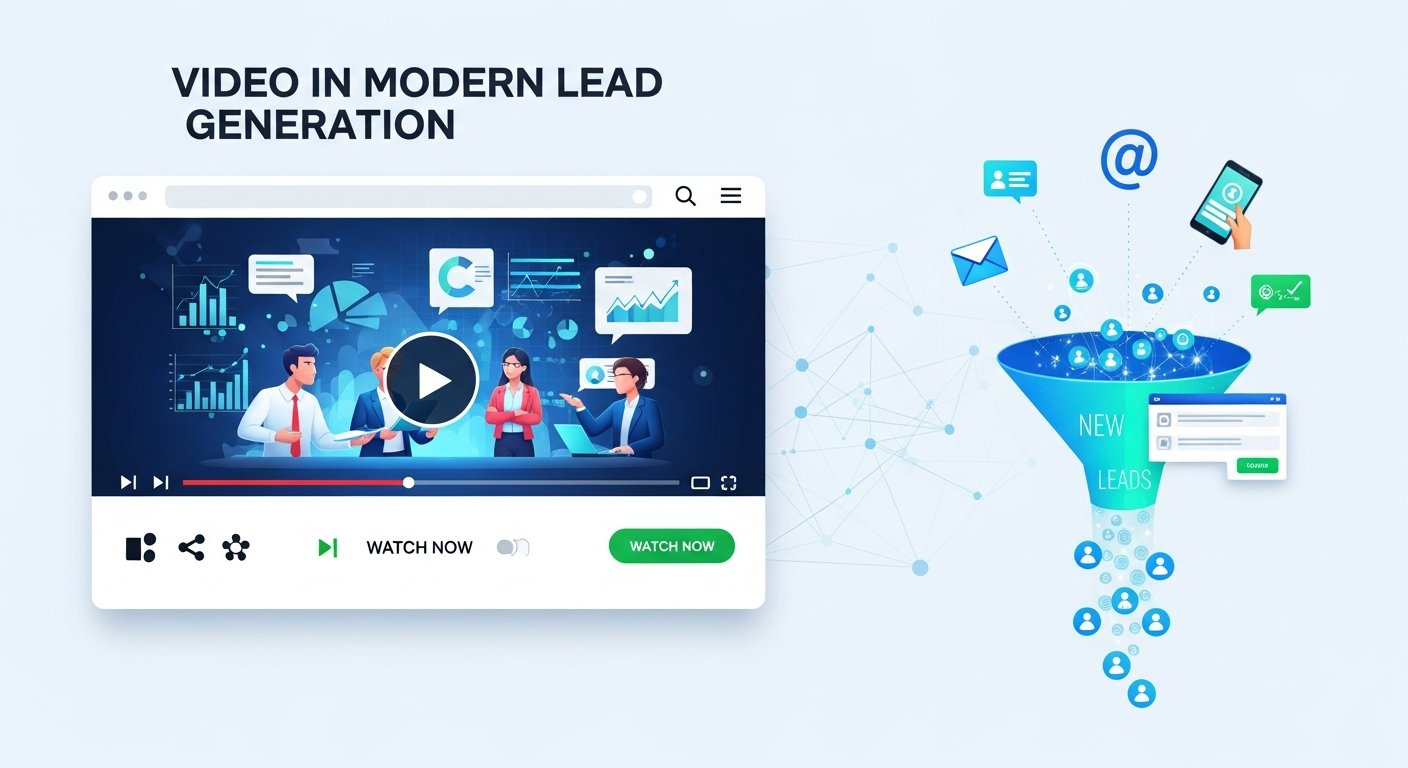
Video content accounts for a large and growing share of online consumption. Platforms like YouTube report billions of daily views, and social media channels prioritize video posts in their algorithms. This surge in video consumption presents a prime opportunity for businesses to reach prospects in a format they prefer. Beyond reach and engagement, videos can foster trust and credibility more quickly than text-based content. By showcasing real people, product demonstrations, and client success stories, videos bridge the gap between awareness and consideration stages.
In addition to simply capturing attention, video enables brands to communicate complex ideas more effectively. Animated explainer videos can simplify technical products, while live-action demonstrations can highlight features and benefits in real-world scenarios. Videos also provide multi-sensory engagement—combining visuals, sound, and motion—which increases retention and makes messaging more memorable. Furthermore, platforms such as YouTube, Instagram, TikTok, and LinkedIn allow for precise targeting, ensuring content reaches the most relevant audience segments.
When paired with clear calls to action and lead capture mechanisms, video marketing becomes a powerful driver of new contacts and potential customers. Embedding forms, gated content, or interactive elements within videos can directly convert viewers into leads without relying solely on external landing pages. Moreover, videos can be repurposed across multiple channels—social media, email campaigns, websites, and paid ads—maximizing ROI while maintaining consistent messaging.
Additionally, video content builds social proof and authenticity. Featuring customer testimonials, influencer collaborations, and behind-the-scenes footage humanizes the brand, creating stronger emotional connections with audiences. The format also supports storytelling, allowing brands to share their mission, values, and product journeys in a way that resonates personally with viewers. As more consumers seek engaging, informative, and trustworthy content online, incorporating video into your lead generation strategy positions your business as forward-thinking, credible, and audience-centric.
By leveraging the growing consumption of video, brands can attract attention, nurture interest, and convert prospects more efficiently, creating a cohesive journey from awareness to consideration and ultimately driving higher-quality leads and long-term customer relationships. Learn more about Next-Gen Lead Generation Strategies.
Types of Video Content for Lead Generation
Different types of videos serve distinct roles in the lead nurturing journey. To maximize results, mix and match formats based on your audience’s needs and the buyer’s journey stage. Each type of video offers unique benefits, from educating prospects to building trust and driving conversions.
- Explainer Videos: Short animations or live-action clips that introduce your product or service, highlight key features, and explain how you solve a specific problem. Explainer videos are ideal for the awareness stage, helping prospects quickly understand your value proposition while keeping them engaged with visually compelling content.
- Product Demos: In-depth walkthroughs that show your solution in action. These videos build confidence in prospective buyers by answering common questions and reducing friction. Product demos are particularly effective during the consideration stage, providing detailed insights into how your product functions and addressing potential objections.
- Webinars and Workshops: Live or recorded sessions that provide valuable insights, tips, and expert advice. Gated webinars are a classic way to collect attendee information and nurture leads over time. They serve both the consideration and decision stages by establishing thought leadership, offering actionable guidance, and directly capturing qualified lead data.
- Customer Testimonials: Authentic interviews with satisfied clients sharing results and success stories. These social proofs boost credibility and can sway indecisive prospects. Testimonial videos are persuasive during the decision stage, as they showcase real-world outcomes, reinforce trust, and highlight the tangible benefits of your products or services.
- Social Media Shorts: Bite-sized clips optimized for platforms like Instagram, TikTok, or LinkedIn. Use eye-catching visuals and strong hooks to drive viewers to a landing page or gated asset. Shorts are highly shareable, perfect for generating awareness and engagement quickly, and can act as a gateway to longer-form content or lead capture forms.
By strategically combining these video types, brands can guide prospects smoothly through the buyer journey, from initial awareness to final conversion, while maintaining engagement and fostering trust at every stage.
Crafting a Lead-Generating Video Funnel
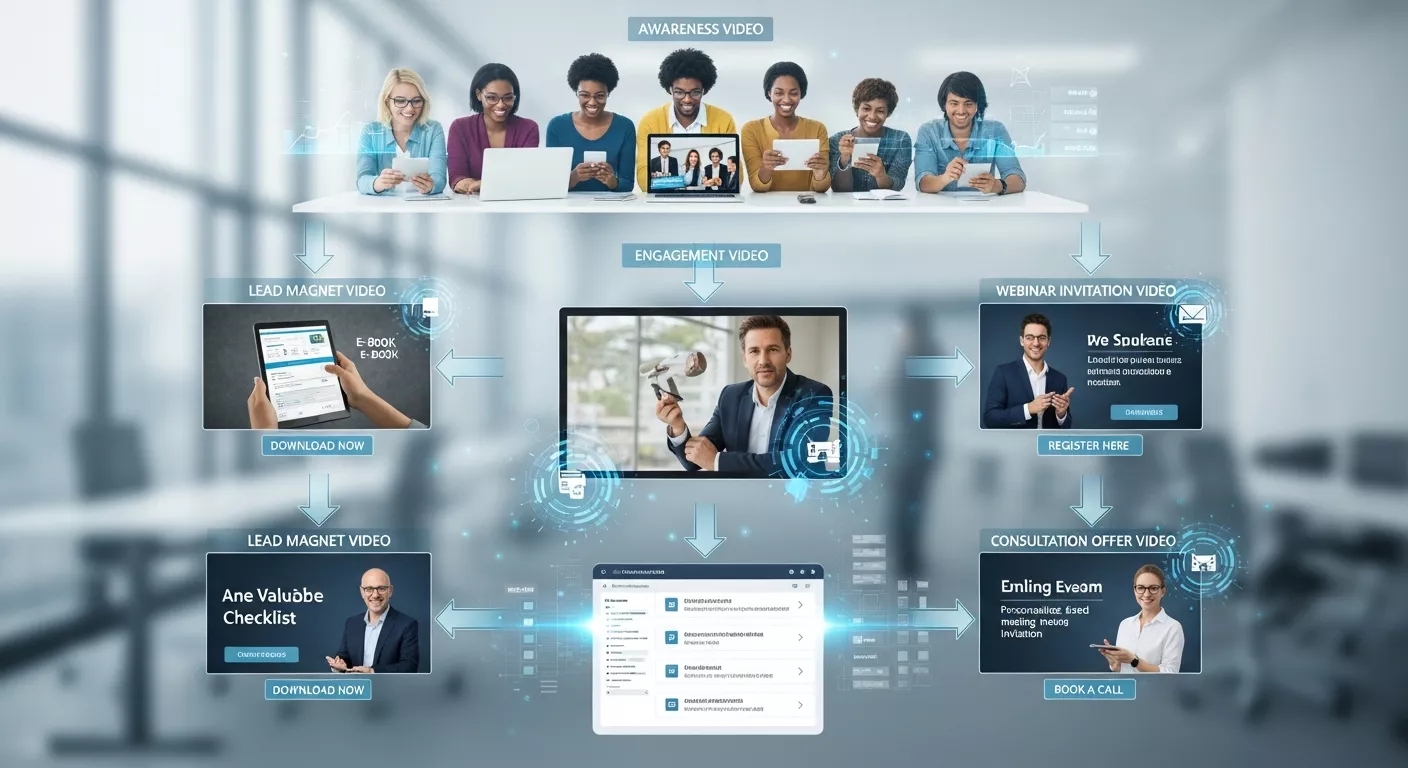
A well-structured video funnel guides prospects from initial discovery to conversion, ensuring that each interaction moves them closer to becoming a qualified lead. By strategically mapping video content to the buyer’s journey, brands can maximize engagement, capture valuable data, and improve overall ROI. Here’s a detailed three-stage approach:
- Attract: Publish short awareness videos on social channels and ad networks. These videos should have a teaser or value-driven hook that immediately captures attention and encourages viewers to learn more. The primary goal at this stage is to introduce your brand, showcase your unique value proposition, and drive traffic to a dedicated landing page or website. Examples include teaser clips, animated explainers, and social media shorts designed for broad visibility.
- Engage: Offer gated premium content such as webinars, detailed demo videos, or interactive guides. Require viewers to provide their contact information—like email addresses or phone numbers—in exchange for access. This stage nurtures interested prospects by providing in-depth information, addressing their questions, and demonstrating the product or service’s value. Follow up with personalized email sequences, automated workflows, or retargeting campaigns to deepen engagement and build a relationship with potential customers.
- Convert: Use targeted retargeting ads featuring case study videos, testimonials, or free trials to re-engage prospects who have interacted with earlier content but have not yet converted. The goal is to drive action by showcasing proof of results, emphasizing product benefits, and presenting clear calls to action. Conversion-focused content reinforces trust, reduces buyer hesitation, and motivates prospects to take the final step, such as making a purchase, signing up for a service, or requesting a consultation.
By carefully structuring your video funnel across these stages, you create a seamless journey that captures attention, nurtures interest, and drives qualified leads toward conversion, while continuously measuring performance and optimizing content for maximum impact.
Top Tools and Platforms for Video Lead Capture
Several specialized platforms and tools streamline video hosting, lead capture, and analytics. Here are some of the best options:
- Wistia: Provides customizable video players, email gates, and detailed viewer heatmaps to identify engaged prospects.
- Vidyard: Offers in player CTAs, A B testing, and CRM integrations to automate lead nurturing based on video interactions.
- Vimeo Business: Delivers lead gen forms, custom branding, and privacy controls for gated content.
- HubSpot Video: Built into the CRM, this tool enables you to record, host, and track video engagement side by side with contact data.
- Interact or Typeform: Use interactive video quizzes or surveys to capture lead details before or after the video plays.
Best Practices for Optimizing Video for Lead Generation
To ensure your video campaigns generate high-quality leads and deliver measurable ROI, it’s crucial to follow these best practices:
- Keep It Concise: Attention spans online are limited. Awareness videos should generally be one to three minutes long to quickly capture interest, while in-depth demos, tutorials, or webinars can extend up to 20 minutes. Concise messaging prevents drop-offs and keeps viewers engaged throughout the content.
- Optimize for Mobile: A significant portion of video consumption happens on mobile devices. Ensure that your video player, landing pages, and lead capture forms are fully responsive. Test different screen sizes, load speeds, and aspect ratios to provide a seamless viewing experience for mobile audiences.
- Strong Calls to Action (CTAs): Every video should guide viewers toward the next step. Use overlay buttons, verbal prompts within the video, and end screens to direct prospects to landing pages, signup forms, or downloadable resources. Make CTAs clear, compelling, and aligned with the video’s objective.
- Captions and Transcripts: Providing captions and full transcripts improves accessibility for all users, including those who are hearing impaired or watching without sound. Additionally, captions and transcripts contribute to SEO, allowing search engines to index your content and drive organic traffic.
- A/B Testing: Experimentation is key to identifying the most effective elements of your video campaigns. Test variations of thumbnails, video intros, length, CTAs, and even content style to determine what drives the highest engagement and lead conversion rates. Regular testing allows continuous optimization and refinement of your video strategy.
Implementing these best practices ensures your video content is engaging, accessible, and conversion-focused, ultimately driving more qualified leads and enhancing overall marketing performance.
Measuring Video Lead Generation Success
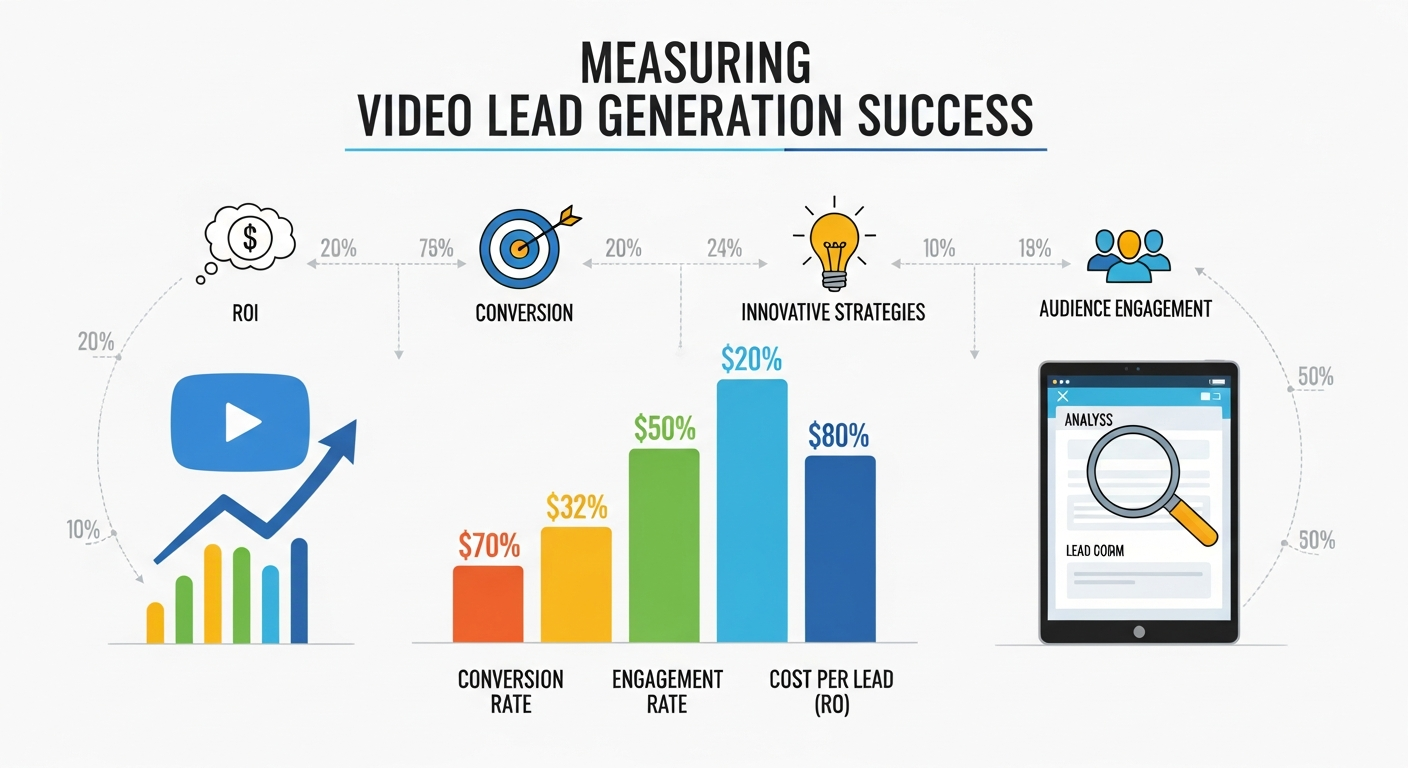
Effectively measuring the performance of your video campaigns is essential to optimize lead generation and maximize ROI. Tracking the right metrics helps identify what works, uncover areas for improvement, and refine your video marketing strategy over time. Key performance indicators (KPIs) include:
- Play Rate: This metric shows the percentage of page visitors who click the play button on your video. A high play rate indicates that your thumbnail, title, and initial messaging are compelling and encourage viewers to engage with your content.
- Watch Time: Total minutes viewed by your audience reflects engagement with your video. Longer watch times signal that viewers find your content valuable, informative, or entertaining, which helps move prospects further along the buyer journey.
- Clickthrough Rate (CTR) on CTAs: Measures how many viewers follow your call-to-action prompts, such as links to landing pages, downloadable resources, or signup forms. A higher CTR demonstrates that your messaging and CTAs effectively drive prospects toward lead capture actions.
- Conversion Rate: The percentage of viewers who complete a desired action, such as submitting a form, signing up for a gated webinar, or downloading a resource. Conversion rate directly reflects the effectiveness of your video content in generating qualified leads.
- Cost Per Lead (CPL): Calculated by dividing total campaign spend by the number of leads generated. CPL allows you to evaluate financial efficiency, compare performance across campaigns, and optimize budgeting for future video marketing initiatives.
By regularly analyzing these metrics and combining them with qualitative insights—like audience feedback and video engagement patterns—you can continually refine your video content, CTAs, and funnel strategy to generate more high-quality leads.
Conclusion
Video marketing is a dynamic and impactful channel for lead generation when executed strategically. By selecting the right formats, crafting a purposebuilt video funnel, deploying powerful tools, and adhering to best practices, you can attract more qualified prospects and nurture them effectively. Remember to measure performance and refine your approach based on data insights. Embrace video as a core pillar of your marketing strategy, and watch your lead pipeline grow with engaged, highquality contacts ready to convert into loyal customers.
FAQ:
-
Why is video effective for lead generation?
Videos engage audiences visually and emotionally, demonstrate products, and provide social proof, increasing trust and the likelihood of conversion. -
What types of videos work best for generating leads?
Explainer videos, product demos, webinars/workshops, customer testimonials, and social media shorts each serve distinct roles across the buyer’s journey. -
How can I capture leads through video?
Use gated content, interactive forms, CTAs embedded in the video, landing pages, and follow-up email sequences to convert viewers into leads. -
Which tools help with video lead generation?
Platforms like Wistia, Vidyard, Vimeo Business, HubSpot Video, and interactive tools like Typeform allow hosting, lead capture, analytics, and tracking engagement. -
How do I measure the success of video campaigns?
Track play rate, watch time, click-through rate on CTAs, conversion rate, and cost per lead to evaluate campaign performance and ROI. -
What are best practices for video lead generation?
Keep videos concise, optimize for mobile, include strong CTAs, add captions and transcripts, and use A/B testing to refine content for higher conversions.


Leave a Reply